Rhenium(I) Complexes with 2-(1,2,4-Triazol-5-yl)-β-Carboline-Based Bidentate Luminophores and Neutral Co-Ligands: Towards Tunable Phosphorescence and Efficient Singlet Dioxygen Photoproduction
Joschua Lüke, Iván Maisuls, Alexander Hepp, Cristian A. Strassert

TL;DR
Scientists created new rhenium complexes that can emit light efficiently and produce singlet oxygen, useful for applications like bioimaging and therapy.
Contribution
The paper introduces a new class of rhenium(I) complexes with tunable phosphorescence and efficient singlet dioxygen photoproduction.
Findings
Methyl substitution enhances phosphorescence efficiency in rhenium complexes.
Re(LMe-nHo)Py achieved 44% photoluminescence quantum yield in dichloromethane.
Complexes efficiently produce singlet dioxygen with up to 45% efficiency.
Abstract
A bidentate ligand concept based on β-carbolines functionalized with a 1,2,4-triazolyl-moiety was designed and realized, enabling the development of a series of neutral rhenium(I) complexes. This new class of anionic ligands, incorporating either an unsubstituted 9H-pyrido[3,4-b]indole core (LnHo) or a 9-methyl-substitued variant (LMe-nHo), was developed towards tailored photofunctionality. Structural modification via methyl substitution at the indole moiety was found to enhance overall phosphorescence efficiency. Comparative studies of two monodentate auxiliary units revealed that 1,3,5-triaza-7-phosphaadamantane (PTA) significantly reduces the photoluminescence efficiency compared to pyridine (Py). Solvent-dependent photoluminescence studies indicated that a lowered polarity leads to an increase in photoluminescence quantum yields (ΦL). The complex Re(LMe-nHo)Py emerged as the most…
Genes, proteins, chemicals, diseases, species, mutations and cell lines named across the full text — each resolved to its canonical identifier and authoritative record.
Click any figure to enlarge with its caption.
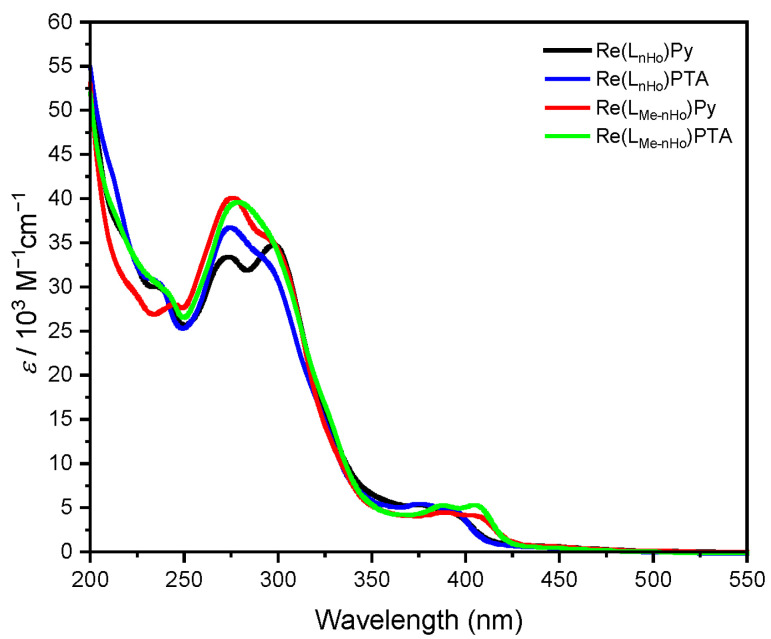 Figure 1
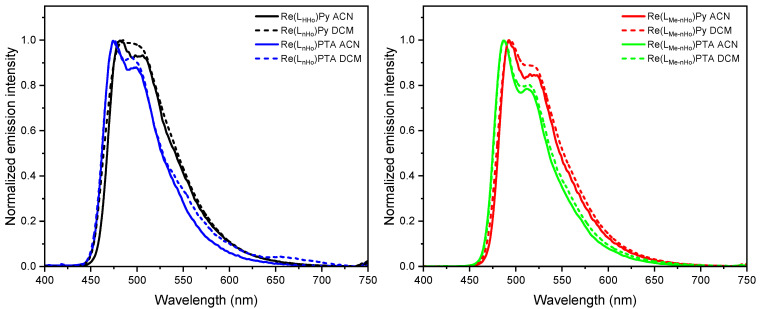 Figure 2
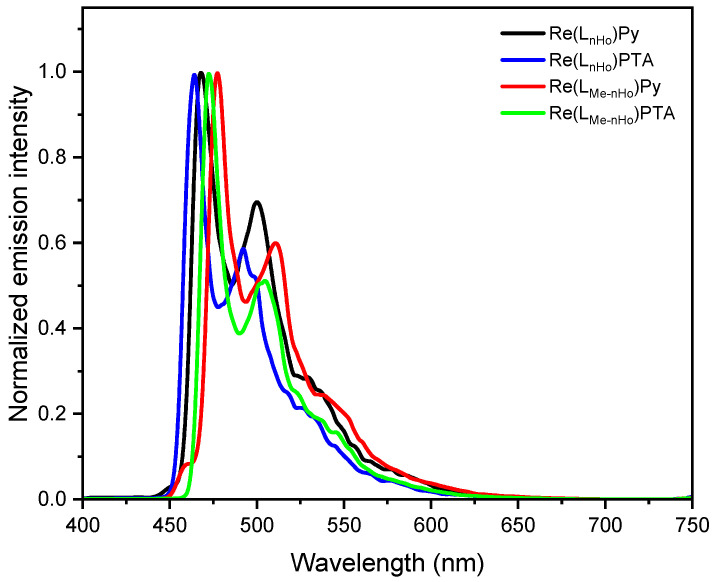 Figure 3
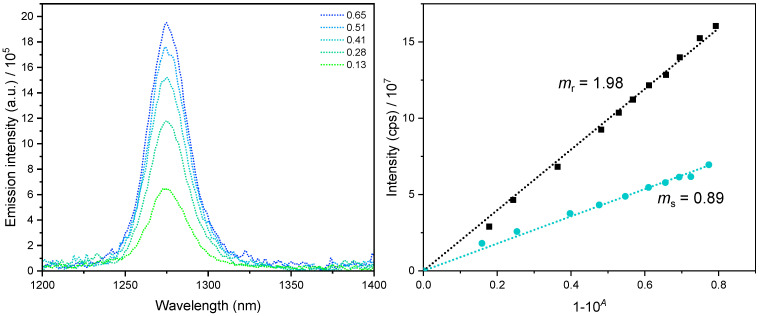 Figure 4
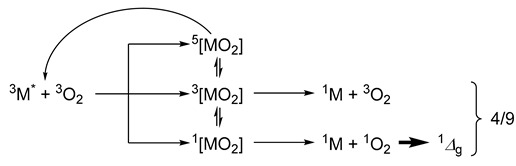 Figure 5
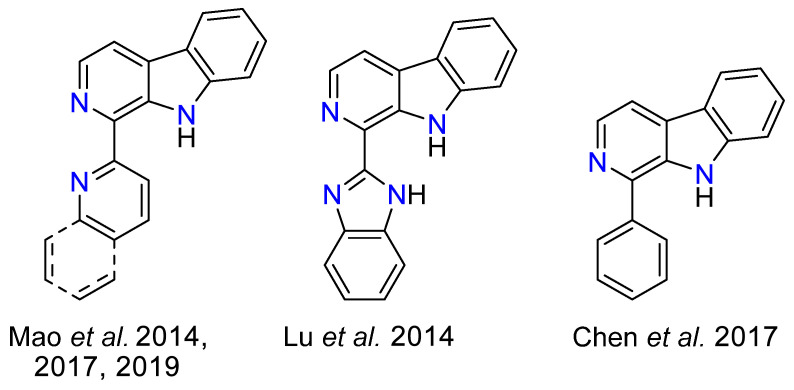 Figure 6
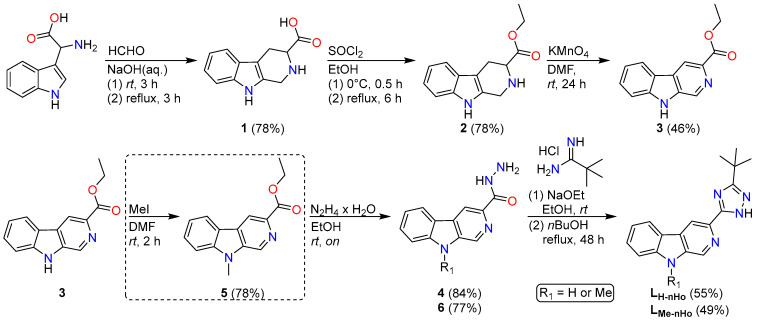 Figure 7
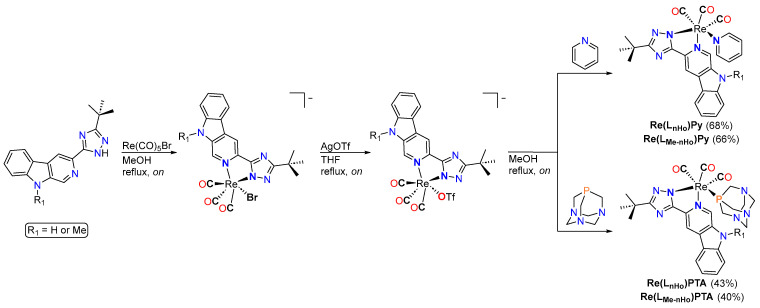 Figure 8
Peer Reviews
No public reviews on file for this paper yet. If you reviewed it on a platform where reviews are public (OpenReview, ICLR, NeurIPS, ICML), you can paste yours below so the community can read it here.
Videos
No videos yet. Explain this paper in a talk, walkthrough, or lecture? Add one.
Taxonomy
TopicsCatalytic Cross-Coupling Reactions · Luminescence and Fluorescent Materials · Organic Light-Emitting Diodes Research