Dangerous Alarming Diameter Assessment (DADA Index) in Which the Ratio of Iris Surface/Pupil Surface Size Is More Reliable than Pupil Diameter Measurement in Comatose Patients After Subarachnoid Haemorrhage: An Experimental Rabbit Model
Hüseyin Findik, Mehmet Dumlu Aydın, Feyzahan Uzun, Muhammet Kaim, Ayhan Kanat, Osman Nuri Keleş, Hakan Hadi Kadıoğlu, Mehmet Emin Akyüz, Mete Zeynal

TL;DR
This study introduces a new method, the DADA index, to assess brain damage in comatose patients after subarachnoid haemorrhage, which is more accurate than traditional pupil diameter measurements.
Contribution
The DADA index, a novel ratio-based assessment, is proposed as a more reliable diagnostic tool for brain death in comatose patients.
Findings
The DADA index more accurately identified brain death compared to pupil diameter in an experimental rabbit model.
Strong negative correlations were found between the DADA index and neurodegeneration in the Edinger–Westphal nucleus.
The DADA index showed superior precision in distinguishing severe neurodegeneration, suggesting its potential for brain death assessment.
Abstract
Objective/Background: Pupil diameter varies across individuals, limiting its reliability in assessing cerebral pathologies, particularly in comatose patients following subarachnoid haemorrhage (SAH). The Dangerous Alarming Diameter Assessment (DADA) index, defined as the ratio of iris surface to pupil surface, may offer a more precise diagnostic tool. This study evaluates the efficacy of the DADA index compared to pupil diameter in predicting neurodegeneration in the Edinger–Westphal nucleus (EWN) and diagnosing brain death in an SAH model. Methods: Twenty-two rabbits were divided into Control (n = 5), Sham (n = 5), and Study (SAH, n = 12) groups. Pupil diameter and DADA index values were measured via spectral-domain optical coherence tomography (SD-OCT) in groups at post-intervention (0.75 cc serum physiologic injection for Sham, 0.75 cc autologous blood injection for Study). After one…
Genes, proteins, chemicals, diseases, species, mutations and cell lines named across the full text — each resolved to its canonical identifier and authoritative record.
Click any figure to enlarge with its caption.
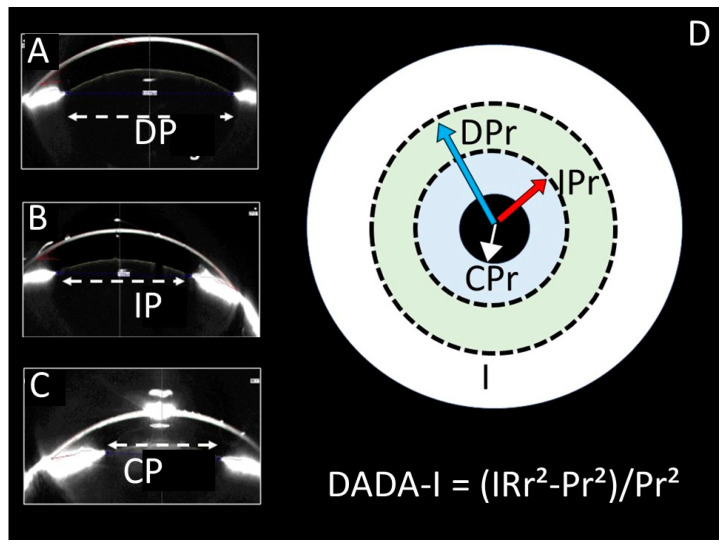 Figure 1
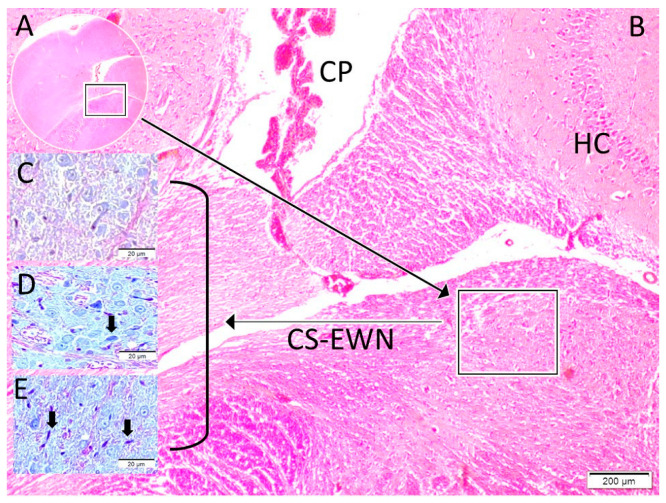 Figure 2
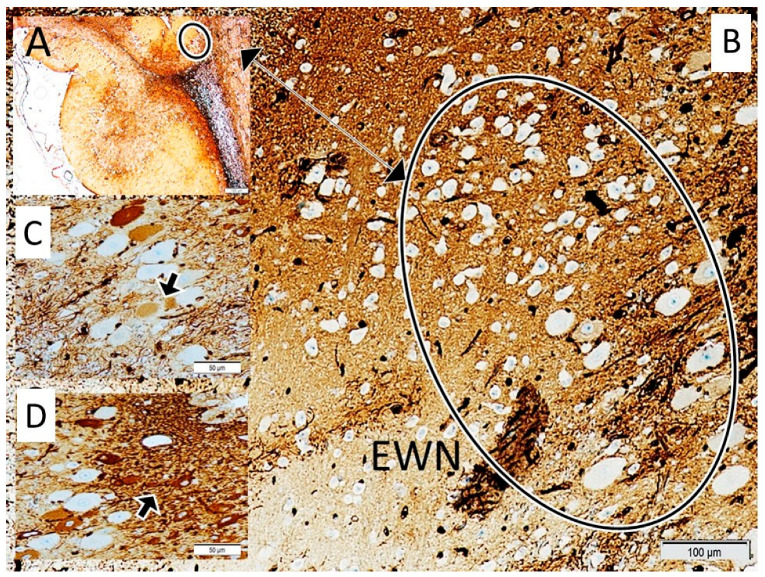 Figure 3
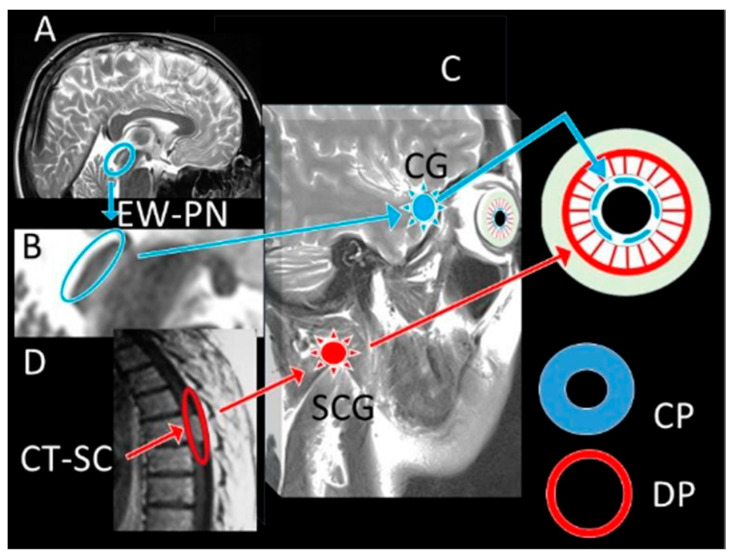 Figure 4
Peer Reviews
No public reviews on file for this paper yet. If you reviewed it on a platform where reviews are public (OpenReview, ICLR, NeurIPS, ICML), you can paste yours below so the community can read it here.
Videos
No videos yet. Explain this paper in a talk, walkthrough, or lecture? Add one.
Taxonomy
TopicsTraumatic Brain Injury and Neurovascular Disturbances · Neurosurgical Procedures and Complications · Intracranial Aneurysms: Treatment and Complications