Comparative Chromosome Painting Clarifies the Intraspecific Chromosomal Variation in Two Ctenomys Species (Rodentia: Ctenomyidae)
Thays Duarte de Oliveira, Natasha Ávila Bertocchi, Luciano Cesar Pozzobon, Ivanete de Oliveira Furo, Edivaldo Herculano Corrêa de Oliveira, Jorge C. Pereira, Malcolm A. Ferguson-Smith, Rafael Kretschmer, Thales R. O. de Freitas

TL;DR
This study uses chromosome painting to uncover chromosomal rearrangements in two Ctenomys rodent species, revealing insights into their evolutionary divergence.
Contribution
The study identifies shared chromosomal rearrangements within and between Ctenomys species using comparative chromosome painting.
Findings
Chromosomal rearrangements were found to differentiate cytotypes within and between C. minutus and C. lami.
Some chromosomes and chromosomal segments remain conserved across C. minutus, C. lami, and C. flamarioni.
The findings highlight the role of chromosomal rearrangements in the diversification of the Ctenomys genus.
Abstract
Ctenomys minutus and Ctenomys lami are rodents known for their karyotypic diversity. The C. minutus diploid number ranges from 2n = 42–50, divided into seven parental cytotypes. While C. lami diploid number ranges from 2n = 50–58, it is divided into four parental cytotypes. To understand the chromosomal evolution of these species, we used whole-chromosome painting with chromosomic probes from Ctenomys flamarioni. We identified chromosomal rearrangements shared among C. minutus and C. lami, and within different cytotypes from within each species. Moreover, several conserved chromosomes across all three Ctenomys species were observed. These rearrangements shed light on the chromosomal evolution of the genus Ctenomys, particularly within the torquatus group, suggesting that these rearrangements have a role on diversification. Background: Ctenomys is a subterranean rodent genus known for…
Genes, proteins, chemicals, diseases, species, mutations and cell lines named across the full text — each resolved to its canonical identifier and authoritative record.
Click any figure to enlarge with its caption.
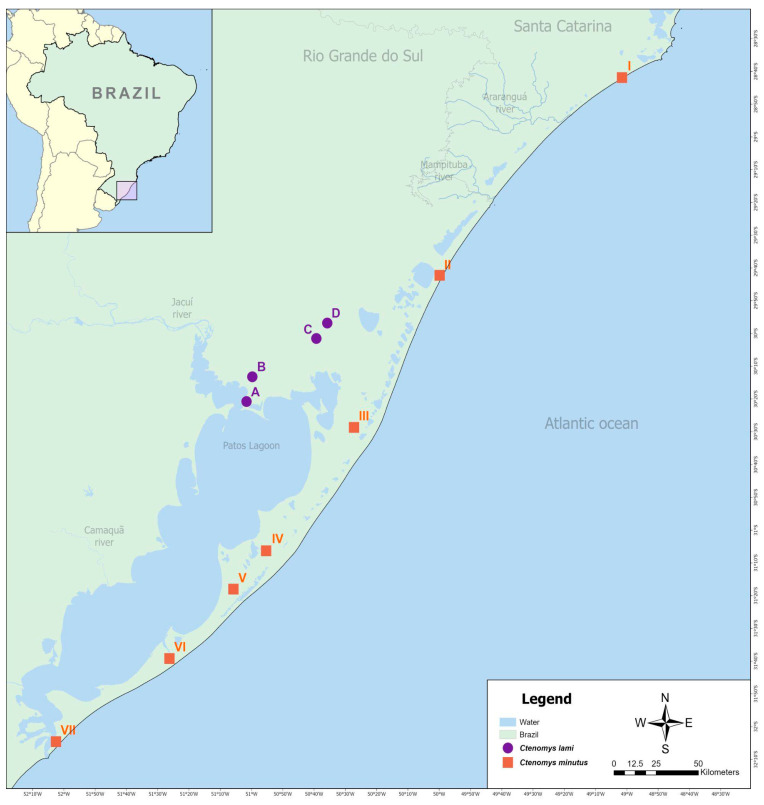 Figure 1
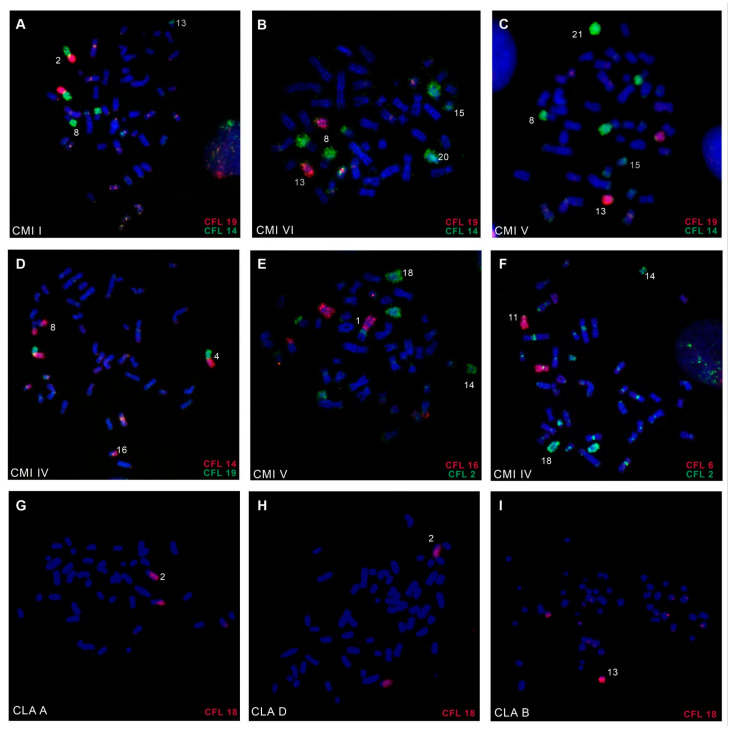 Figure 2
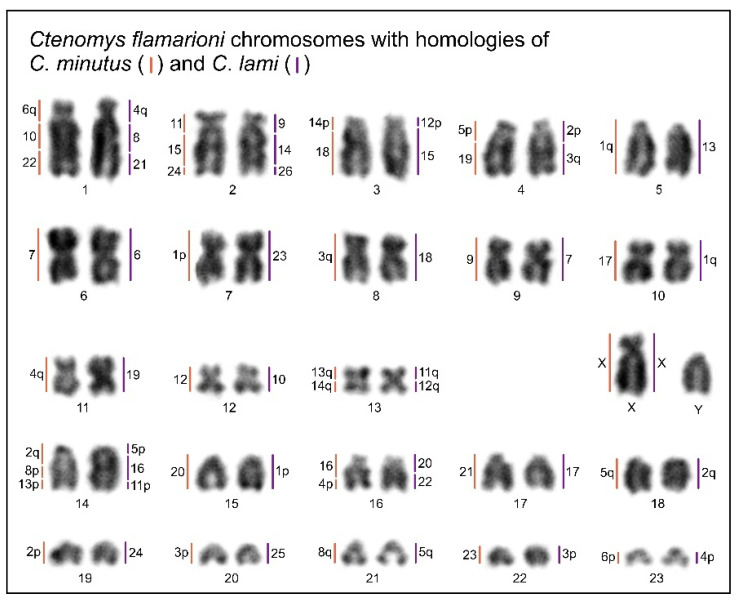 Figure 3
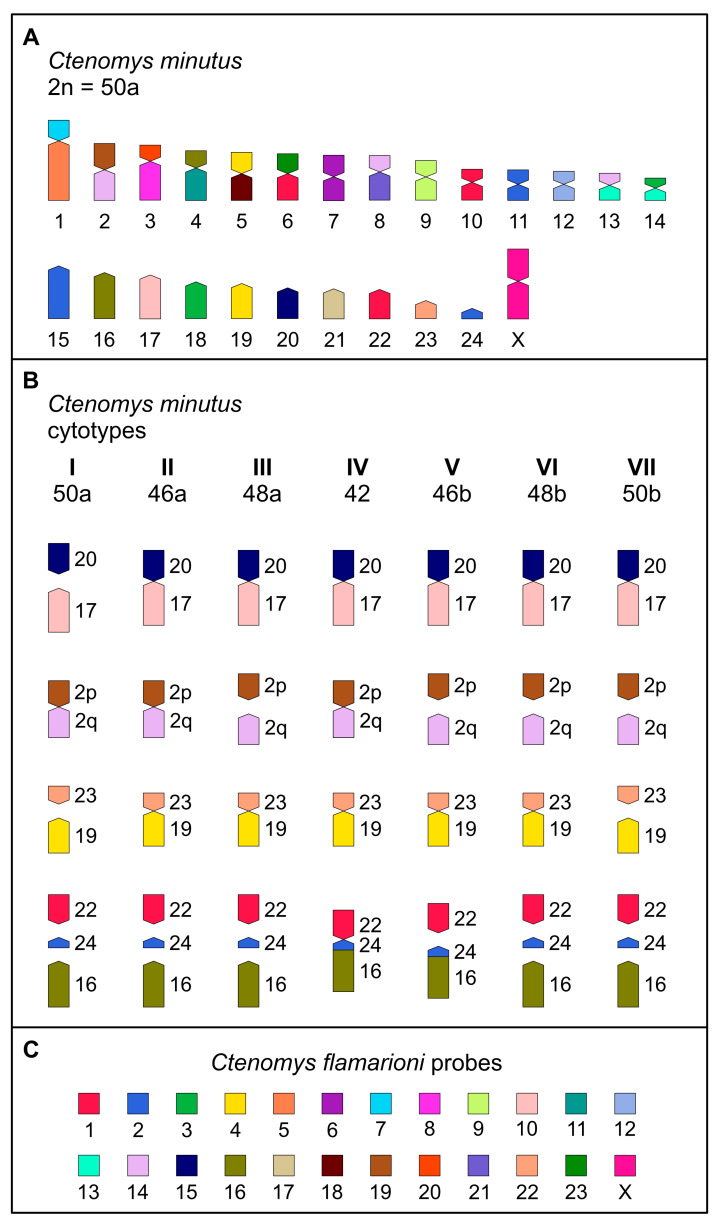 Figure 4
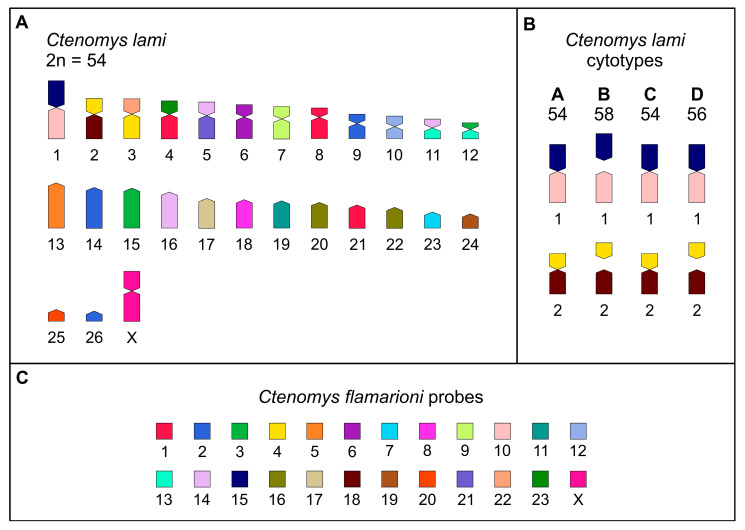 Figure 5
Peer Reviews
No public reviews on file for this paper yet. If you reviewed it on a platform where reviews are public (OpenReview, ICLR, NeurIPS, ICML), you can paste yours below so the community can read it here.
Videos
No videos yet. Explain this paper in a talk, walkthrough, or lecture? Add one.
Taxonomy
TopicsGenetic diversity and population structure · Chromosomal and Genetic Variations · Genetic Mapping and Diversity in Plants and Animals