A Combination of Lacticaseibacillus paracasei CECT 30660 and Bifidobacterium longum subsp. infantis CECT 7210 Cell-Free Supernatants Reduces LPS-Induced Preterm Birth and Systemic Inflammation in Pregnant Mice
Sergio Quesada-Vázquez, Maria Cristina De Almagro García, Gloria Cifuentes-Orjuela, Anna Antolín, Juan María Alcaide-Hidalgo, Jesús Jiménez, Francesc Puiggròs, Antoni Caimari, Fàtima Sabench, Josep M. Del Bas, Xavier Escoté, José Antonio Moreno-Muñoz

TL;DR
A combination of two probiotic cell-free supernatants reduced preterm birth and inflammation in pregnant mice, offering a potential new treatment.
Contribution
The study introduces a novel therapeutic strategy using cell-free supernatants to target inflammation-induced preterm birth.
Findings
Combined cell-free supernatants reduced preterm deliveries from 85.6% to 42.8% in mice.
The treatment significantly attenuated proinflammatory cytokines TNF-α and IL-6.
The supernatant combination inhibited the growth of pathogenic bacteria like Streptococcus agalactiae.
Abstract
Background/Objectives. Preterm birth (PTB), affecting approximately 11.1% of pregnancies globally, often results from inflammation at the maternal–fetal interface triggered by microbial or immune dysregulation. This study investigates the efficacy of cell-free supernatant derived from Bifidobacterium longum subsp. infantis CECT 7210 and Lacticaseibacillus paracasei CECT 30660 in mitigating inflammation-induced PTB in a murine model. Methods. Lipopolysaccharide (LPS) was administered to induce preterm labor and systemic inflammation, mimicking infection-related PTB. Results. The results demonstrated that combined administration of CECT 7210 and CECT 30660 cell-free supernatants reduced preterm deliveries from 85.6% to 42.8% in mice and significantly attenuated systemic and intrauterine proinflammatory cytokines, including TNF-α and IL-6, in maternal plasma and myometrial tissues.…
Genes, proteins, chemicals, diseases, species, mutations and cell lines named across the full text — each resolved to its canonical identifier and authoritative record.
Click any figure to enlarge with its caption.
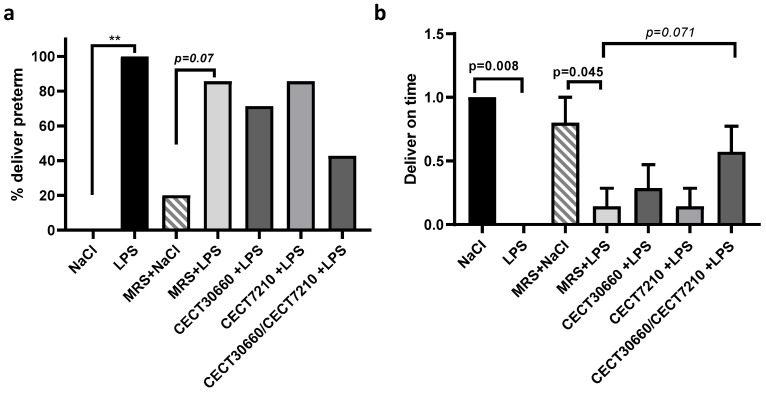 Figure 1
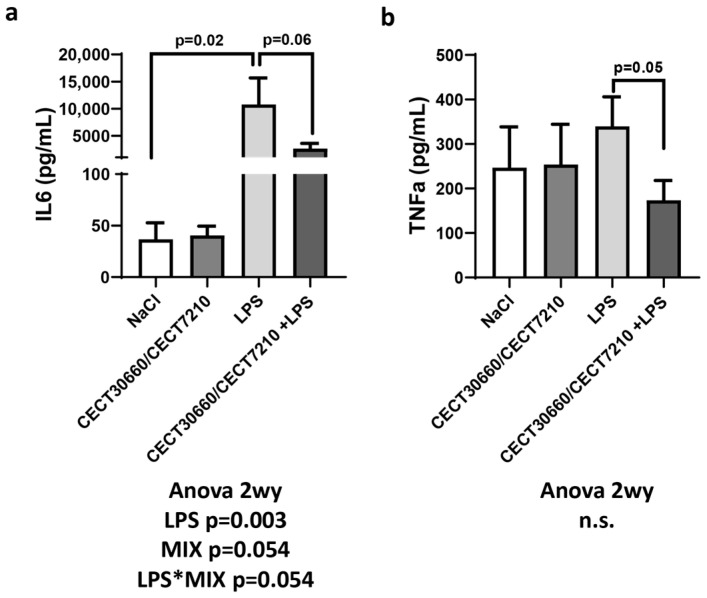 Figure 2
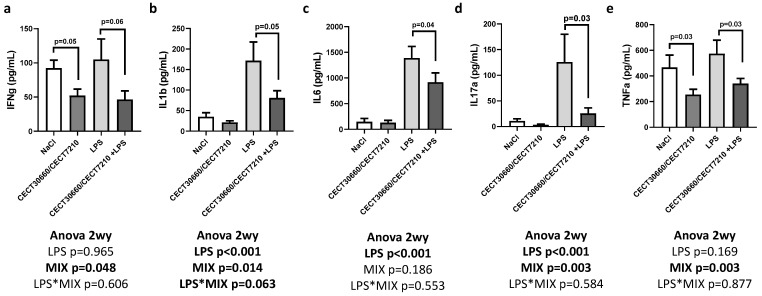 Figure 3
Peer Reviews
No public reviews on file for this paper yet. If you reviewed it on a platform where reviews are public (OpenReview, ICLR, NeurIPS, ICML), you can paste yours below so the community can read it here.
Videos
No videos yet. Explain this paper in a talk, walkthrough, or lecture? Add one.
Taxonomy
TopicsPreterm Birth and Chorioamnionitis · Infant Nutrition and Health · Neonatal and Maternal Infections