AMPK Limits MNNG-Induced Parthanatos by Inhibiting BH3-Only Protein Bim
Shuhei Hamano, Tomoe Maruyama, Midori Suzuki, Maki Mitsuya, Takumi Yokosawa, Yusuke Hirata, Atsushi Matsuzawa, Takuya Noguchi

TL;DR
This study shows that AMPK reduces a type of cell death called parthanatos by preventing the increase of a protein called Bim, offering new insights into how cells regulate death.
Contribution
The study reveals a novel regulatory link between AMPK and parthanatos by showing AMPK inhibits Bim-mediated cell death.
Findings
AMPK is activated by MNNG through PARP-1-dependent ATP depletion.
AMPK selectively inhibits Bim-mediated parthanatos but not BAX/BAK-mediated parthanatos.
MNNG-induced Bim upregulation occurs only when AMPK activation is blocked.
Abstract
Parthanatos represents an alternative form of regulated cell death (RCD) mediated by poly (ADP-ribose) polymerase-1 (PARP-1). However, the underlying mechanisms and physiological significance of parthanatos are poorly understood. In this study, we investigated molecular mechanisms of parthanatos in human fibrosarcoma HT1080 cells using biochemical and cellular experiments, and found that parthanatos induced by the alkylating agent N-methyl-N′-nitro-N-nitrosoguanidine (MNNG) is mediated by two alternative pathways that depend on pro-death Bcl-2 family proteins BAX/BAK or Bcl-2-interacting mediator of cell death (Bim). Moreover, we found that MNNG activates AMP-activated protein kinase (AMPK) through PARP-1-dependent ATP depletion, and then AMPK selectively downregulates MNNG-induced parthanatos mediated by Bim but not BAX/BAK. Under unstimulated conditions, expression levels of Bim were…
Genes, proteins, chemicals, diseases, species, mutations and cell lines named across the full text — each resolved to its canonical identifier and authoritative record.
Click any figure to enlarge with its caption.
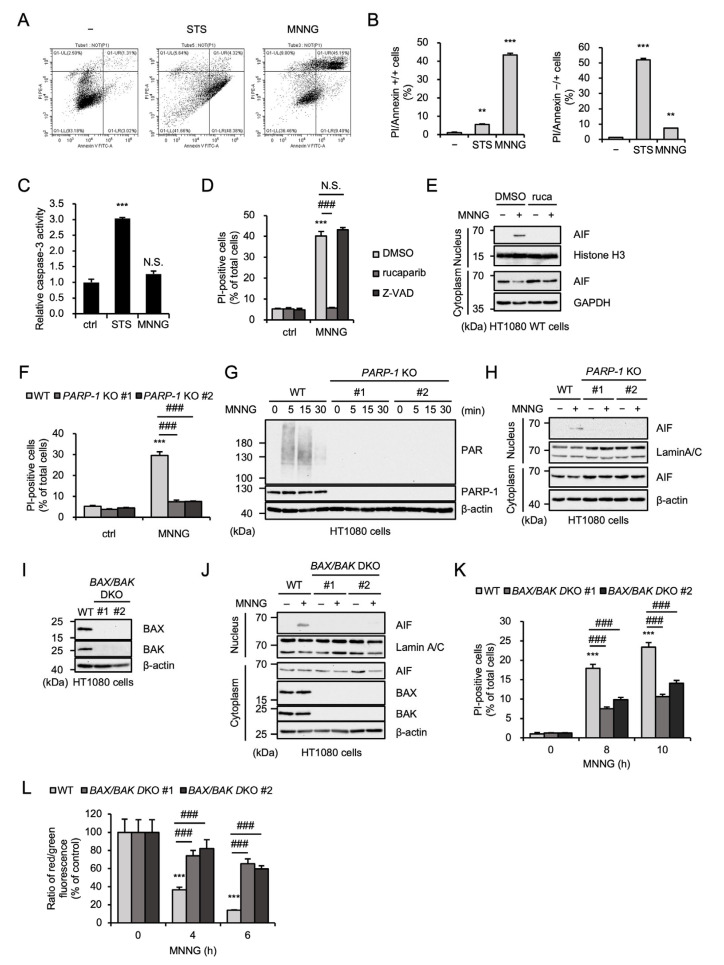 Figure 1
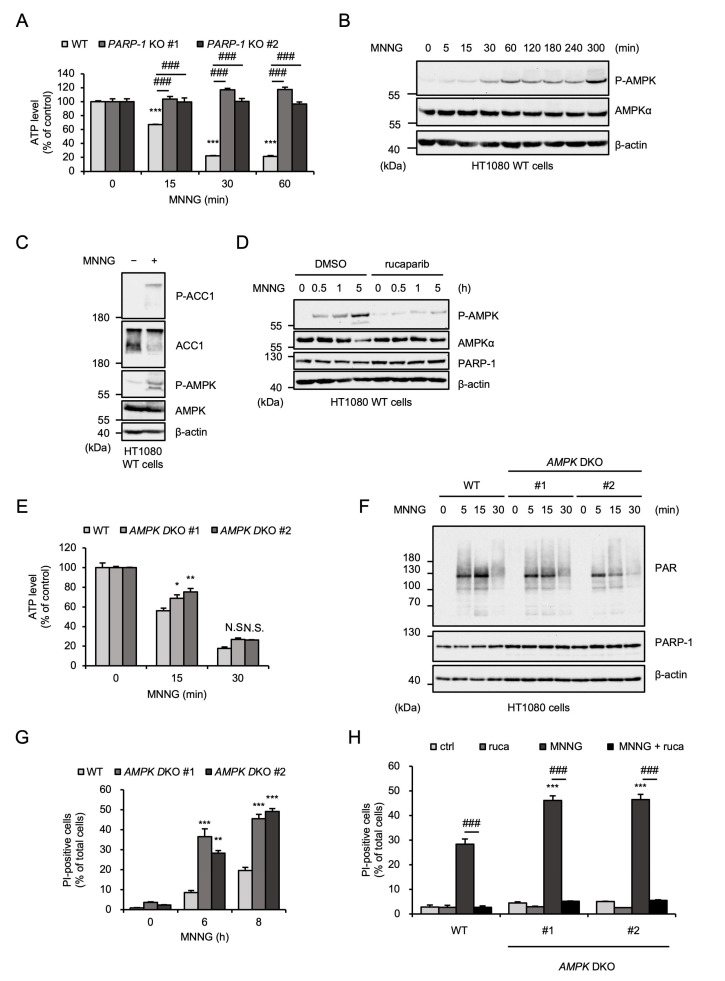 Figure 2
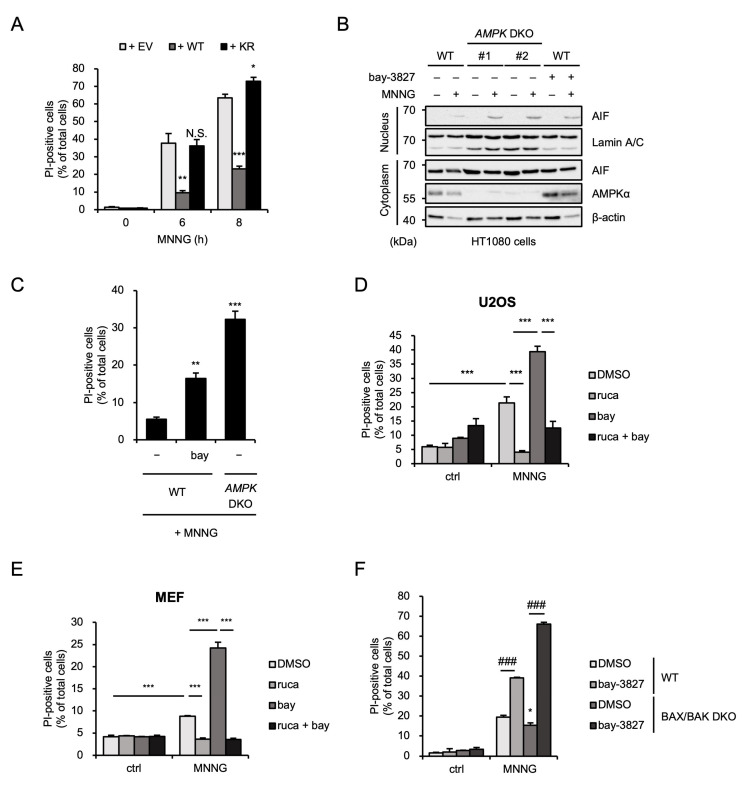 Figure 3
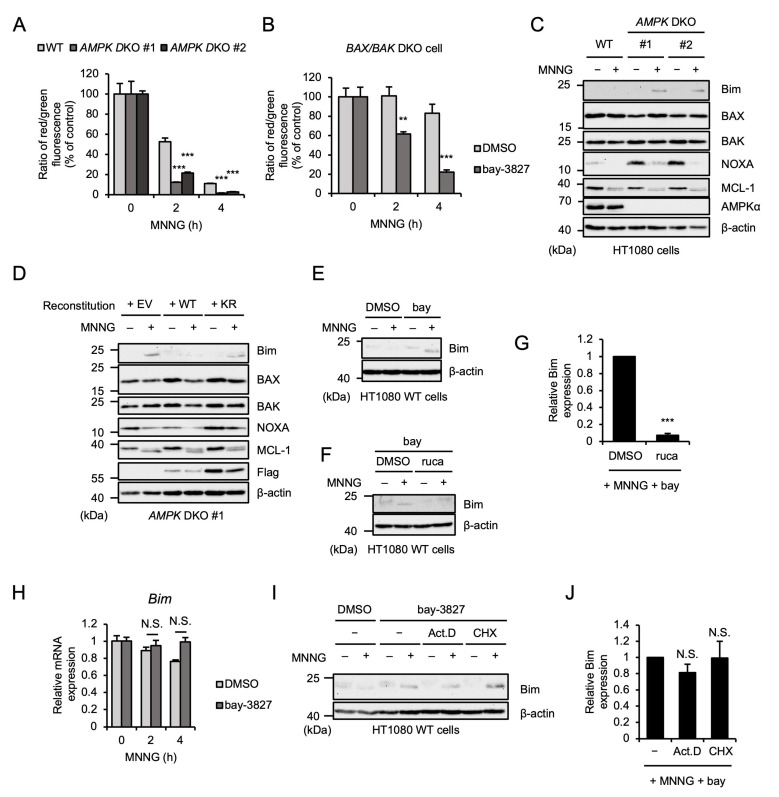 Figure 4
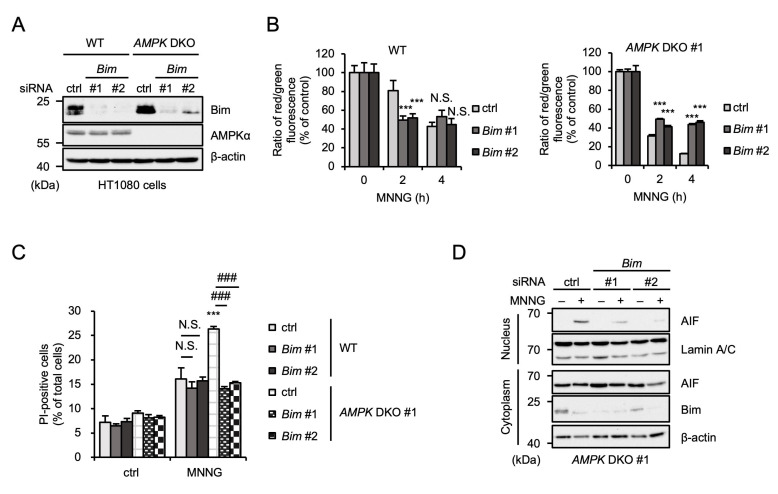 Figure 5
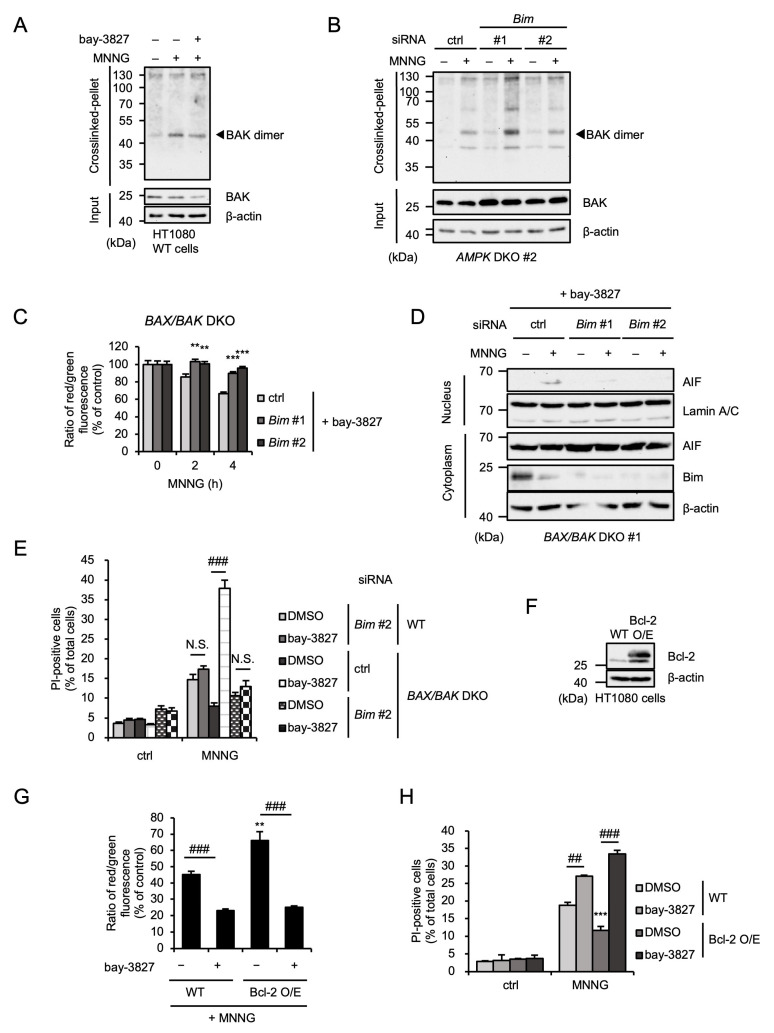 Figure 6
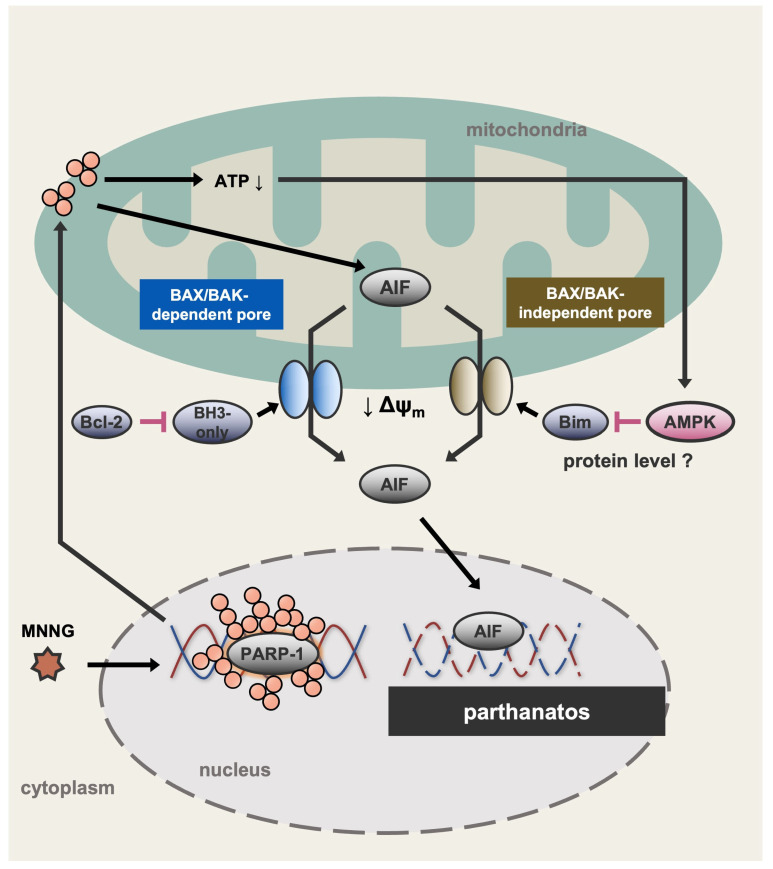 Figure 7
Peer Reviews
No public reviews on file for this paper yet. If you reviewed it on a platform where reviews are public (OpenReview, ICLR, NeurIPS, ICML), you can paste yours below so the community can read it here.
Videos
No videos yet. Explain this paper in a talk, walkthrough, or lecture? Add one.
Taxonomy
TopicsPARP inhibition in cancer therapy · Metabolism, Diabetes, and Cancer · Cell death mechanisms and regulation