Caspase-6 Is a Non-Apoptotic Effector of Shear-Induced Morphological Adaptation in Pulmonary Artery Endothelial Cells In Vitro
Corey Wittig, Emir Bora Akmeriç, Laura Michalick, Jakob M. König, Wolfgang M. Kuebler, Holger Gerhardt, Robert Szulcek

TL;DR
Caspase-6 helps human pulmonary artery endothelial cells adapt their shape to fluid shear stress in a non-lethal way.
Contribution
Caspase-6 is identified as a non-apoptotic effector specifically required for shear-induced morphological adaptation in pulmonary artery endothelial cells.
Findings
Caspase-6 inhibition reduced shear adaptation from 75.2% to 5.5% in endothelial cells.
Caspase-6 activation coincided with morphological remodeling under shear stress.
Caspase-6 is specifically involved in shear adaptation, not other stimuli like cyclic stretch or TNF-α.
Abstract
Caspases are known for their roles in cell death and inflammation. However, emerging evidence suggests they also mediate non-lethal processes, governed by a finely tuned balance of localization, activity, kinetics, and substrate availability. Given that many caspase substrates are implicated in mechanoadaptive processes, we investigated if caspases contribute to morphological adaptation of human pulmonary artery endothelial cells to fluid shear stress and other morphology-altering stimuli in vitro. Using selective inhibitors, we screened all major caspases for a role in endothelial cell adaptation to unidirectional laminar shear stress (15 dyn/cm2, 72 h). Selective inhibition of caspase-6, but not other caspases, impaired morphological shear adaptation. Only 5.5% of caspase-6-inhibited cells shear-adapted vs. 75.2% of vector controls. Live-cell FRET imaging revealed progressive…
Genes, proteins, chemicals, diseases, species, mutations and cell lines named across the full text — each resolved to its canonical identifier and authoritative record.
Click any figure to enlarge with its caption.
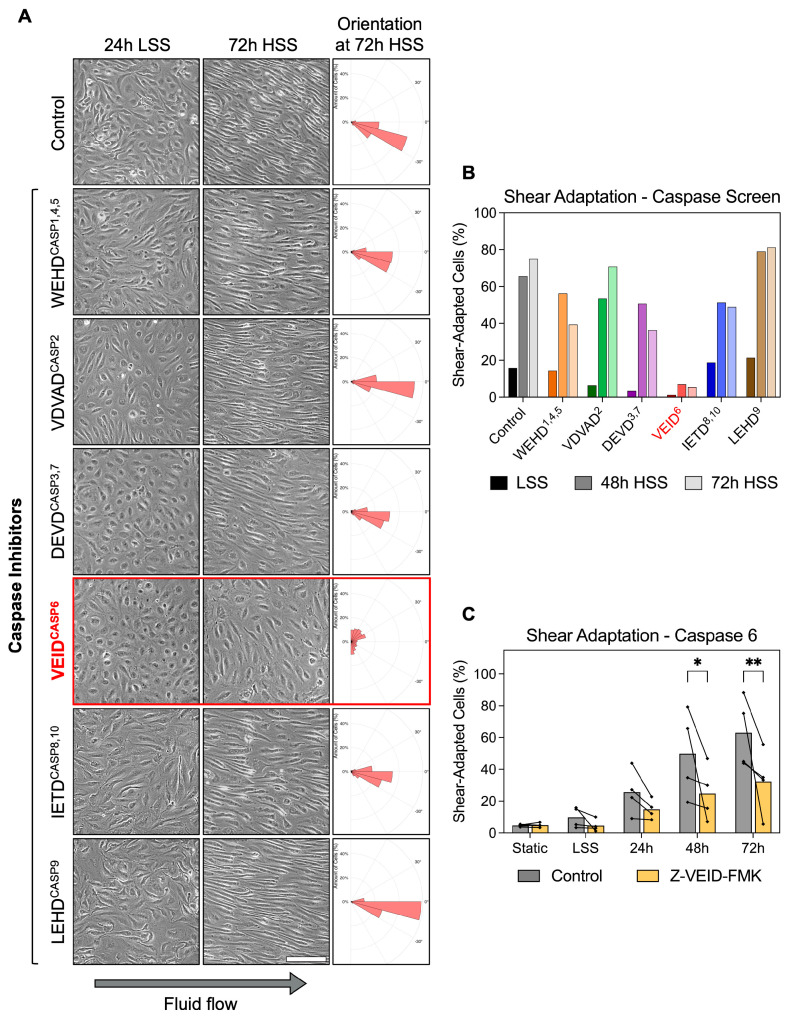 Figure 1
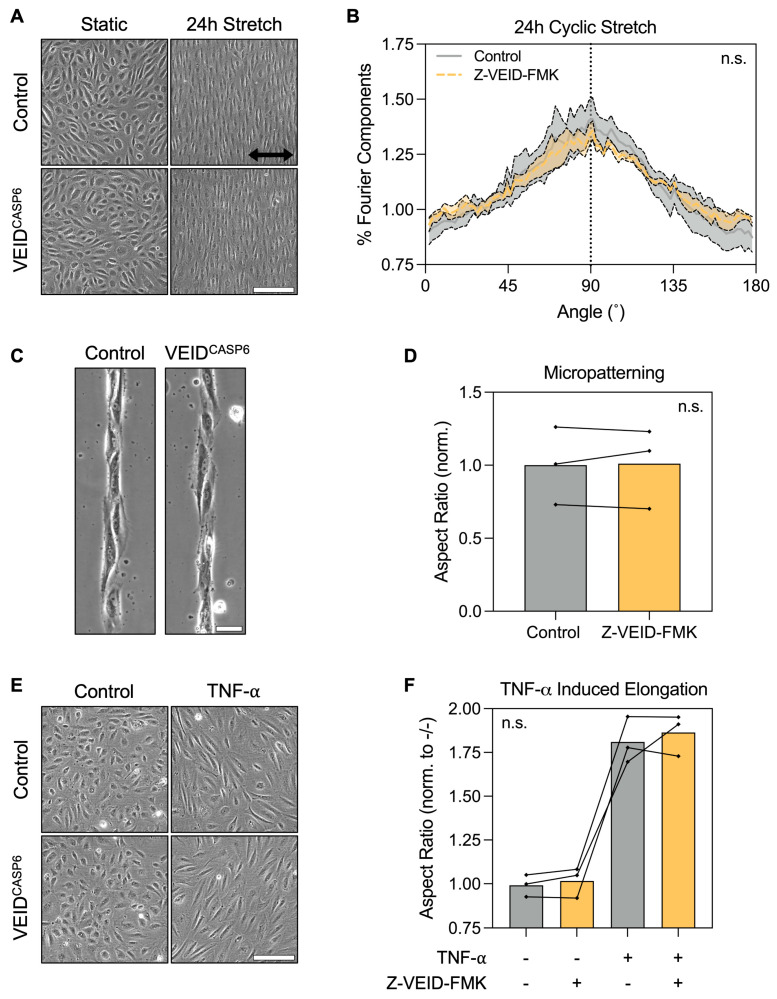 Figure 2
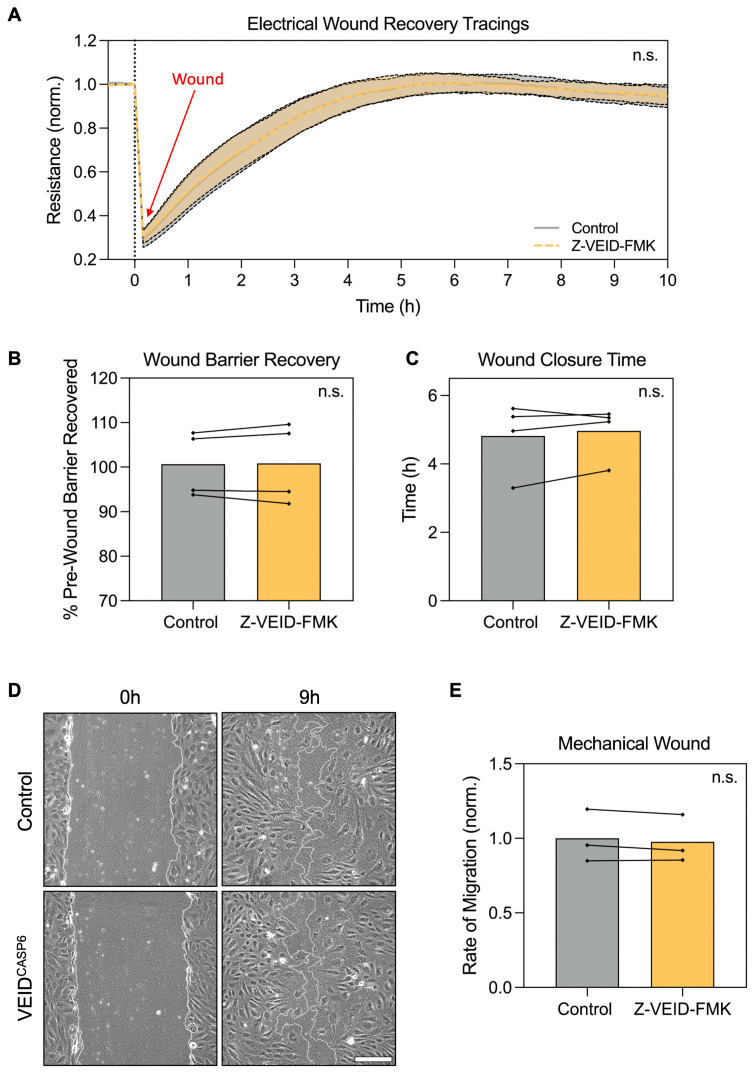 Figure 3
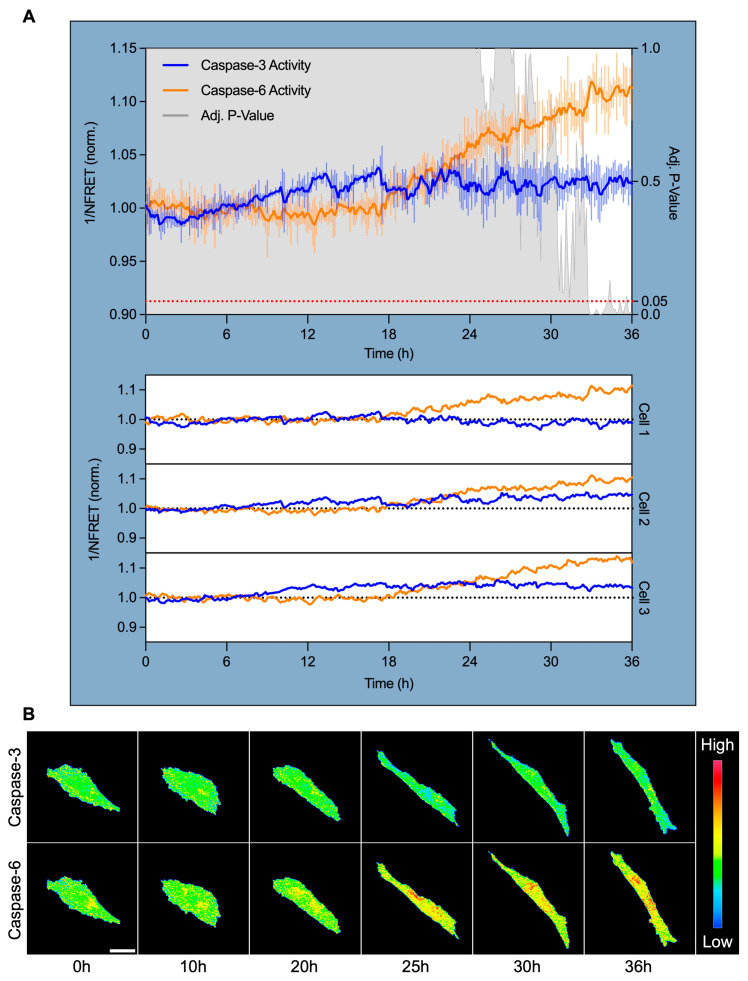 Figure 4
Peer Reviews
No public reviews on file for this paper yet. If you reviewed it on a platform where reviews are public (OpenReview, ICLR, NeurIPS, ICML), you can paste yours below so the community can read it here.
Videos
No videos yet. Explain this paper in a talk, walkthrough, or lecture? Add one.
Taxonomy
TopicsHeat shock proteins research · Nuclear Structure and Function · Caveolin-1 and cellular processes