Co-Occurrence of RAD21 and TNFAIP3 Mutations in Cornelia de Lange Syndrome with Pustular Psoriasis: Potential Molecular Interactions
Beatriz E. Orozco, Cindy V. Orozco, Esperanza Meléndez, María F. Mangones, José Valderrama, Adalberto Lobato, Pilar Garavito-Galofre, Jorge I. Vélez, Oscar M. Vidal

TL;DR
This paper reports a rare case where mutations in RAD21 and TNFAIP3 co-occur in a patient with Cornelia de Lange Syndrome and pustular psoriasis, suggesting a possible molecular link between these conditions.
Contribution
The study is the first to propose a molecular mechanism linking RAD21 and TNFAIP3 mutations in developmental and inflammatory diseases.
Findings
RAD21 and TNFAIP3 mutations co-occur in a patient with Cornelia de Lange Syndrome and pustular psoriasis.
RAD21 deficiency and TNFAIP3 loss-of-function may synergistically cause developmental and inflammatory phenotypes.
RAD21 knockdown may downregulate TNFAIP3 expression, suggesting a mechanistic connection.
Abstract
Cornelia de Lange Syndrome (CdLS) is a rare multisystem developmental disorder caused primarily by mutations in cohesin complex genes, including RAD21. Psoriasis is a chronic inflammatory skin disease linked to immune dysregulation, notably involving TNFAIP3 (A20), a negative regulator of NF-κB signaling. Although case reports have suggested a possible coexistence of CdLS and psoriasis, the underlying molecular basis has remained unexplored. Here we report the first case of molecular co-occurrence of CdLS and generalized pustular psoriasis in a patient with novel heterozygous nonsense variant in RAD21 (c.1306C>T, p.Gln436*), pathogenic for CdLS type 4, and a previously unreported truncating variant in TNFAIP3 (c.2199C>A, p.Cys733*), predicted to disrupt NF-κB regulation and classified as a variant of uncertain significance. Structural protein modeling showed significant conformational…
Genes, proteins, chemicals, diseases, species, mutations and cell lines named across the full text — each resolved to its canonical identifier and authoritative record.
Click any figure to enlarge with its caption.
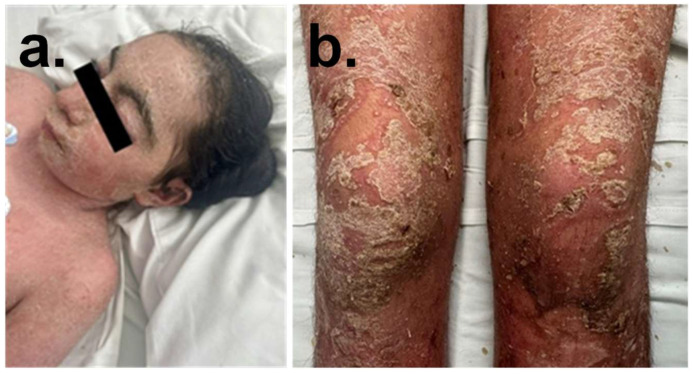 Figure 1
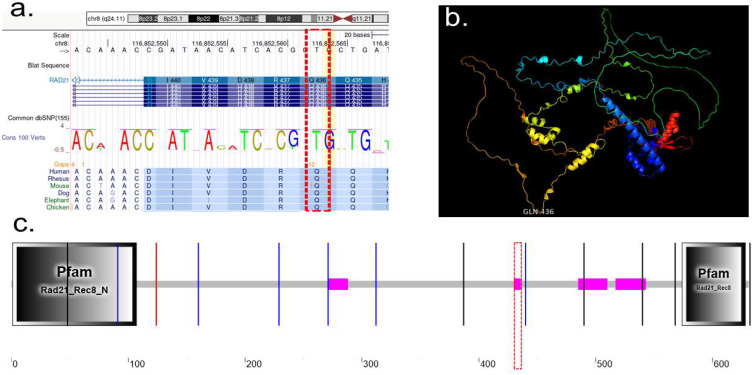 Figure 2
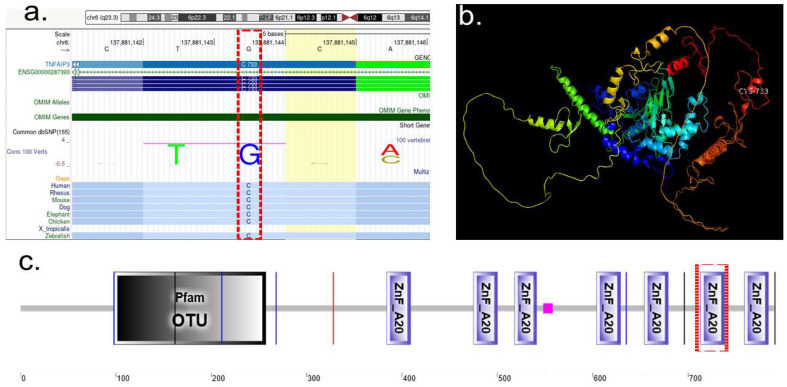 Figure 3
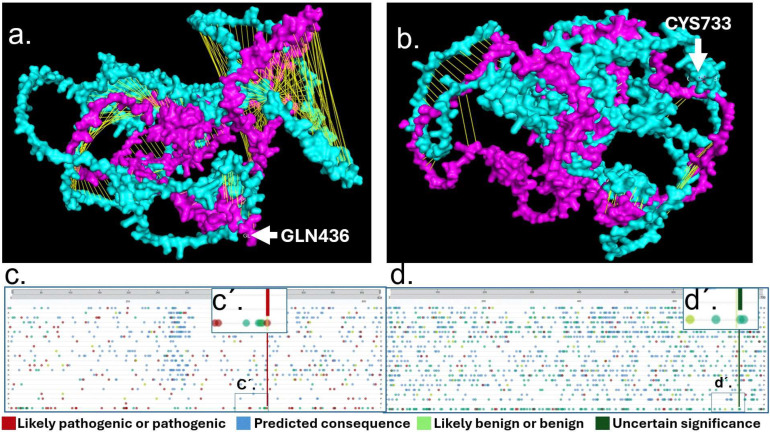 Figure 4
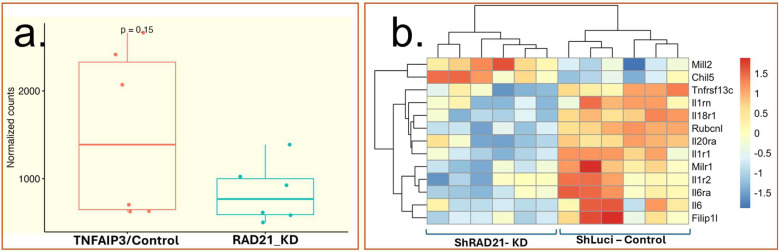 Figure 5
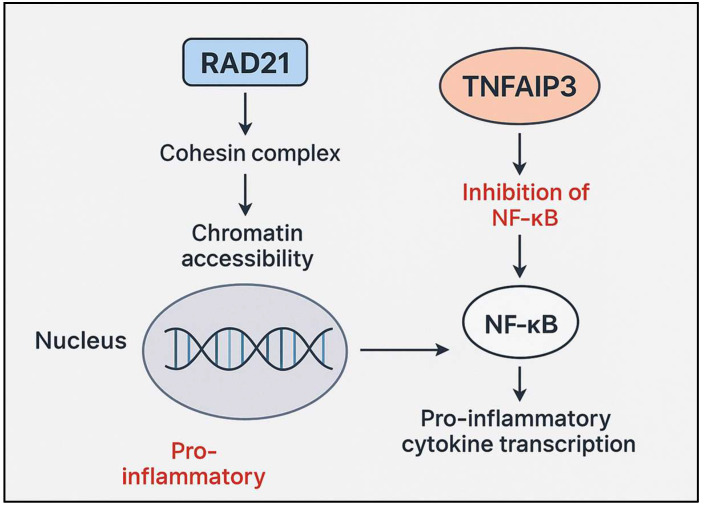 Figure 6
Peer Reviews
No public reviews on file for this paper yet. If you reviewed it on a platform where reviews are public (OpenReview, ICLR, NeurIPS, ICML), you can paste yours below so the community can read it here.
Videos
No videos yet. Explain this paper in a talk, walkthrough, or lecture? Add one.
Taxonomy
TopicsSkin and Cellular Biology Research · Genetic Syndromes and Imprinting · Genomics and Chromatin Dynamics