Novel Halolactones Derived from Vanillin: Design, Synthesis, Structural Characterization, and Evaluation of Antiproliferative and Hemolytic Activities
Anna Dunal, Witold Gładkowski, Ewa Dejnaka, Joanna Sulecka-Zadka, Aleksandra Pawlak, Aleksandra Włoch, Hanna Pruchnik, Gabriela Maciejewska

TL;DR
Scientists designed and tested new vanillin-derived compounds that show promise as anticancer agents with low toxicity.
Contribution
A novel class of halolactones derived from vanillin was synthesized and evaluated for anticancer activity and low toxicity.
Findings
Trans-δ-iodo-γ-lactone showed the highest antiproliferative activity against CLBL-1 and T-24 cancer cells.
All compounds showed no toxicity to normal fibroblasts and no hemolytic effects on red blood cells.
The compounds demonstrated favorable selectivity for cancer cells over normal cells.
Abstract
A series of novel γ-halo-δ-lactones and δ-halo-γ-lactones bearing a phenolic ring at the β-position were synthesized from vanillin. The divergent seven-step synthetic route commenced with the benzyl protection of the hydroxy group of the starting material, followed by a four-step transformation that led to the corresponding β-aryl-γ,δ-unsaturated carboxylic acids. Subsequent halolactonization (iodo-, bromo-, and chlorolactonization), followed by selective benzyl deprotection, gave the target halolactones. The structures of all intermediates and final lactones were confirmed by comprehensive spectroscopic analyses, including NMR and HRMS. The resulting halolactones were evaluated for antiproliferative activity against two canine (CLBL-1, CLB70) and two human (T-24, CaCo-2) cancer cell lines, as well as non-cancerous mouse embryonic fibroblasts (NIH/3T3). Hemolytic assays were performed…
Genes, proteins, chemicals, diseases, species, mutations and cell lines named across the full text — each resolved to its canonical identifier and authoritative record.
Click any figure to enlarge with its caption.
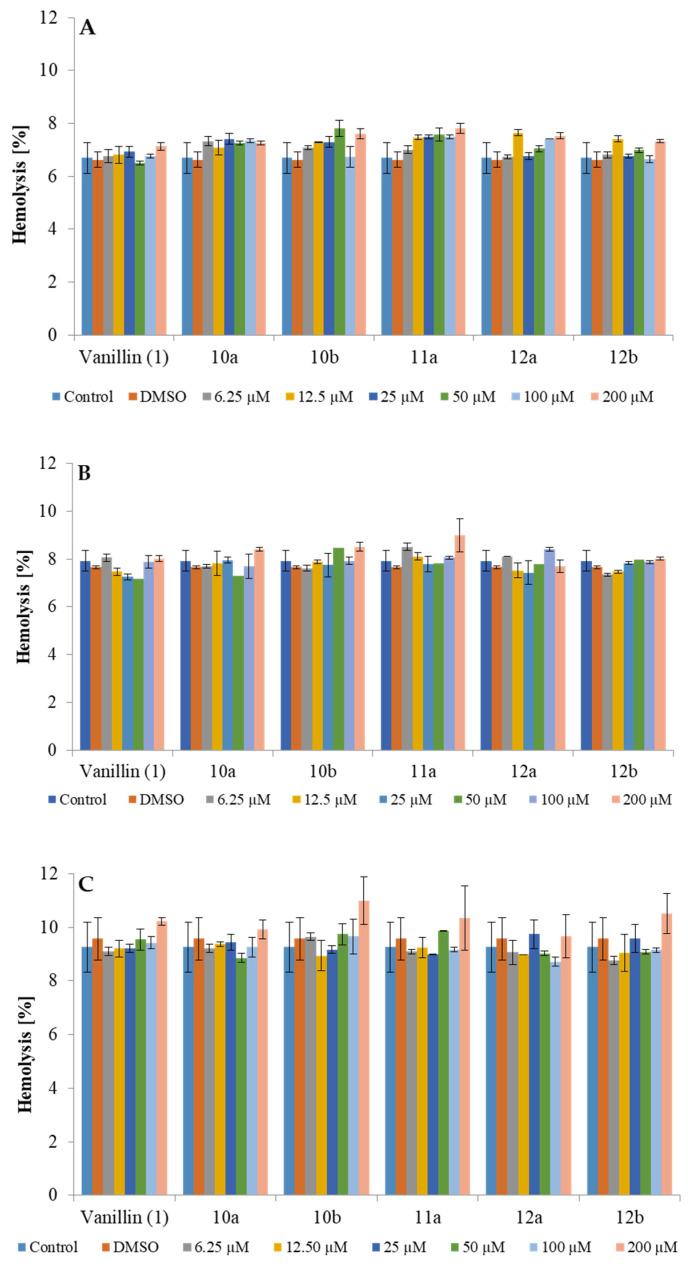 Figure 1
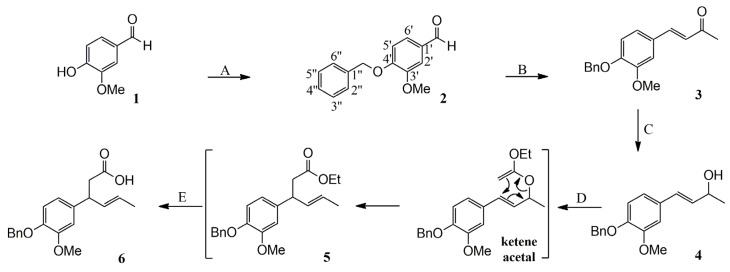 Figure 2
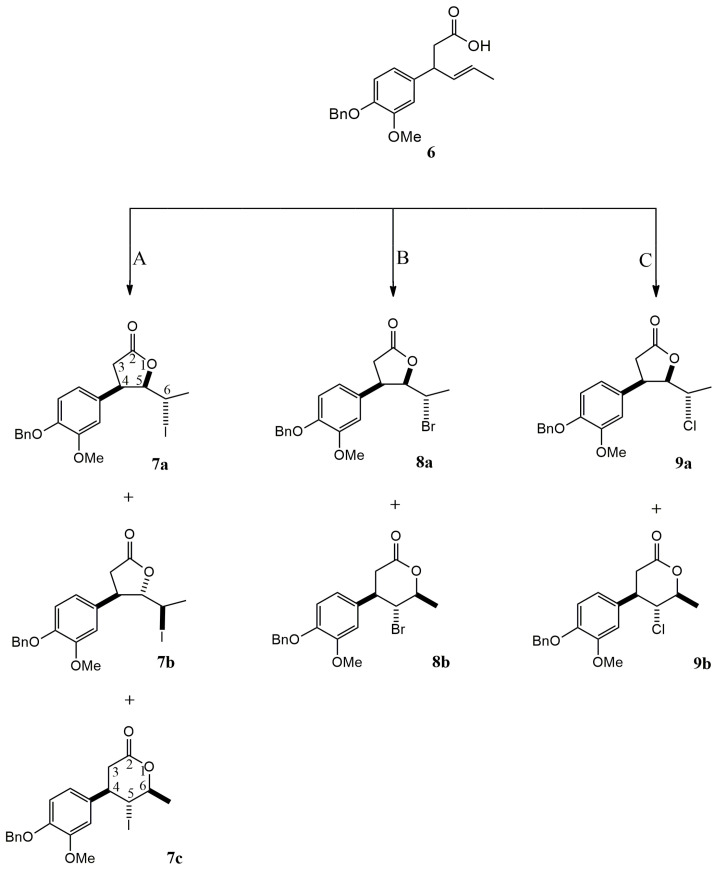 Figure 3
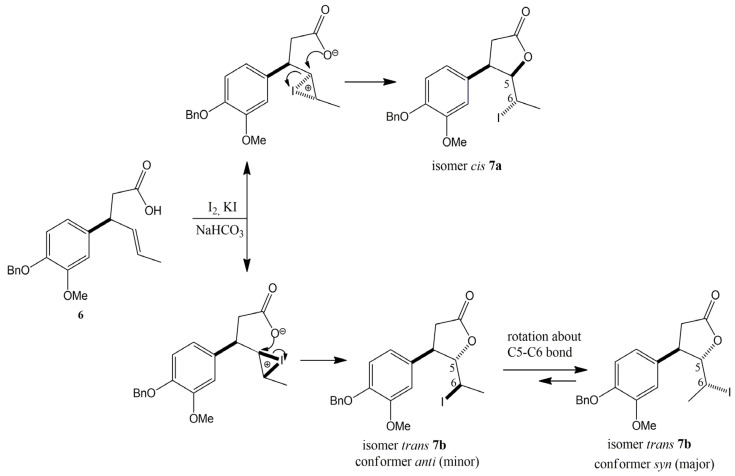 Figure 4
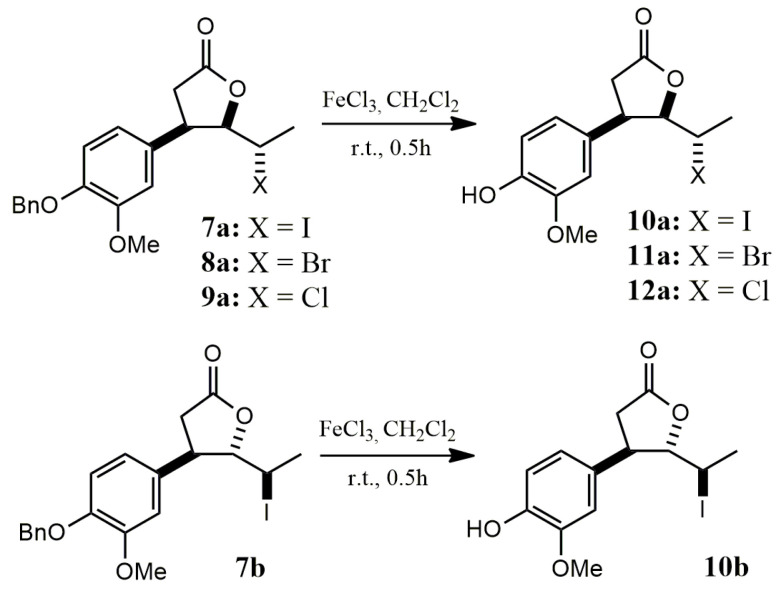 Figure 5
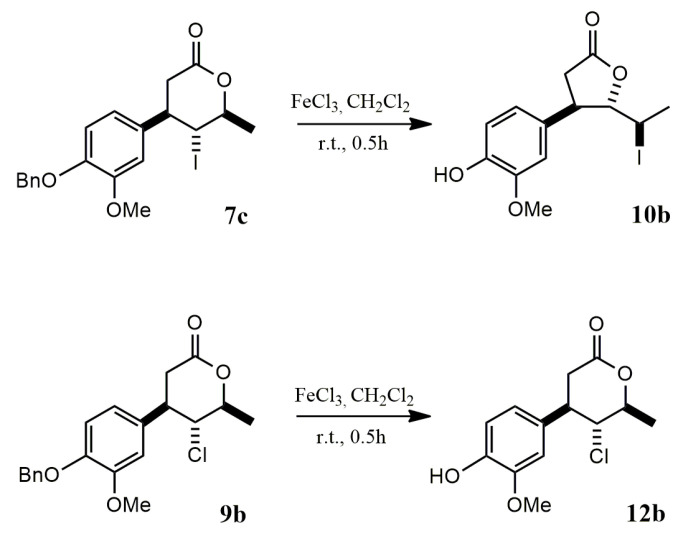 Figure 6
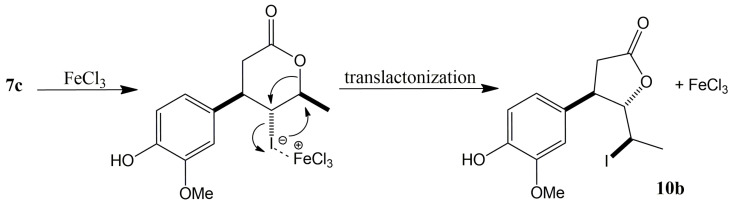 Figure 7
Peer Reviews
No public reviews on file for this paper yet. If you reviewed it on a platform where reviews are public (OpenReview, ICLR, NeurIPS, ICML), you can paste yours below so the community can read it here.
Videos
No videos yet. Explain this paper in a talk, walkthrough, or lecture? Add one.
Taxonomy
TopicsBiochemical and biochemical processes · Sesquiterpenes and Asteraceae Studies · Plant-derived Lignans Synthesis and Bioactivity