Optimum Patient’s Selection for Atrial Fibrillation Ablation Using Echocardiography
Matteo Cameli, Maria Concetta Pastore, Francesco Morrone, Giulia Elena Mandoli, Giovanni Benfari, Federica Ilardi, Matteo Lisi, Alessandro Malagoli, Simona Sperlongano, Ciro Santoro, Andrea Stefanini, Elena Placuzzi, Annalisa Pasquini, Miriam Durante, Aleksander Dokollari

TL;DR
This paper reviews how echocardiographic parameters and emerging factors can help select patients for atrial fibrillation ablation to reduce recurrence risks.
Contribution
The paper systematically reviews echocardiographic and emerging clinical/biochemical predictors for AF recurrence after ablation.
Findings
Echocardiographic parameters like left atrial size and myocardial deformation are key predictors of AF recurrence.
Longstanding persistent AF has higher recurrence rates compared to paroxysmal AF.
Novel biomarkers like MR-proANP and hsa-miR-206 may improve risk prediction for AF recurrence.
Abstract
Catheter ablation (CA) has become a validated technique for treating patients with symptomatic or paroxysmal atrial fibrillation (AF), as recommended by the latest 2024 European society of cardiology (ESC) guidelines, class II level A. The procedure is also recommended for patients with persistent AF without major risk factors for AF recurrence, as an alternative to antiarrhythmic medications class I or III. However, CA carries the risk of AF recurrence in 30–35% of patients, sometimes after the procedure. Multiple factors impact the onset, maintenance, and recurrence of AF after CA, including clinical, biohumoral, echocardiographic, genetic, and lifestyle factors. Beyond traditional predictors, emerging factors such as obstructive sleep apnea syndrome, chronic renal failure, chronic lung disease, physical activity patterns, gut microbiota composition, and epicardial fat thickness…
Genes, proteins, chemicals, diseases, species, mutations and cell lines named across the full text — each resolved to its canonical identifier and authoritative record.
Click any figure to enlarge with its caption.
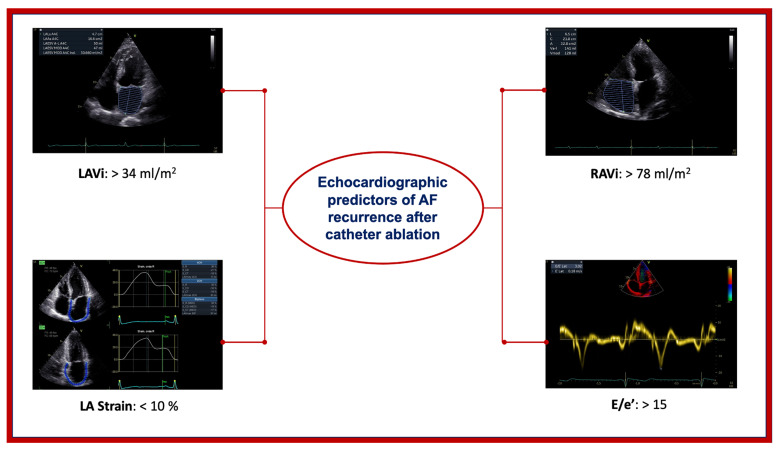 Figure 1
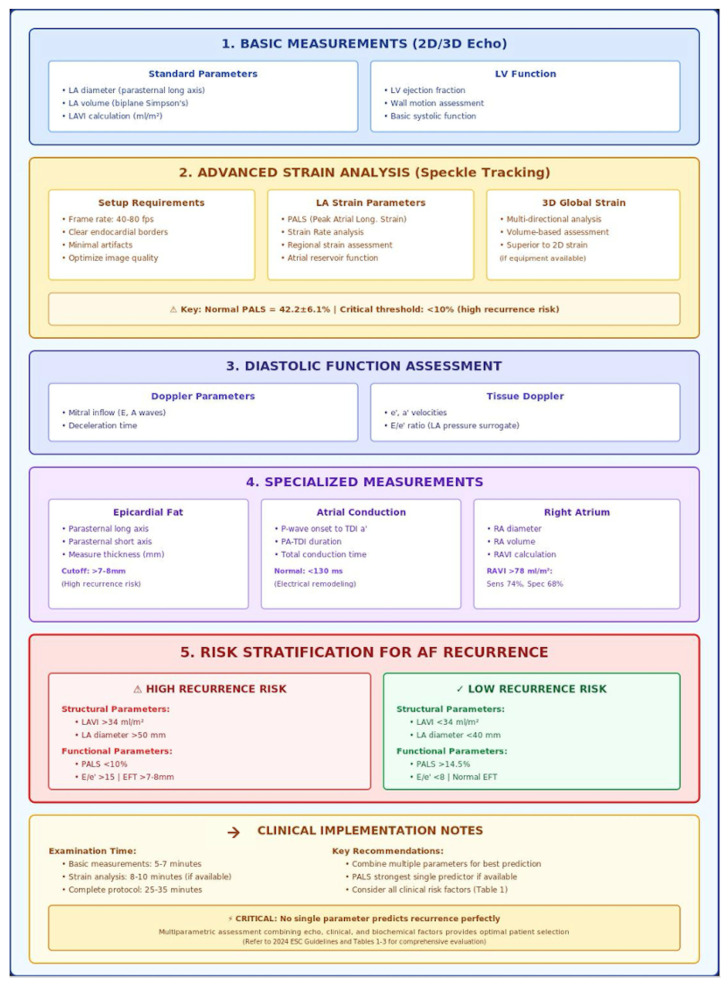 Figure 2
Peer Reviews
No public reviews on file for this paper yet. If you reviewed it on a platform where reviews are public (OpenReview, ICLR, NeurIPS, ICML), you can paste yours below so the community can read it here.
Videos
No videos yet. Explain this paper in a talk, walkthrough, or lecture? Add one.
Taxonomy
TopicsAtrial Fibrillation Management and Outcomes · Cardiovascular Disease and Adiposity · Cardiac Arrhythmias and Treatments