Sapotaceae Family Fruits from Central America: Botanical, Phytochemical and Nutraceutical Insights—A Review
Zaira Guadalupe Ibarra-Manzanares, Alayla Guadalupe Ibarra-Manzanares, Lluvia de Abril Alexandra Soriano-Melgar, Martha Monzerrath Orozco-Sifuentes, Jesús Andrés Salas-Tovar, Sarahí del Carmen Rangel-Ortega, Raúl Rodríguez-Herrera

TL;DR
This review explores the botanical, chemical, and health benefits of Sapotaceae family fruits in Central America, highlighting their potential for functional foods and medicine.
Contribution
The paper provides a comprehensive review of the phytochemical and nutraceutical potential of underutilized Sapotaceae fruits in Central America.
Findings
Sapotaceae fruits contain secondary metabolites like phenolics and carotenoids linked to health benefits.
Traditional uses and recent scientific studies suggest potential for functional products and therapeutic applications.
The review identifies opportunities for sustainable use and development of these species.
Abstract
The Sapotaceae family includes various fruit species of ecological, economic, and nutritional importance, among which Pouteria sapota (mamey sapote), Manilkara zapota (zapote chico), Pouteria campechiana (canistel), and Pouteria viridis (zapote verde) stand out, widely distributed throughout Mesoamerica. These species have traditionally been used as a source of food, natural medicine, and other products of cultural value. In recent decades, there has been growing scientific interest in studying their phytochemical composition, which has led to the identification of important secondary metabolites such as phenolic compounds, carotenoids, flavonoids, and triterpenes, associated with beneficial health effects. This article summarizes and analyzes the available information on their diversity, traditional use, chemical composition, and biological activities. It also highlights research…
Genes, proteins, chemicals, diseases, species, mutations and cell lines named across the full text — each resolved to its canonical identifier and authoritative record.
Click any figure to enlarge with its caption.
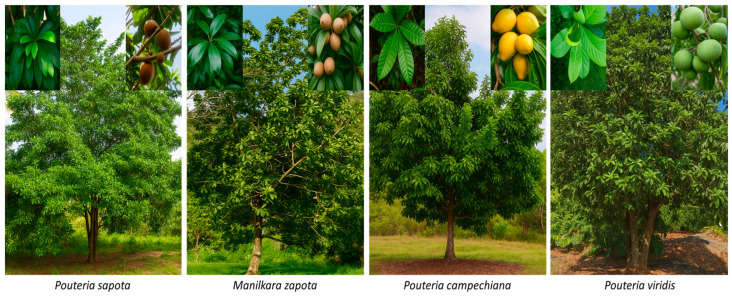 Figure 1
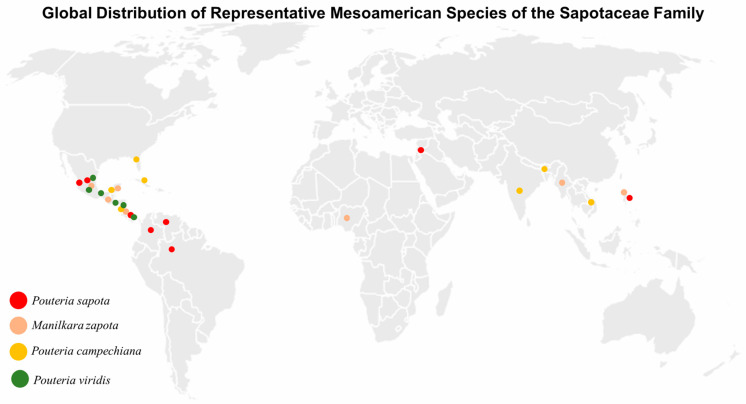 Figure 2
 Figure 3
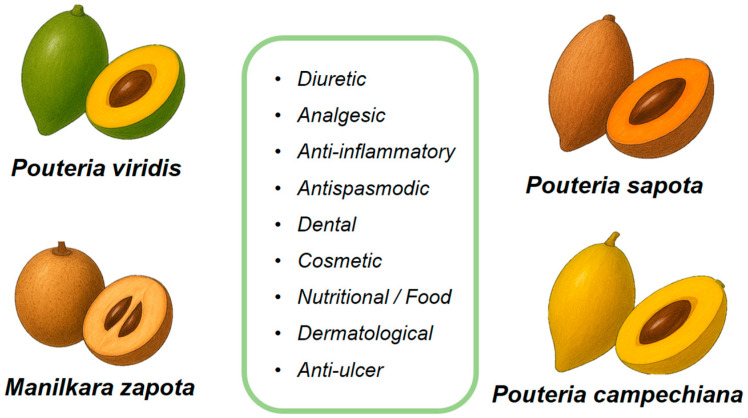 Figure 4
Peer Reviews
No public reviews on file for this paper yet. If you reviewed it on a platform where reviews are public (OpenReview, ICLR, NeurIPS, ICML), you can paste yours below so the community can read it here.
Videos
No videos yet. Explain this paper in a talk, walkthrough, or lecture? Add one.
Taxonomy
TopicsPhytochemistry Medicinal Plant Applications · Natural Compound Pharmacology Studies · Sesquiterpenes and Asteraceae Studies