Subscapularis Partial Thickness Tears by Yoo and Rhee Classification: Identifying MRI Predictors for Type IIB, Requiring Surgical Repair
Yoonsang Lee, Seul Ki Lee, Jee-Young Kim

TL;DR
This study identifies MRI features that help predict which subscapularis tendon tears require surgery based on a new classification system.
Contribution
The study introduces a novel MRI-based classification for subscapularis tendon tears and identifies predictors for surgical intervention.
Findings
Muscle atrophy and LHBT subluxation were strong predictors for Yoo type IIB tears requiring surgery.
MRI findings like fatty infiltration and lesser tuberosity cysts differed significantly between tear types.
Age was significantly higher in patients with Yoo type IIB tears compared to other types.
Abstract
Objectives: This study aimed to assess the significance of a novel subclassification for partial thickness tears of the subscapularis tendon (SSC) by Yoo and Rhee and to identify key MRI findings predictive of the newly adopted surgical indicator (Yoo type IIB). Methods: Between June 2021 and January 2024, 190 patients undergoing preoperative MRI and arthroscopic rotator cuff repair were enrolled. Patients with arthroscopically confirmed Lafosse type 1 tears (n = 148) who underwent debridement were included. Preoperative MRIs were retrospectively evaluated for SSC tear according to Yoo and Rhee classification, muscle atrophy, fatty infiltration, lesser tuberosity cyst, and long head of the biceps (LHBT) pathologies. Patients were divided into the control (Yoo type I + IIA) and study (Yoo type IIB) groups, and significant associations of MRI findings between the groups were investigated.…
Genes, proteins, chemicals, diseases, species, mutations and cell lines named across the full text — each resolved to its canonical identifier and authoritative record.
Click any figure to enlarge with its caption.
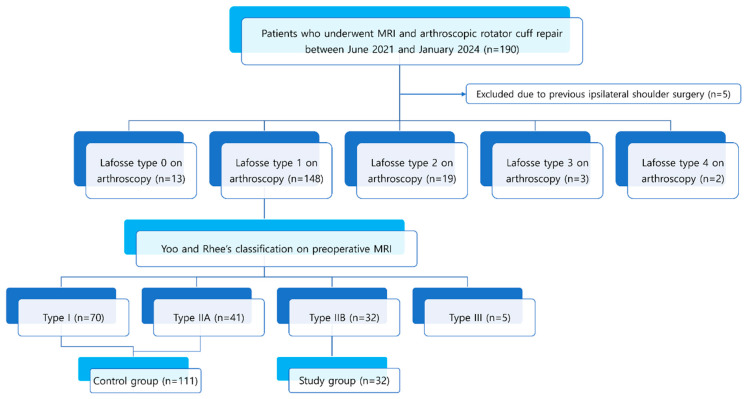 Figure 1
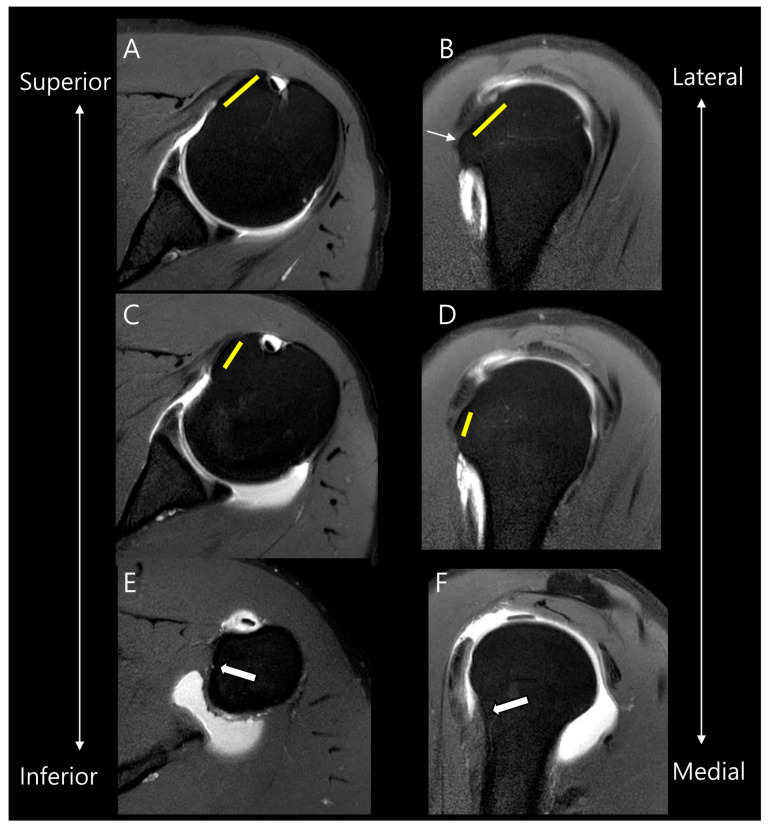 Figure 2
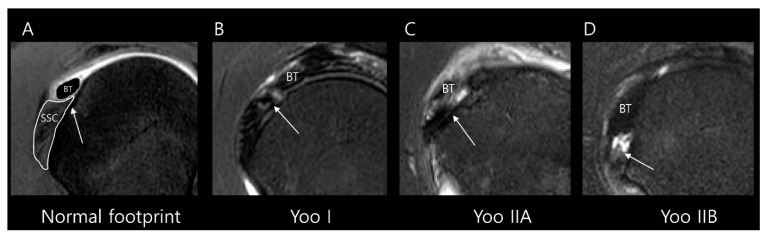 Figure 3
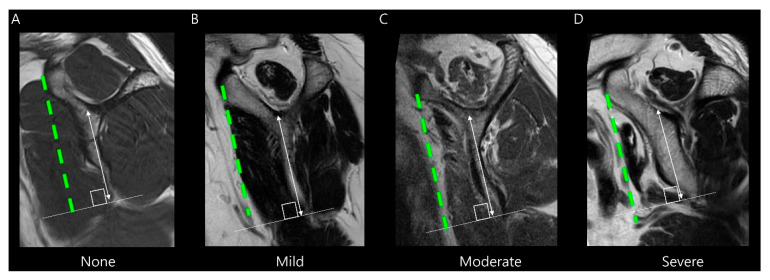 Figure 4
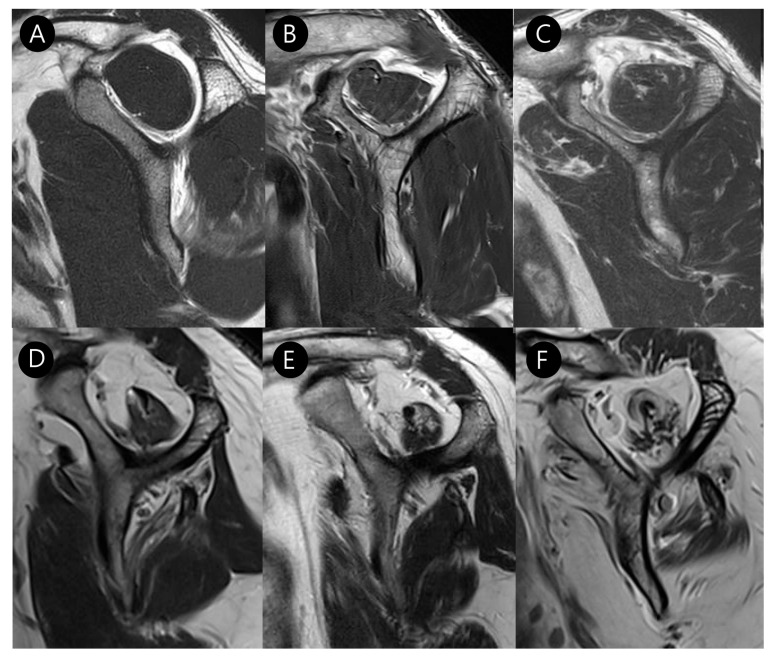 Figure 5
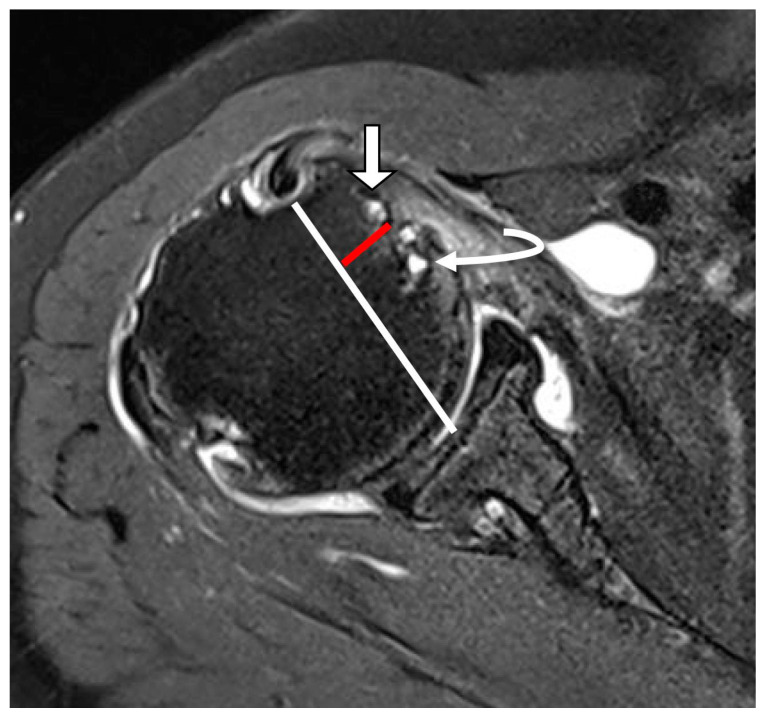 Figure 6
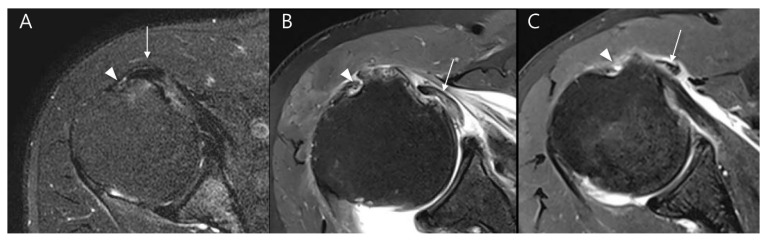 Figure 7
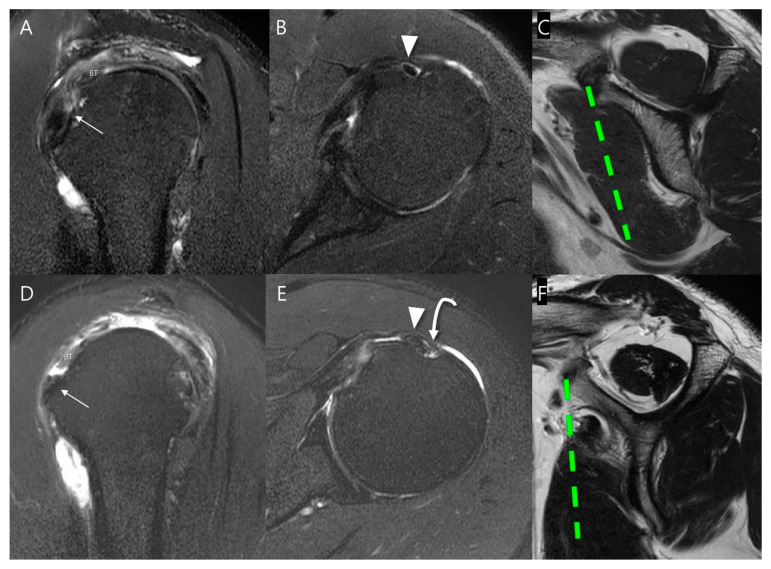 Figure 8
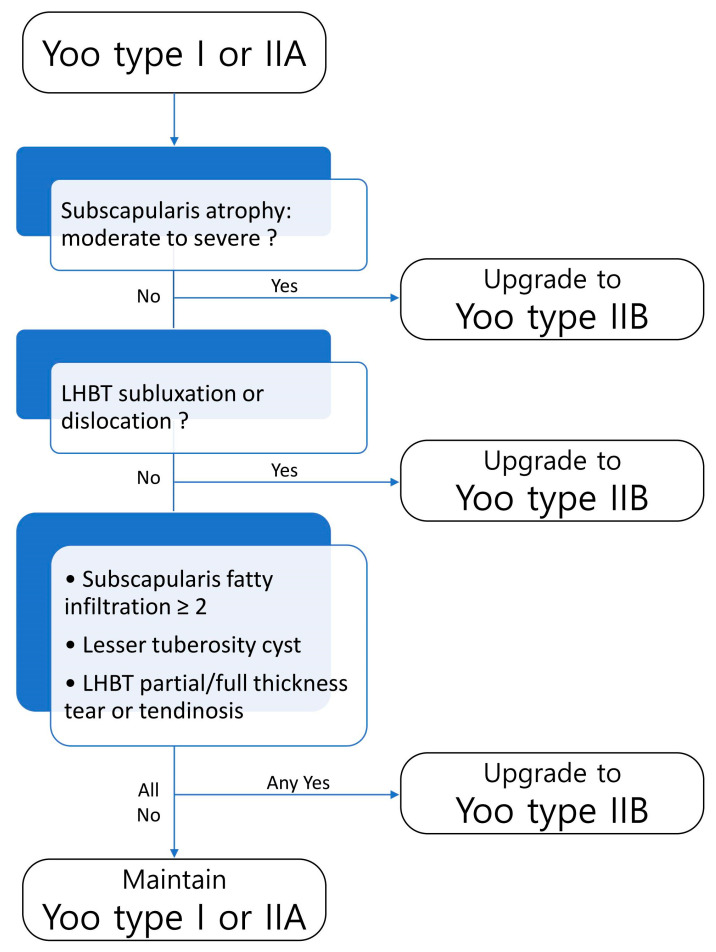 Figure 9
Peer Reviews
No public reviews on file for this paper yet. If you reviewed it on a platform where reviews are public (OpenReview, ICLR, NeurIPS, ICML), you can paste yours below so the community can read it here.
Videos
No videos yet. Explain this paper in a talk, walkthrough, or lecture? Add one.
Taxonomy
TopicsShoulder Injury and Treatment · Shoulder and Clavicle Injuries · Hip disorders and treatments