Dysferlin and the Regulation of Ca2+ Release in Skeletal Muscle
Robert J. Bloch, Joaquin Muriel, Valeriy Lukyanenko

TL;DR
This paper explores how dysferlin regulates calcium in muscle cells and how its absence causes muscle disease.
Contribution
The paper proposes that dysferlin prevents calcium leaks, which could lead to new treatments for LGMD R2.
Findings
Dysferlin helps control calcium at the triad junction in muscle cells.
Loss of dysferlin increases calcium leaks and causes abnormal calcium waves.
Reducing calcium leaks may be a potential therapy for LGMD R2.
Abstract
Dysferlin is a large transmembrane protein that is mutated or absent in Limb Girdle Muscular Dystrophy Type R2 (LGMD R2). Although it may have several functions in healthy skeletal muscle, most research on dysferlin has addressed its roles in repair of the sarcolemma and in maintaining proper control of Ca2+ homeostasis at the triad junction, where it concentrates. Here, we review the literature on the role of dysferlin in both membrane repair and in Ca2+ homeostasis, with a focus on the latter. We propose that pathophysiology in LGMD R2 is in part the result of increased leak of Ca2+ at the triad junction, which in turn reduces the amplitude of Ca2+ transients and, by activating Ca2+-induced Ca2+ release, or CICR, at the triad junction, induces Ca2+ waves. We discuss the mechanisms that regulate Ca2+ leak and Ca2+ levels at the triad junction under physiological and pathophysiological…
Genes, proteins, chemicals, diseases, species, mutations and cell lines named across the full text — each resolved to its canonical identifier and authoritative record.
Click any figure to enlarge with its caption.
 Figure 1
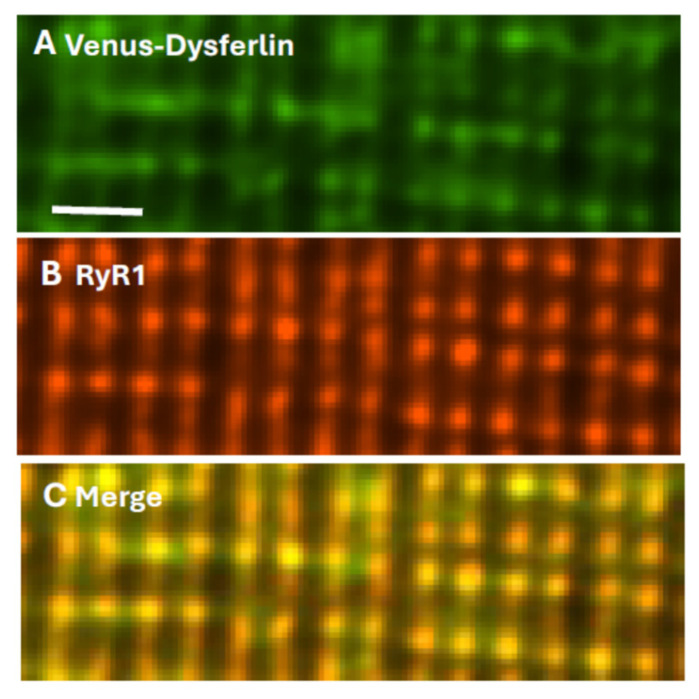 Figure 2
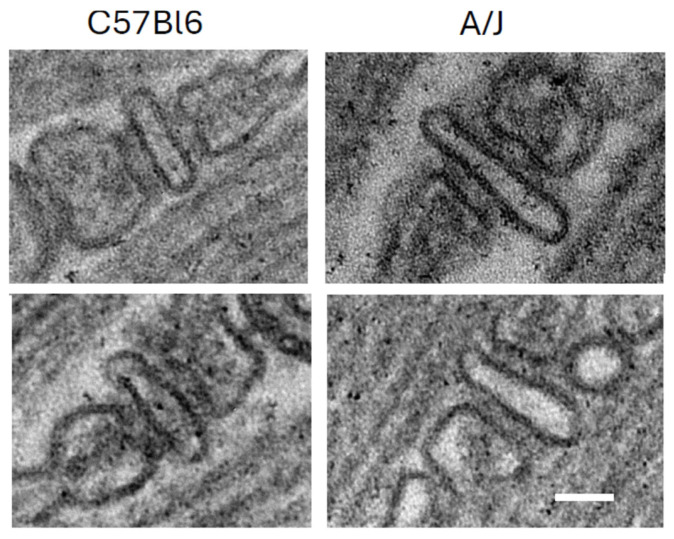 Figure 3
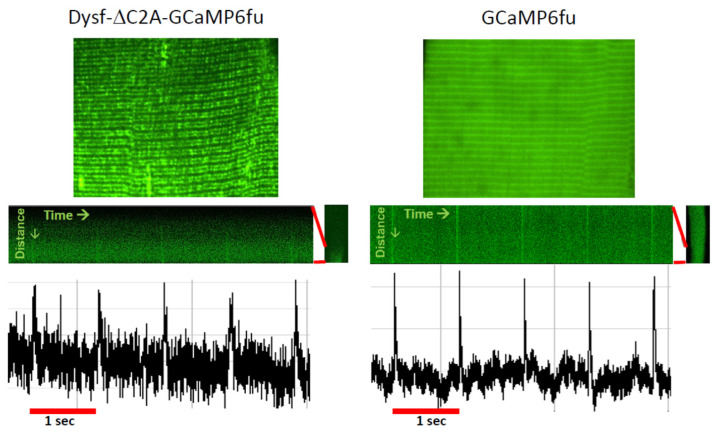 Figure 4
Peer Reviews
No public reviews on file for this paper yet. If you reviewed it on a platform where reviews are public (OpenReview, ICLR, NeurIPS, ICML), you can paste yours below so the community can read it here.
Videos
No videos yet. Explain this paper in a talk, walkthrough, or lecture? Add one.
Taxonomy
TopicsMuscle Physiology and Disorders · Ion channel regulation and function · Cardiomyopathy and Myosin Studies