Functional Trait Variability of Salicornia europaea L. Across Inland Saline Habitats: Integrating Shoot and Root Morphometrics with Soil Salinity and Trophic Status
Agnieszka Piernik, Nour Elhouda Gargouri, Piotr Hulisz, Ahmad Rajabi Dehnavi, Stefany Cárdenas Pérez

TL;DR
This study explores how different populations of Salicornia europaea adapt to salt stress and soil conditions, revealing distinct growth strategies useful for agriculture and environmental restoration.
Contribution
The study identifies population-specific adaptive strategies and soil-legacy effects in Salicornia europaea under varying salinity.
Findings
Inland populations of Salicornia europaea show heritable differences in shoot and root morphology under salt stress.
Soil composition significantly influences plant growth, with site-specific traits observed across four locations.
Optimal growth occurs at 200–400 mM NaCl, with some populations thriving at extreme salinity (1000 mM).
Abstract
Salicornia europaea is an extremely salt-tolerant annual halophyte. It occurs in coastal and inland saline habitats and is increasingly cultivated for food, nutraceuticals, and environmental remediation. This study examined whether inland populations from contrasting saline sites exhibit heritable differences in shoot and root morphology. Seeds from four isolated sites (Ciechocinek, Inowrocław, Salzgraben, and Soltauquelle) were grown at 0, 200, 400, and 1000 mM NaCl, and morphometric traits were quantified from digital images. Corresponding soil samples were also analyzed. A strong relationship was found between population origin and responses to salt stress. Optimal growth generally occurred at 200–400 mM NaCl. Shoot canopy area consistently best discriminated among populations. Inowrocław and Salzgraben performed best under extreme salinity (1000 mM), whereas Ciechocinek showed the…
Genes, proteins, chemicals, diseases, species, mutations and cell lines named across the full text — each resolved to its canonical identifier and authoritative record.
Click any figure to enlarge with its caption.
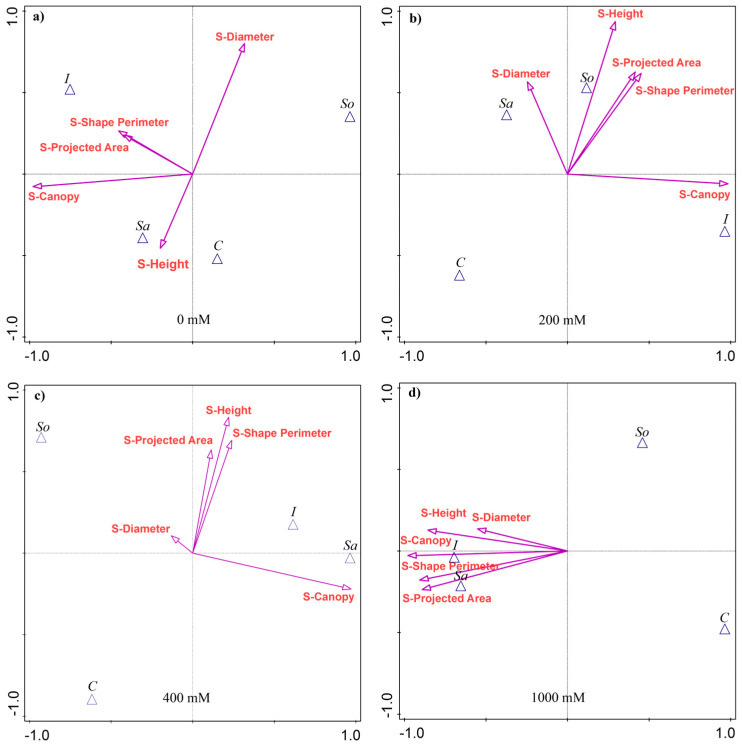 Figure 1
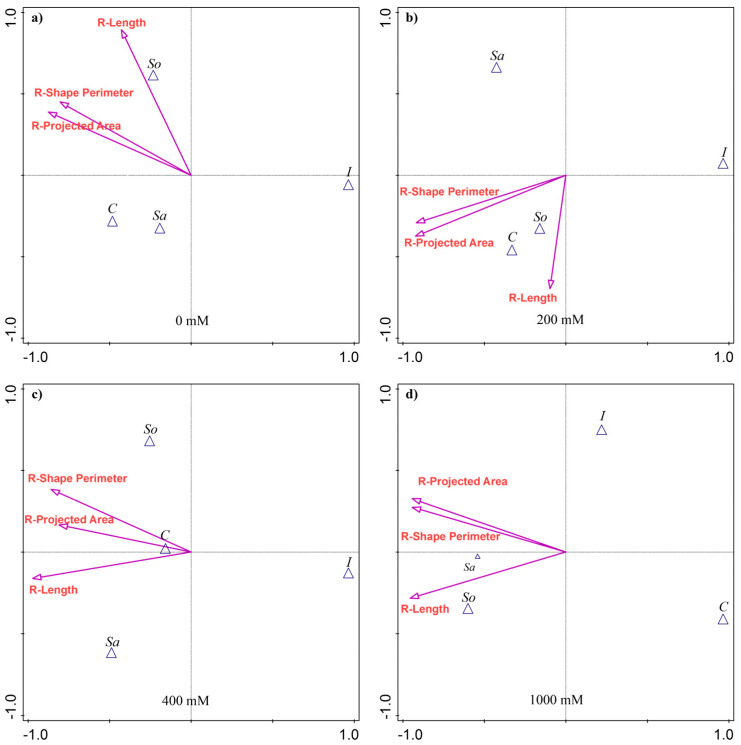 Figure 2
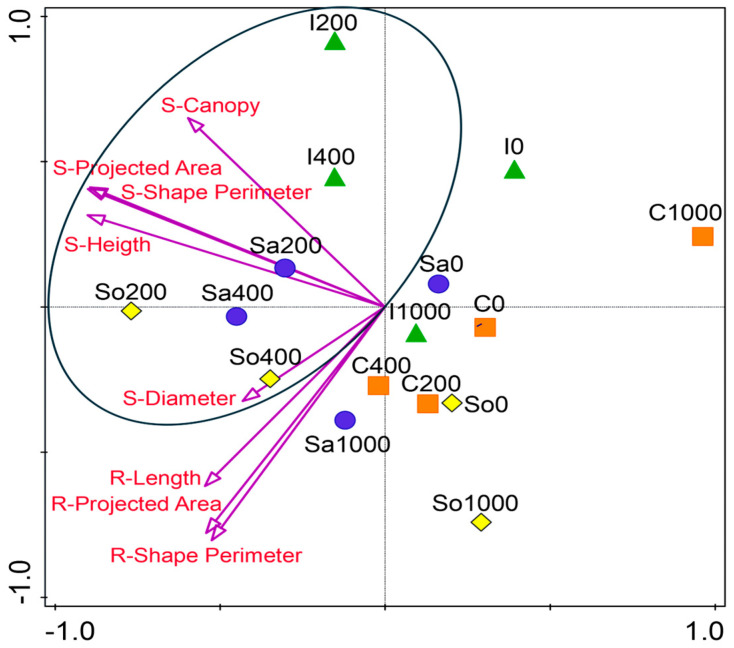 Figure 3
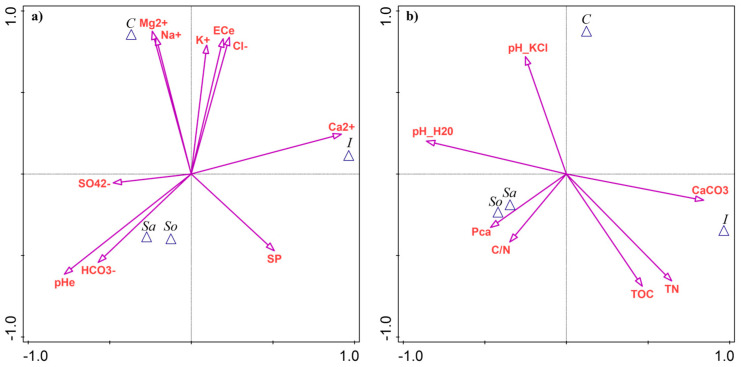 Figure 4
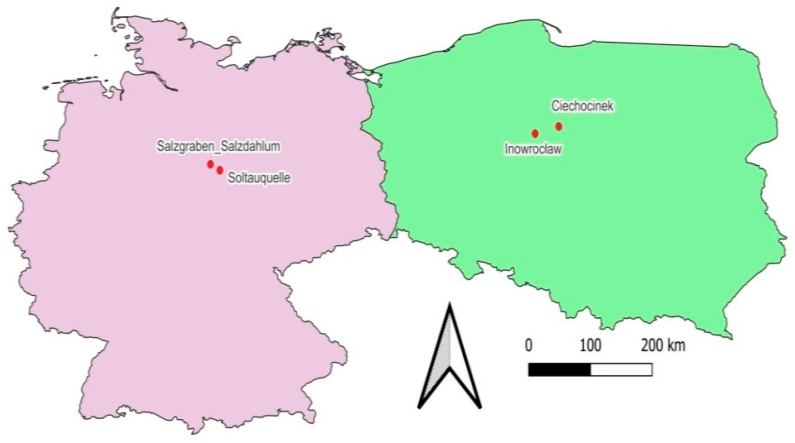 Figure 5
Peer Reviews
No public reviews on file for this paper yet. If you reviewed it on a platform where reviews are public (OpenReview, ICLR, NeurIPS, ICML), you can paste yours below so the community can read it here.
Videos
No videos yet. Explain this paper in a talk, walkthrough, or lecture? Add one.
Taxonomy
TopicsPlant Stress Responses and Tolerance · Plant Gene Expression Analysis · Plant nutrient uptake and metabolism