Host-Dependent Phytochemical Profiles and Antioxidant and Hypoglycemic Activities of Mexican Mistletoe (Psittacanthus calyculatus) Organs
Zaida Ochoa-Cruz, Jorge Molina-Torres, Hortencia Gabriela Mena-Violante, Jeanette Guadalupe Cárdenas-Valdovinos, Mariana Villa-Santiago, María Valentina Angoa-Pérez

TL;DR
Mexican mistletoe's chemical makeup and health benefits depend on the host plant and organ, with freeze-drying boosting its medicinal potential.
Contribution
The study reveals host-specific phytochemical profiles and enhanced bioactivity in freeze-dried Mexican mistletoe organs.
Findings
Freeze-dried pericarps from Mimosa sp. showed high malvidin-3-O-glucoside and gallic acid levels.
Freeze-drying increased gallic acid concentration by 54% in Mimosa sp. pericarps.
Freeze-dried mistletoe organs exhibited strong antioxidant and hypoglycemic activities.
Abstract
Mexican mistletoe (Psittacanthus calyculatus) is an ecologically and pharmacologically relevant hemiparasitic plant whose phytochemical composition varies according to host, organ, and processing. This study analyzed the pericarp, flower, leaf, and peduncle in fresh and freeze-dried conditions. The samples were collected from Forestiera phillyreoides and Mimosa sp. High-performance thin-layer chromatography revealed the presence of malvidin-3-O-glucoside (27.43 ± 1.88 mg/g dry weight [DW]) in freeze-dried pericarps, cyanidin-3-O-glucoside (26.55 ± 1.19 mg/g DW) in freeze-dried flowers, and rutin (5.39 ± 1.24 mg/g DW) in freeze-dried leaves collected from Mimosa sp. Gas chromatography coupled with mass spectrometry (GC-MS) confirmed the presence of gallic acid (40.40 ± 0.228 mg/g DW in freeze-dried pericarps of Mimosa sp.), which was 42.9% higher than the amount found in F. phillyreoides…
Genes, proteins, chemicals, diseases, species, mutations and cell lines named across the full text — each resolved to its canonical identifier and authoritative record.
Click any figure to enlarge with its caption.
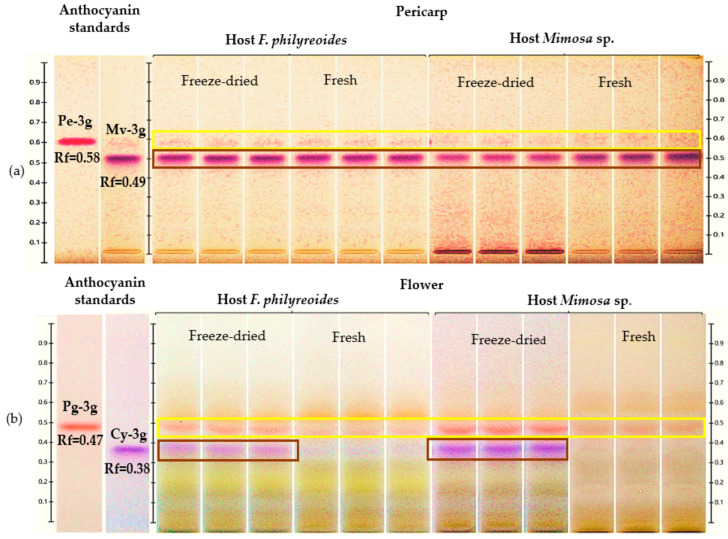 Figure 1
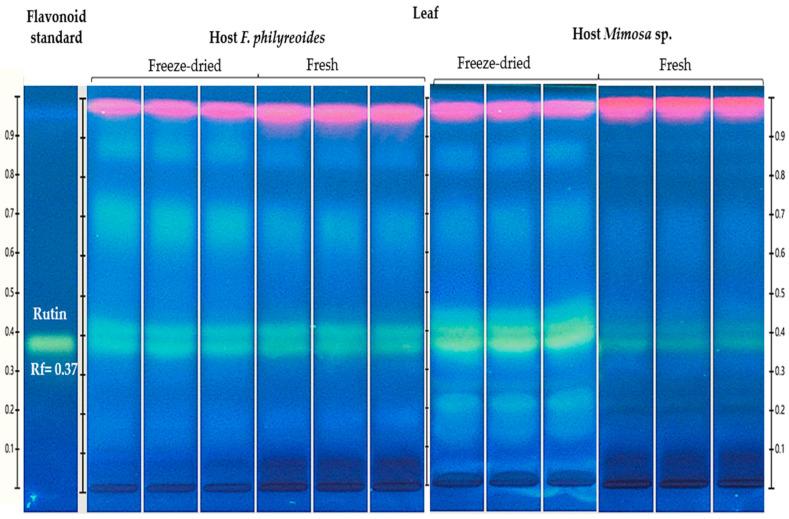 Figure 2
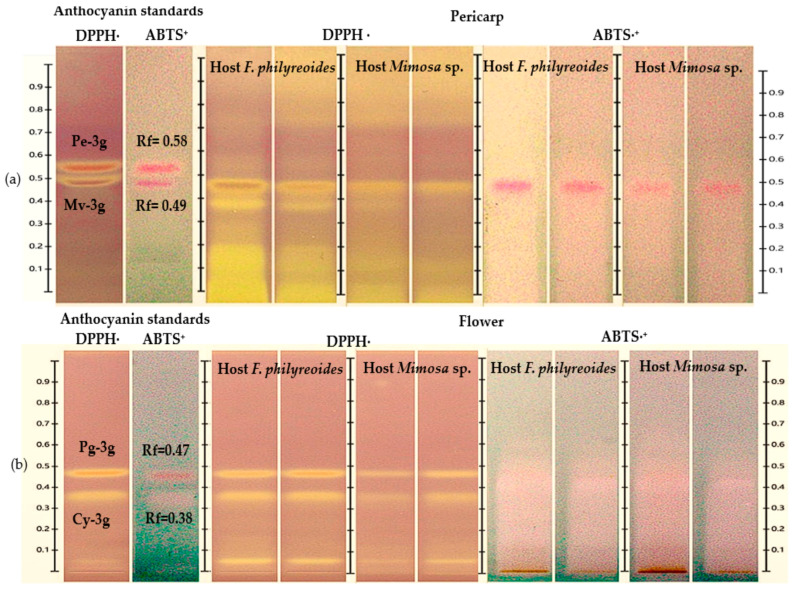 Figure 3
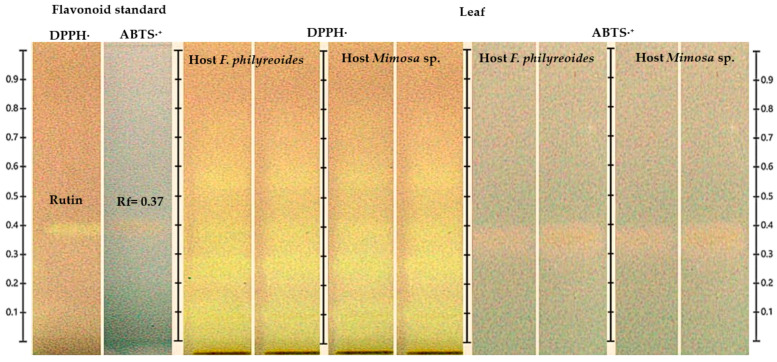 Figure 4
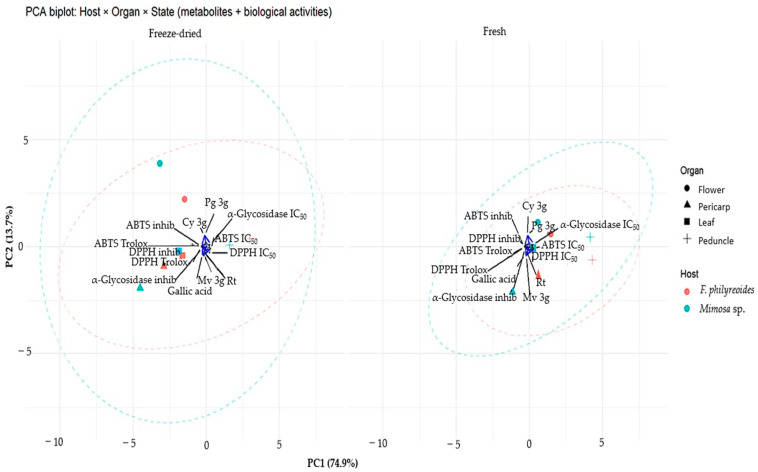 Figure 5
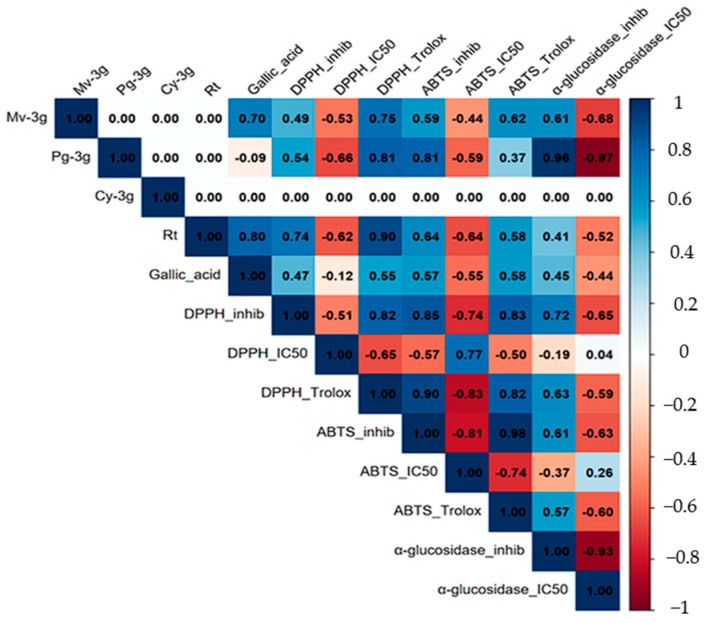 Figure 6
Peer Reviews
No public reviews on file for this paper yet. If you reviewed it on a platform where reviews are public (OpenReview, ICLR, NeurIPS, ICML), you can paste yours below so the community can read it here.
Videos
No videos yet. Explain this paper in a talk, walkthrough, or lecture? Add one.
Taxonomy
TopicsToxin Mechanisms and Immunotoxins · Plant Parasitism and Resistance · Phytochemistry and Biological Activities