Molecular Mimicry Between Toxoplasma gondii B-Cell Epitopes and Human Antigens Related to Schizophrenia: An In Silico Approach
Juan F. Cano, Maria Andrea Bernal-Valencia, Pablo Vargas-Acevedo, Germán Mejía-Salgado, Andrés Sánchez, Oscar Correa-Jiménez, Marlon Múnera, Alejandra de-la-Torre

TL;DR
This study explores how proteins from the Toxoplasma gondii parasite might resemble human proteins linked to schizophrenia, suggesting a possible immune-based mechanism for the disorder.
Contribution
The study identifies potential molecular mimicry between Toxoplasma gondii proteins and schizophrenia-related autoantigens using in silico methods.
Findings
Five schizophrenia-related autoantigens showed similarities with Toxoplasma gondii proteins.
Gamma-enolase (ENO2) exhibited the highest homology with T. gondii proteins, up to 65% identity.
Shared antigenic features suggest a possible autoimmune mechanism linking T. gondii infection to schizophrenia.
Abstract
Schizophrenia is a complex disorder influenced by genetic, neurobiological, and environmental factors, with increasing evidence implicating immune dysregulation. This study examined potential molecular mimicry between autoantigens associated with schizophrenia and proteins from Toxoplasma gondii, a parasite previously linked to the disorder. Amino acid sequences of schizophrenia-related autoantigens were retrieved from databases (AAgAtlas, PubMed), and homologous sequences were searched within the T. gondii proteome. Sequence identity was evaluated, and conserved B-cell epitopes were predicted using three-dimensional structures from the Protein Data Bank or models generated in Swiss-Model, followed by epitope mapping with ElliPro. Five autoantigens—gamma-enolase (ENO2), thyroid peroxidase (TPO), glutamic acid decarboxylase 65 kDa isoform (GAD65), serine/threonine-protein kinase 2…
Genes, proteins, chemicals, diseases, species, mutations and cell lines named across the full text — each resolved to its canonical identifier and authoritative record.
Click any figure to enlarge with its caption.
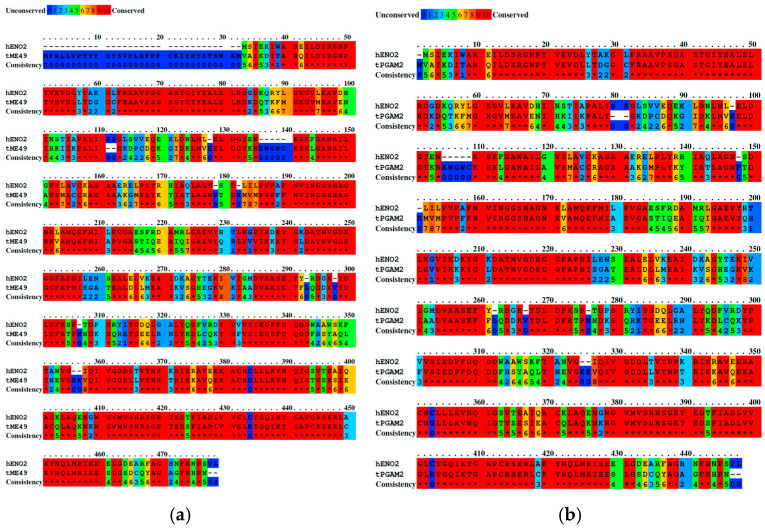 Figure 1
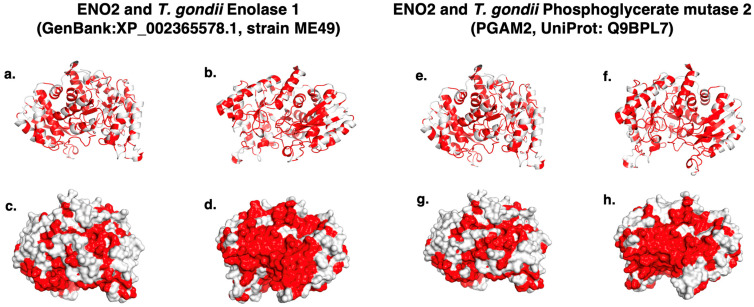 Figure 2
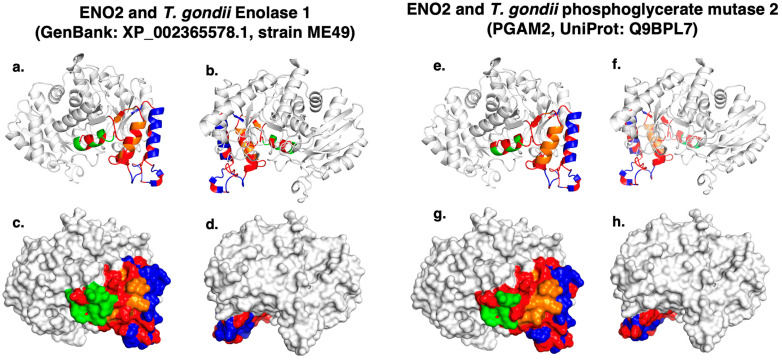 Figure 3
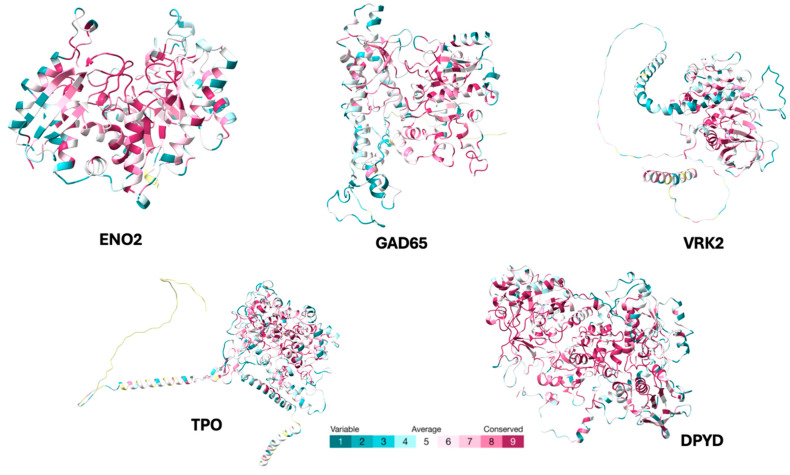 Figure 4
Peer Reviews
No public reviews on file for this paper yet. If you reviewed it on a platform where reviews are public (OpenReview, ICLR, NeurIPS, ICML), you can paste yours below so the community can read it here.
Videos
No videos yet. Explain this paper in a talk, walkthrough, or lecture? Add one.
Taxonomy
TopicsToxoplasma gondii Research Studies · HIV Research and Treatment · Influenza Virus Research Studies