Vegetative Propagation of Dictyota kunthii (Dictyotales, Phaeophyceae) Through Thallus Fragmentation and Ligulae: Potential Alternatives for Cultivation
Cristian Bulboa, Loretto Contreras-Porcia, Jean Pierre Remonsellez, Camila Mora, Kathya Gomez, Natalia Godoy, Cristian Agurto, Cristian Rogel

TL;DR
This study explores methods to cultivate the seaweed Dictyota kunthii, finding that ligulae are effective for growing new plantlets under specific conditions.
Contribution
The study identifies optimal conditions for ligulae-based propagation of D. kunthii, enabling scalable biomass production.
Findings
Thallus fragmentation did not result in viable growth or regeneration.
Ligulae developed successfully under various conditions, with enhanced growth under specific light, temperature, and nutrient conditions.
Optimal cultivation conditions include 17°C, 12:12 photoperiod, 65 µmol m−2 s−1 light, and Basfoliar® nutrients.
Abstract
The growing interest in the commercial exploitation of the bioactive components of Dictyota species, including Dictyota kunthii due to its antifungal activity and use in the development of innovative bioproducts, depends on the availability of biomass. In this context, the cultivation of this species emerges as a promising alternative. This study examined thallus fragmentation and ligulae development as methods to produce D. kunthii. Accordingly, thalli were divided into apical, middle, and basal sections to generate the respective tissue fragments, which were cultured under controlled conditions. On the other hand, ligulae development was studied under different conditions of photon flux density (10, 35 and 65 µmol m−2s−1); temperature (10, 17 °C); photoperiod (8:16, 12:12, 16:08 h [Light:Dark]), and seawater enrichment:Basfoliar®, Compo Expert, Krefeld, Germany and von Stosch…
Genes, proteins, chemicals, diseases, species, mutations and cell lines named across the full text — each resolved to its canonical identifier and authoritative record.
Click any figure to enlarge with its caption.
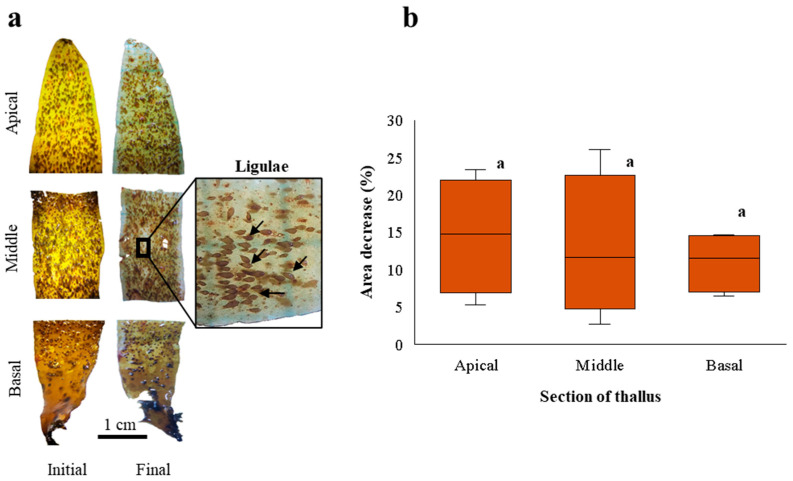 Figure 1
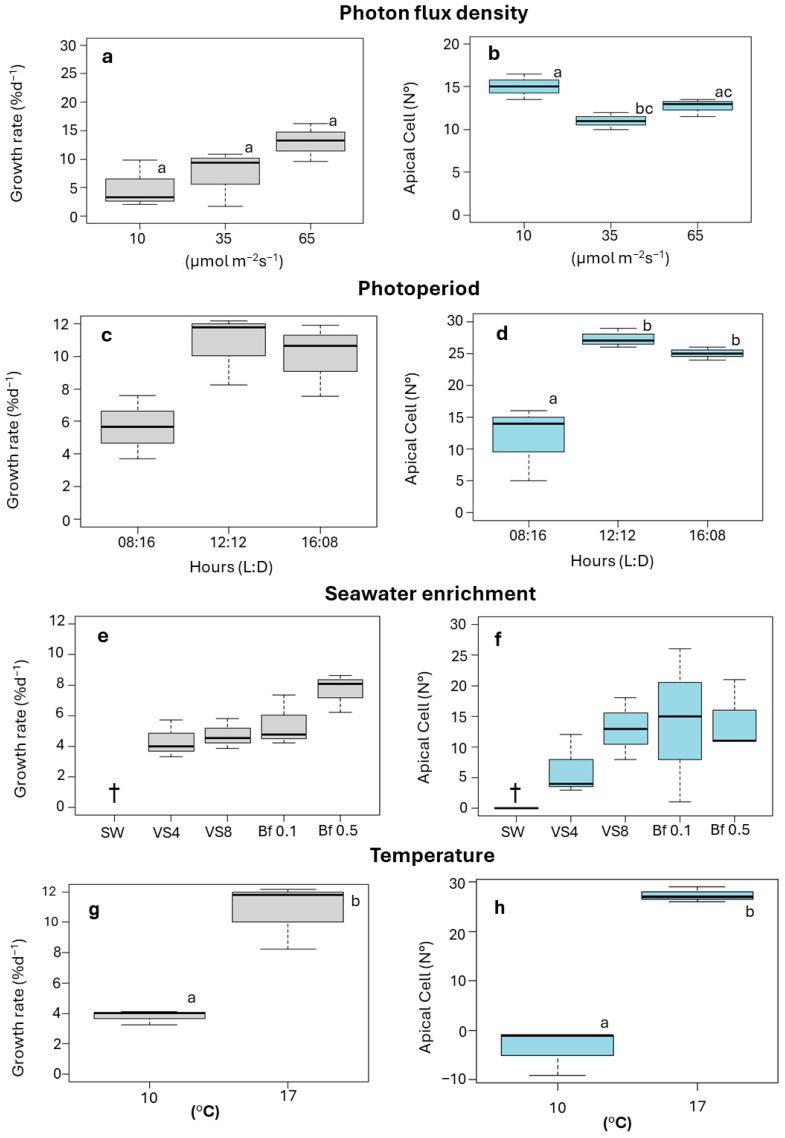 Figure 2
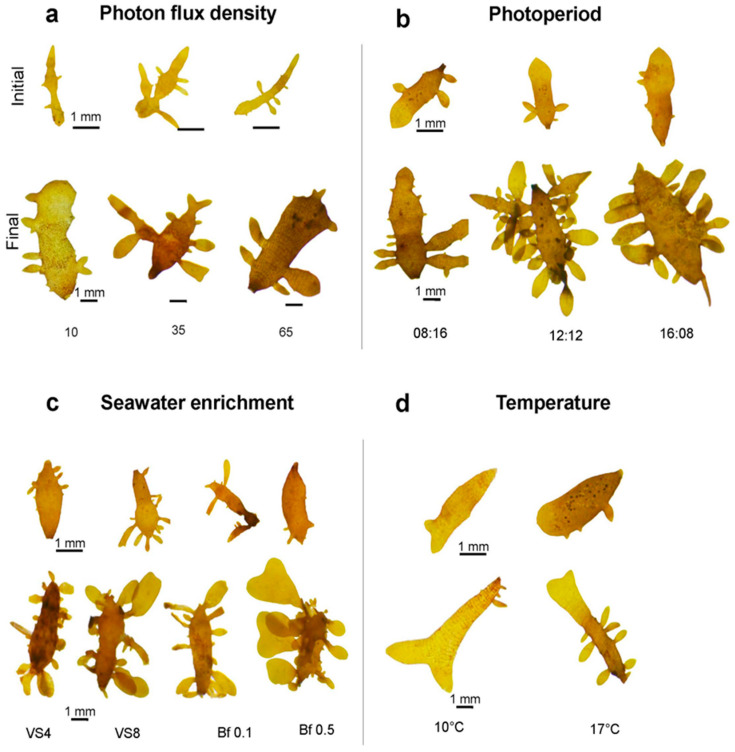 Figure 3
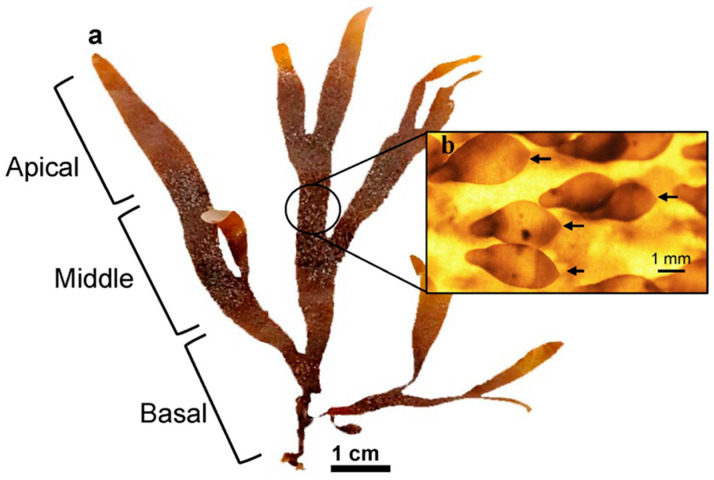 Figure 4
Peer Reviews
No public reviews on file for this paper yet. If you reviewed it on a platform where reviews are public (OpenReview, ICLR, NeurIPS, ICML), you can paste yours below so the community can read it here.
Videos
No videos yet. Explain this paper in a talk, walkthrough, or lecture? Add one.
Taxonomy
TopicsMarine and coastal plant biology · Seaweed-derived Bioactive Compounds · Polysaccharides and Plant Cell Walls