Venous Thromboembolism in Inherited Platelet Disorders: A Clinical Challenge
Francesco Paciullo, Patrizia Rovere-Querini, Loredana Bury, Emanuela Falcinelli, Paolo Gresele

TL;DR
This paper discusses the challenges of managing venous thromboembolism in patients with inherited platelet disorders.
Contribution
The paper provides a summary of current evidence on VTE incidence, risk factors, and management in inherited platelet disorders.
Findings
VTE risk is not abolished in inherited platelet disorder patients despite abnormal platelet function.
Managing VTE in these patients requires balancing thrombosis and bleeding risks.
The paper focuses on VTE prevention and treatment strategies in the perioperative setting.
Abstract
Inherited platelet disorders (IPDs) are rare hematological conditions characterized by abnormal platelet function or number, predisposing patients to bleeding. Even if they apparently lower the risk of venous thromboembolism (VTE), this is not abolished in these patients, and may represent a potential cause of mortality. VTE prevention and treatment in these patients is particularly challenging due to the delicate balance between thrombosis and bleeding risks. Here, we summarize current evidence on the incidence, risk factors, and management strategies for VTE in IPD patients, with a focus on the perioperative setting.
Genes, proteins, chemicals, diseases, species, mutations and cell lines named across the full text — each resolved to its canonical identifier and authoritative record.
Click any figure to enlarge with its caption.
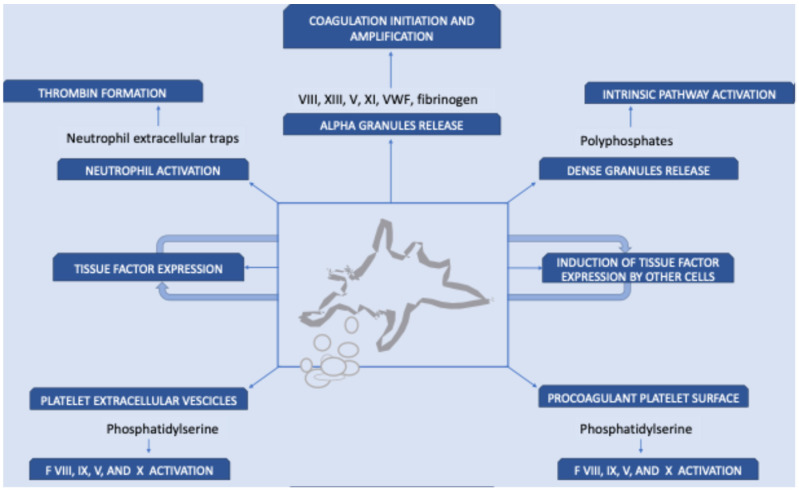 Figure 1
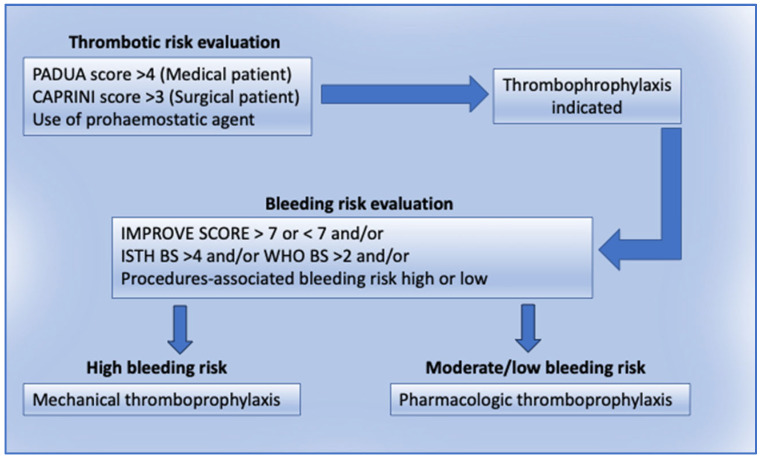 Figure 2
Peer Reviews
No public reviews on file for this paper yet. If you reviewed it on a platform where reviews are public (OpenReview, ICLR, NeurIPS, ICML), you can paste yours below so the community can read it here.
Videos
No videos yet. Explain this paper in a talk, walkthrough, or lecture? Add one.
Taxonomy
TopicsVenous Thromboembolism Diagnosis and Management · Platelet Disorders and Treatments · Blood Coagulation and Thrombosis Mechanisms