Conservation and Remodeling of Alternative Splicing Landscapes in the Evolution of Panax
Jing Zhao, Xiangru Meng, Peng Di, Junbo Rong, Hongwei Xun, Siwen Zheng, Juzuo Li, Jian Zhang, Ying-Ping Wang

TL;DR
This study explores how alternative splicing patterns evolved in five Panax species, revealing shifts in splicing types and conserved roles in RNA splicing and chromatin modification.
Contribution
The study identifies conserved and divergent alternative splicing events across Panax species, linking them to evolutionary adaptation and chromatin modification processes.
Findings
Panax species show an expansion of alternative splicing events with shifts from intron retention to exon skipping and alternative splice site events.
Allotetraploid Panax species exhibit more complex alternative splicing patterns compared to diploid species.
Conserved intron retention events are primarily associated with genes involved in chromatin modification and RNA splicing.
Abstract
Alternative splicing (AS) is a widely recognized post-transcriptional regulatory mechanism that plays a crucial role in plant evolution and environmental adaptation. In this study, five representative Panax species were systematically analyzed to examine the evolutionary conservation and functional characteristics of AS events. Results revealed an expansion in the number of AS events and associated genes across the Panax species, accompanied by a genome-wide shift in splicing types from a dominance of intron retention (IR) to an increase in exon skipping (ES), alternative donor (A5), and alternative acceptor (A3) events. Splicing preferences were also found to diverge among allotetraploid species, which exhibited more complex AS patterns. The genomic features of IR and ES events, such as GC content and length of the sequence involved in AS, were highly conserved among Panax species of…
Genes, proteins, chemicals, diseases, species, mutations and cell lines named across the full text — each resolved to its canonical identifier and authoritative record.
Click any figure to enlarge with its caption.
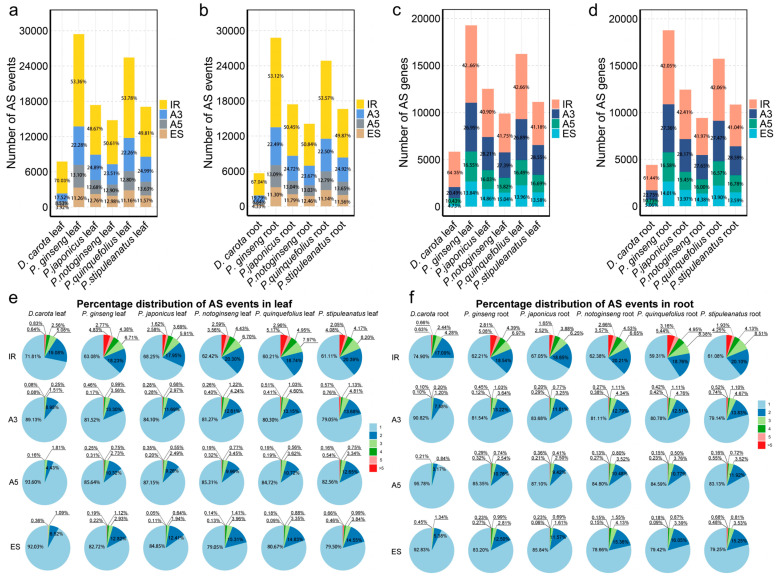 Figure 1
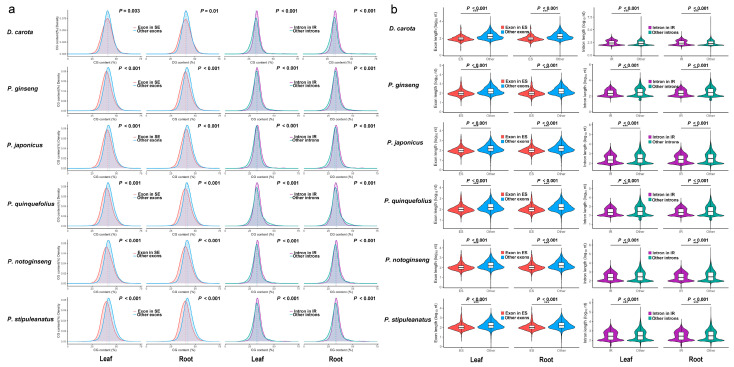 Figure 2
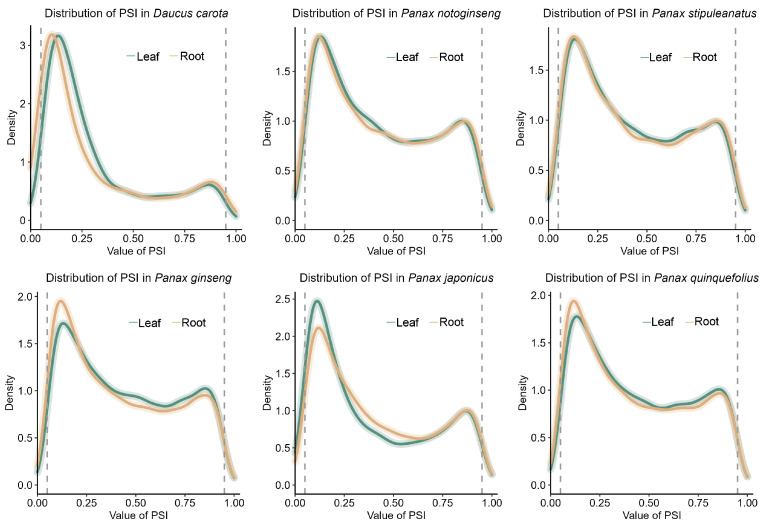 Figure 3
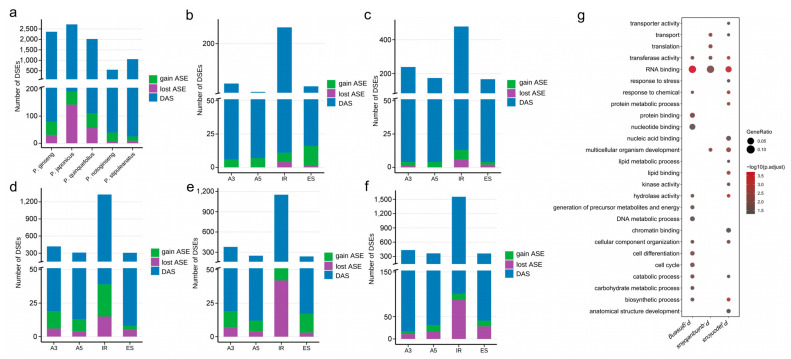 Figure 4
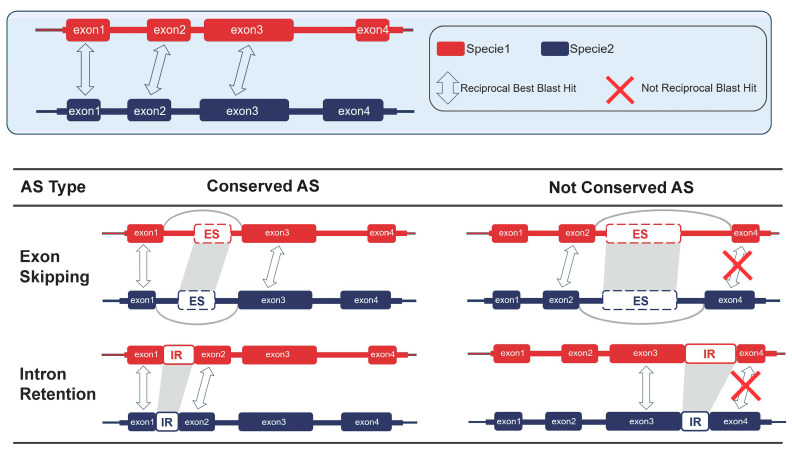 Figure 5
Peer Reviews
No public reviews on file for this paper yet. If you reviewed it on a platform where reviews are public (OpenReview, ICLR, NeurIPS, ICML), you can paste yours below so the community can read it here.
Videos
No videos yet. Explain this paper in a talk, walkthrough, or lecture? Add one.
Taxonomy
TopicsRNA Research and Splicing · Plant Molecular Biology Research · RNA and protein synthesis mechanisms