The Anthocyanidins Malvidin and Cyanidin Alleviate Irinotecan-Triggered Intestinal Mucositis by Modulating Oxidative Stress and Cytokine Release
Giovana Filócomo Machado, Quélita Cristina Pereira, Felipe Leonardo Fagundes, Maycon Tavares Emílio-Silva, Vinícius Peixoto Rodrigues, Mariana de Almeida Patiño, Giulia Izzo Jorge, José Aires Pereira, Carlos Augusto Real Martinez, Clélia Akiko Hiruma-Lima

TL;DR
The study shows that anthocyanidins malvidin and cyanidin reduce intestinal damage caused by chemotherapy by lowering oxidative stress and inflammation, but they don't fully prevent weight loss or tissue damage.
Contribution
The novel contribution is identifying distinct protective mechanisms of malvidin and cyanidin in modulating oxidative stress and cytokine responses in chemotherapy-induced mucositis.
Findings
Malvidin and cyanidin both reduced oxidative stress markers in the duodenum and colon.
Malvidin showed broader anti-inflammatory effects, reducing IL-1β and IL-17 in both intestinal segments.
Neither compound prevented weight loss or histopathological damage, suggesting additional mechanisms are needed for mucosal repair.
Abstract
Chemotherapy with irinotecan (CPT-11) induces intestinal mucositis via oxidative stress and NF-κB-driven cytokine amplification. We investigated the protective effects of the anthocyanidins cyanidin and malvidin (5 mg/kg) in a murine CPT-11 mucositis model. Both compounds increased duodenal glutathione level (GSH) and reduced lipid peroxidation (MDA), with distinct antioxidant profiles: malvidin enhanced catalase (CAT) activity, while cyanidin elevated superoxide dismutase (SOD). In the colon, cyanidin lowered MDA, whereas other oxidative and inflammatory markers remained largely unchanged. Malvidin significantly reduced IL-1β and IL-17 in both intestinal segments; cyanidin selectively decreased IL-6 in the colon, and this reduction was also observed for malvidin treatment. Gene expression analysis revealed broad transcriptional suppression in the duodenum for both compounds (Nrf2,…
Genes, proteins, chemicals, diseases, species, mutations and cell lines named across the full text — each resolved to its canonical identifier and authoritative record.
Click any figure to enlarge with its caption.
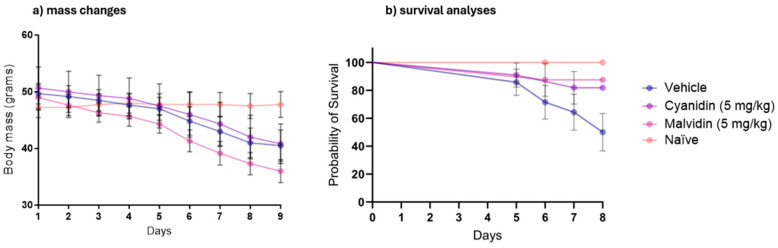 Figure 1
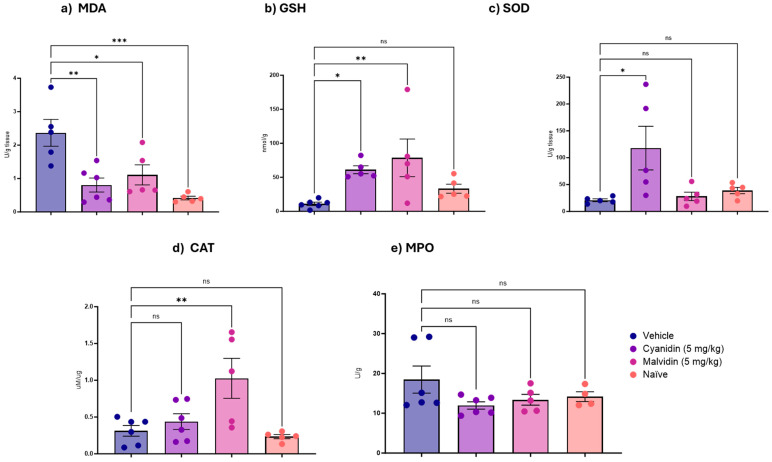 Figure 2
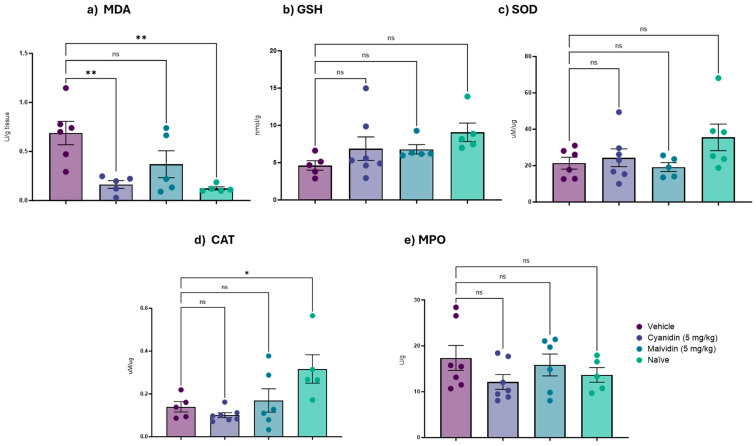 Figure 3
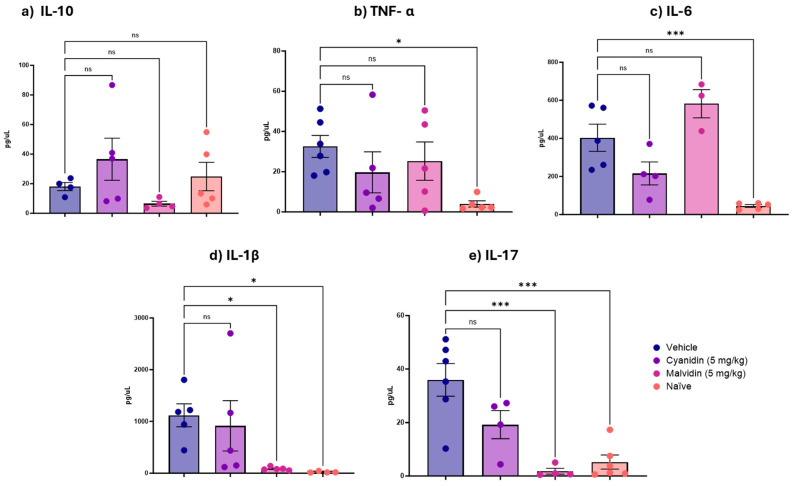 Figure 4
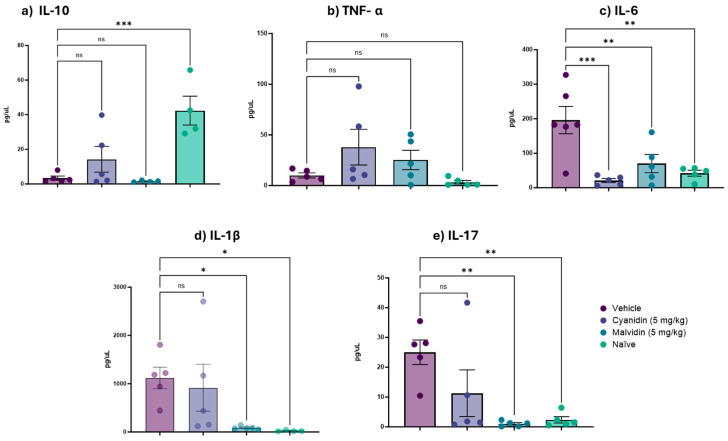 Figure 5
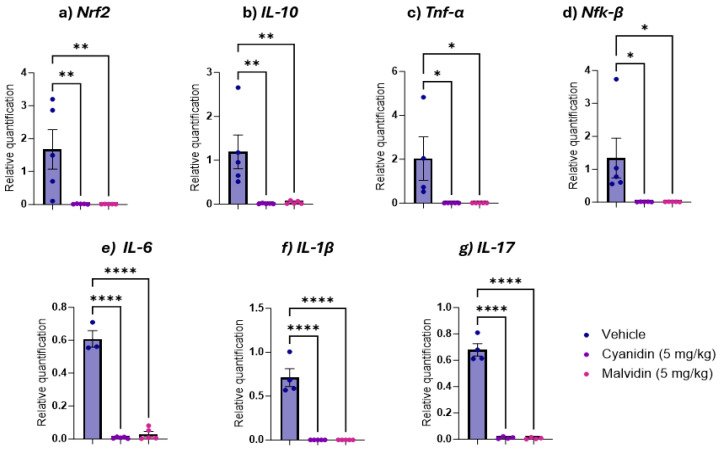 Figure 6
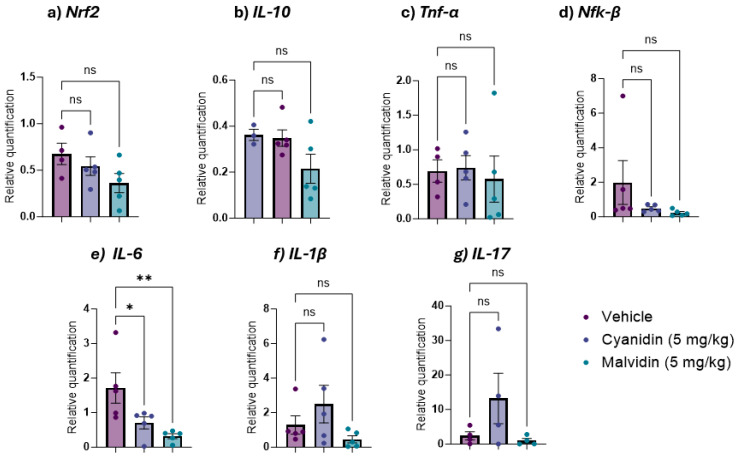 Figure 7
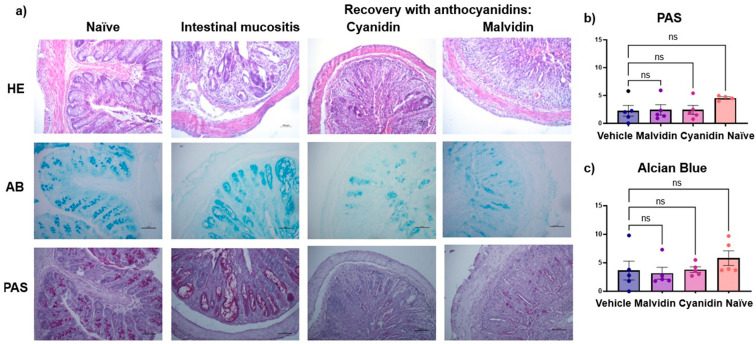 Figure 8
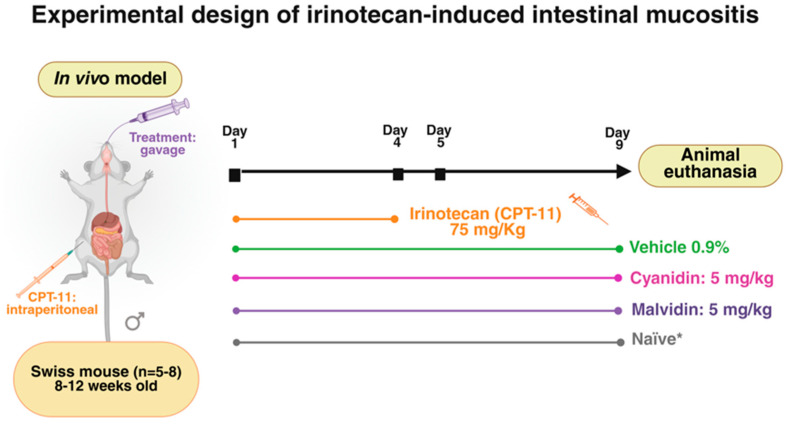 Figure 9
Peer Reviews
No public reviews on file for this paper yet. If you reviewed it on a platform where reviews are public (OpenReview, ICLR, NeurIPS, ICML), you can paste yours below so the community can read it here.
Videos
No videos yet. Explain this paper in a talk, walkthrough, or lecture? Add one.
Taxonomy
TopicsOral health in cancer treatment · Bone health and treatments · Effects of Radiation Exposure