Elevated Levels of Active GSK3β in the Blood of Patients with Myotonic Dystrophy Type 1 Correlate with Muscle Weakness
Katherine Jennings, Cuixia Tian, Rebeccah L. Brown, Paul S. Horn, Benedikt Schoser, Hani Kushlaf, Nikolai A. Timchenko, Lubov Timchenko

TL;DR
This study shows that active GSK3β levels in blood correlate with muscle weakness in Myotonic Dystrophy Type 1 patients, suggesting a potential noninvasive biomarker.
Contribution
The study identifies active GSK3β in blood as a potential noninvasive biomarker for muscle weakness in DM1.
Findings
Active GSK3β levels in PBMCs are elevated in CDM1, juvenile DM1, and adult-onset DM1 patients.
Blood levels of active GSK3β correlate with CTG repeat length and muscle weakness severity.
Thrombospondin and TGFβ levels are also elevated in DM1 patients' blood.
Abstract
Myotonic Dystrophy type 1 (DM1) is a complex disease affecting multiple tissues, including skeletal and cardiac muscles, the brain and the eyes. DM1 results from an expansion of CTG repeats in the 3′ UTR of the DMPK gene. Previously, we described that the small-molecule inhibitor of GSK3β, tideglusib (TG), reduces DM1 pathology in DM1 cell and mouse models by correcting the GSK3β-CUGBP1 pathway, decreasing the mutant CUG-containing RNA. Respectively, clinical trials using TG showed promising results for patients with congenital DM1 (CDM1). The drug development in DM1 human studies needs specific and noninvasive biomarkers. We examined the blood levels of active GSK3β in different clinical forms of DM1 and found an increase in active GSK3β in the peripheral blood mononuclear cells (PBMCs) in patients with CDM1, juvenile DM1 and adult-onset DM1 vs. unaffected patients. The blood levels of…
Genes, proteins, chemicals, diseases, species, mutations and cell lines named across the full text — each resolved to its canonical identifier and authoritative record.
Click any figure to enlarge with its caption.
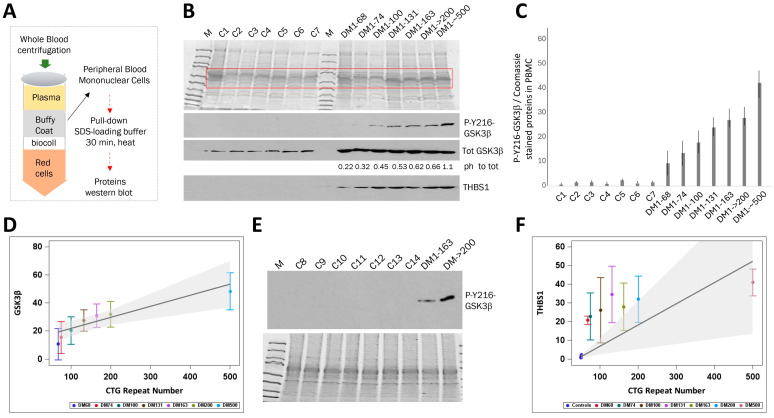 Figure 1
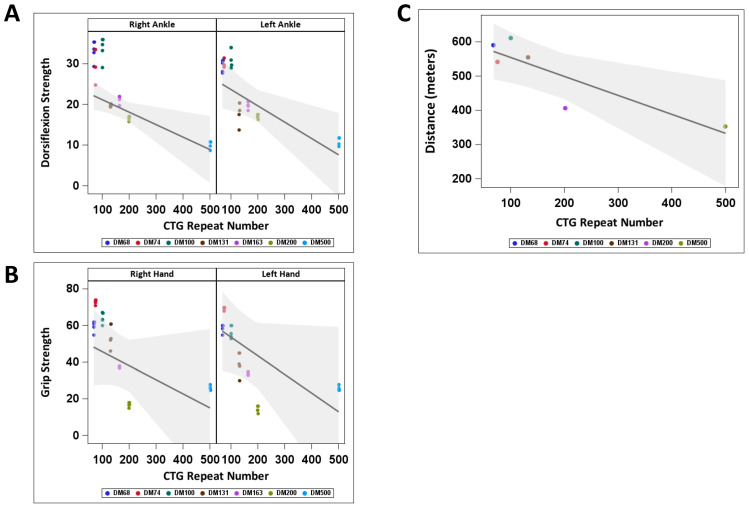 Figure 2
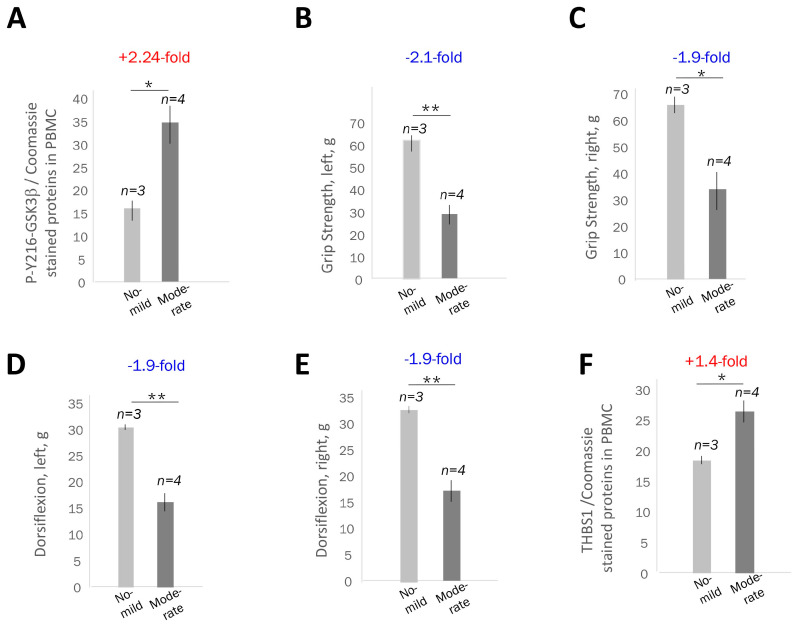 Figure 3
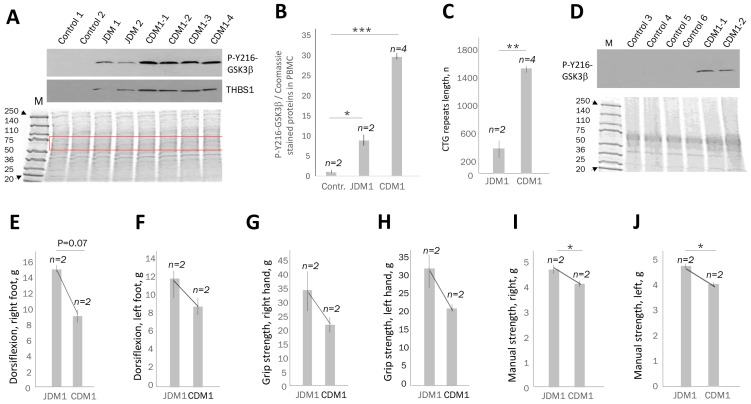 Figure 4
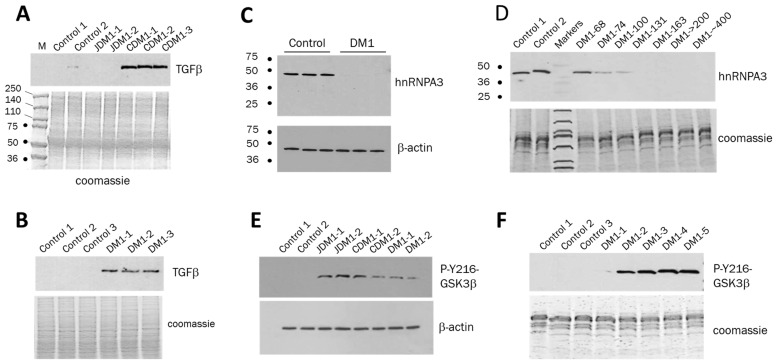 Figure 5
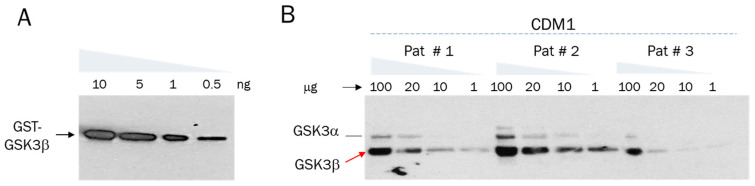 Figure 6
Peer Reviews
No public reviews on file for this paper yet. If you reviewed it on a platform where reviews are public (OpenReview, ICLR, NeurIPS, ICML), you can paste yours below so the community can read it here.
Videos
No videos yet. Explain this paper in a talk, walkthrough, or lecture? Add one.
Taxonomy
TopicsGenetic Neurodegenerative Diseases · Amyotrophic Lateral Sclerosis Research · Biochemical and Molecular Research