Minimizing Permanent Pacemaker Implantation After TAVR: Current Strategies, Monitoring Pathways, and Future Directions
Alfonso Reyes Mitre, Hector Lopez de la Garza, Claudio Espada Guerreiro, Dahyr Olivas Medina, Erick Marlon Avila Gil, Pablo Juan Salvadores, José Antonio Baz Alonso, Andres Iñiguez Romo, Victor Alfonso Jimenez Diaz

TL;DR
This paper reviews strategies to reduce the need for permanent pacemakers after TAVR, a common complication despite improvements in the procedure.
Contribution
The paper provides a comprehensive framework integrating risk assessment, procedural planning, and monitoring to minimize conduction disturbances after TAVR.
Findings
Conduction disturbances leading to PPI remain a common complication of TAVR despite procedural advancements.
Clinical, anatomical, and procedural factors are strong predictors of post-TAVR conduction issues.
A multimodal approach combining risk assessment and monitoring can reduce PPI incidence and improve outcomes.
Abstract
Transcatheter aortic valve replacement (TAVR) has evolved over the last two decades into a cornerstone therapy for patients with severe symptomatic aortic stenosis. This therapy was initially reserved for those at high or prohibitive surgical risk but is now firmly established across all surgical risk categories. Its non-inferiority to surgical aortic valve replacement has been demonstrated even in low-risk populations, supporting the rapid worldwide expansion of its use. Nevertheless, despite procedural refinements and the advent of newer-generation prostheses, conduction disturbances leading to permanent pacemaker implantation (PPI) remain one of the most frequent and clinically relevant complications. Reported incidence ranges between 8% and 20% depending on prosthesis type, implantation technique, and baseline patient characteristics. Multiple clinical, anatomical, and procedural…
Genes, proteins, chemicals, diseases, species, mutations and cell lines named across the full text — each resolved to its canonical identifier and authoritative record.
Click any figure to enlarge with its caption.
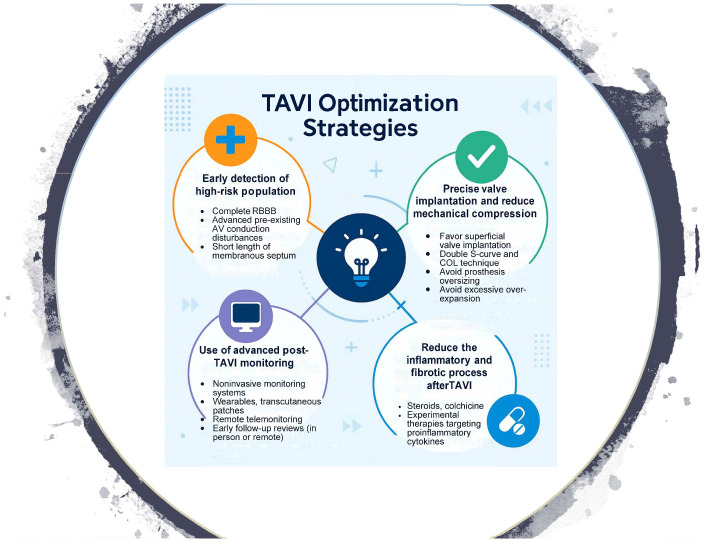 Figure 1
Peer Reviews
No public reviews on file for this paper yet. If you reviewed it on a platform where reviews are public (OpenReview, ICLR, NeurIPS, ICML), you can paste yours below so the community can read it here.
Videos
No videos yet. Explain this paper in a talk, walkthrough, or lecture? Add one.
Taxonomy
TopicsCardiac Valve Diseases and Treatments · Mechanical Circulatory Support Devices · Cardiovascular Function and Risk Factors