Phytochemical Profiling, Anti-Inflammatory Action, and Human Gut Microbiota-Assisted Digestion of Rheum officinale Petiole and Root Extracts—An In Vitro Study
Oleksandra Liudvytska, Mariusz Kowalczyk, Justyna Krzyżanowska-Kowalczyk, Karolina Michaś, Maria Michalak, Aneta Balcerczyk, Weronika Skowrońska, Marcin Równicki, Agnieszka Bazylko, Monika A. Olszewska, Joanna Kolodziejczyk-Czepas

TL;DR
This study shows that both the root and petiole parts of Rheum officinale have strong anti-inflammatory properties, with the petiole being a promising source of bioactive compounds.
Contribution
The study reveals the anti-inflammatory potential of R. officinale petioles, often discarded, and compares it to the root part.
Findings
Petiole and root extracts inhibited pro-inflammatory cytokine release from human cells.
Petiole extract significantly inhibited cyclooxygenase-2 and 5-lipoxygenase activities.
No cytotoxic effects were observed at tested concentrations.
Abstract
Background/Objectives: Rheum officinale, an ethnomedicinal plant, has roots widely employed in modern pharmacological formulations. However, many of its biological activities remain only partly recognized. Furthermore, the metabolome and biological activity of its edible petioles, often considered a waste product, have received limited scientific attention. Methods and Results: The examination of anti-inflammatory properties of both root and petiole extracts (1–50 µg/mL) revealed the inhibition of the pro-inflammatory cytokine release from human peripheral blood mononuclear cells, a reduction in ALOX5 gene expression in human umbilical vein endothelial cells, and the significant inhibition (>60%) of cyclooxygenase-2 and 5-lipoxygenase activities. Importantly, no cytotoxic effects were detected at the tested concentrations. Conclusions: The petiole extract demonstrated anti-inflammatory…
Genes, proteins, chemicals, diseases, species, mutations and cell lines named across the full text — each resolved to its canonical identifier and authoritative record.
Click any figure to enlarge with its caption.
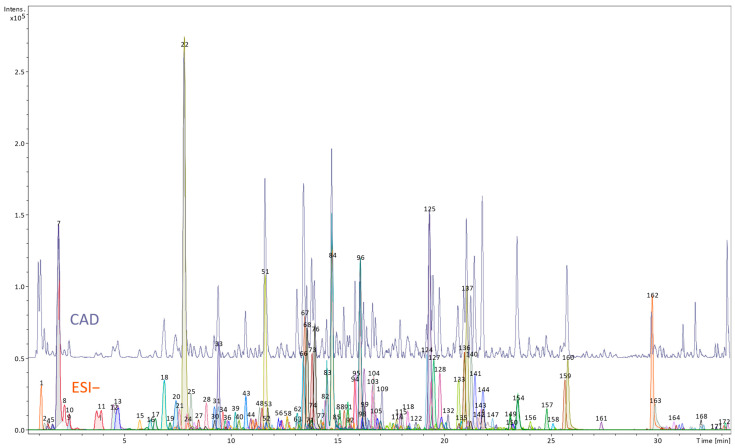 Figure 1
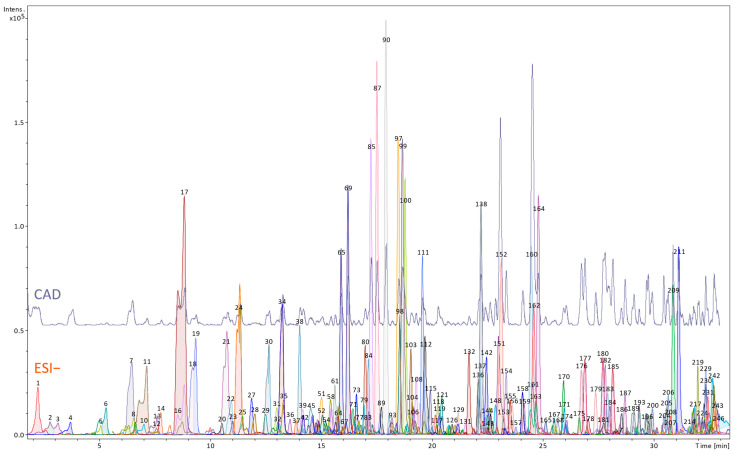 Figure 2
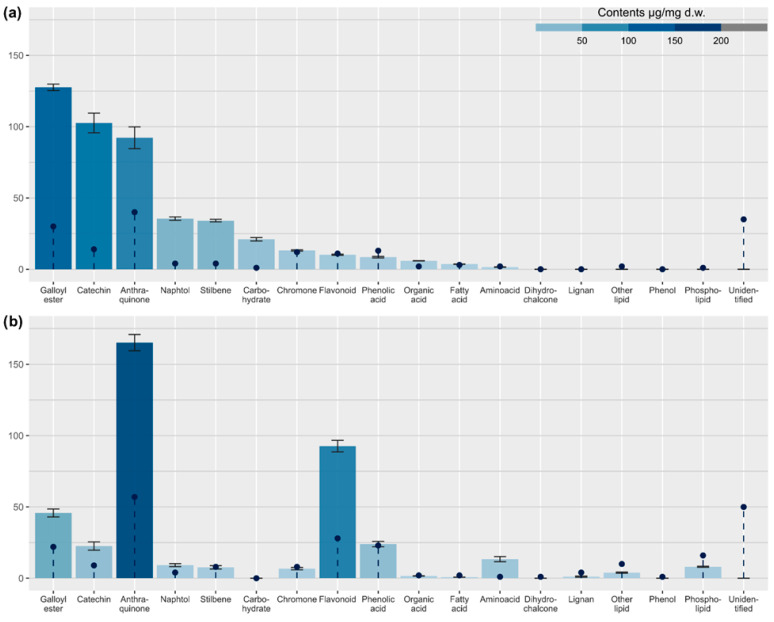 Figure 3
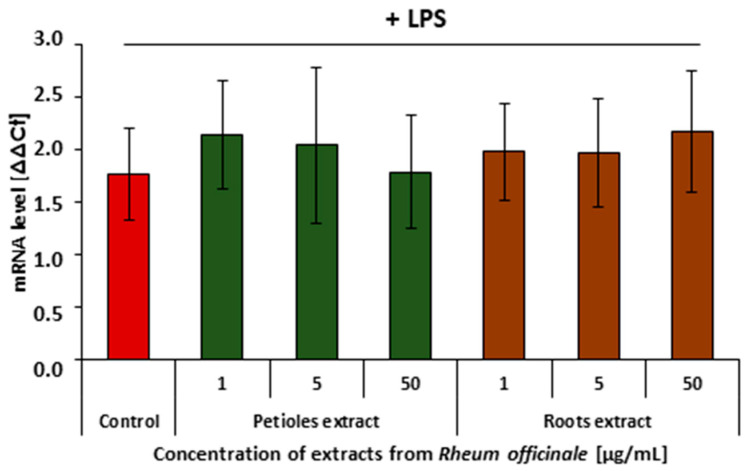 Figure 4
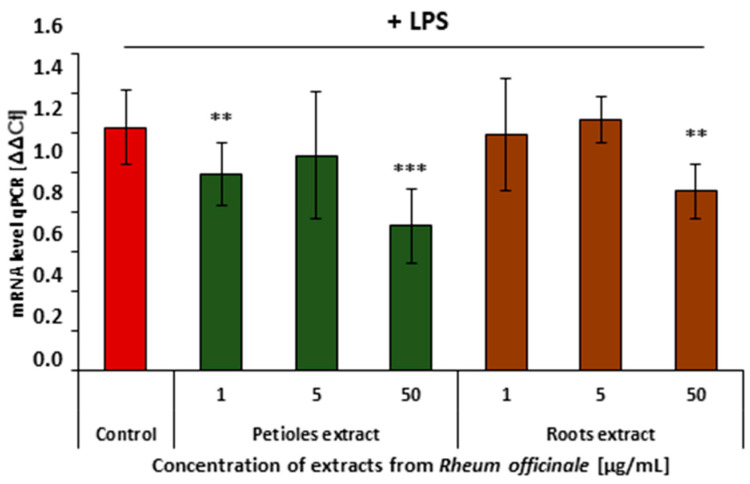 Figure 5
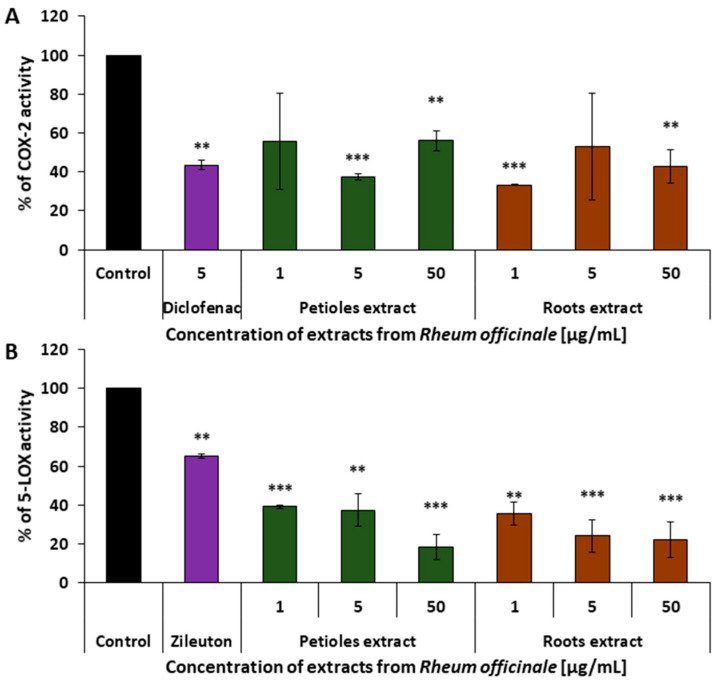 Figure 6
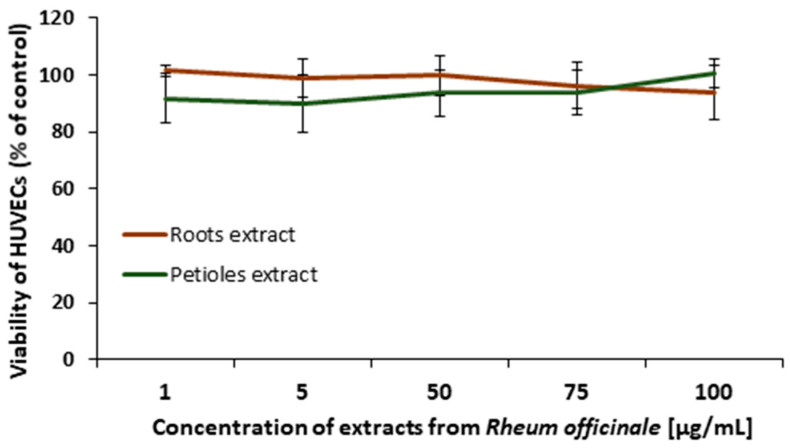 Figure 7
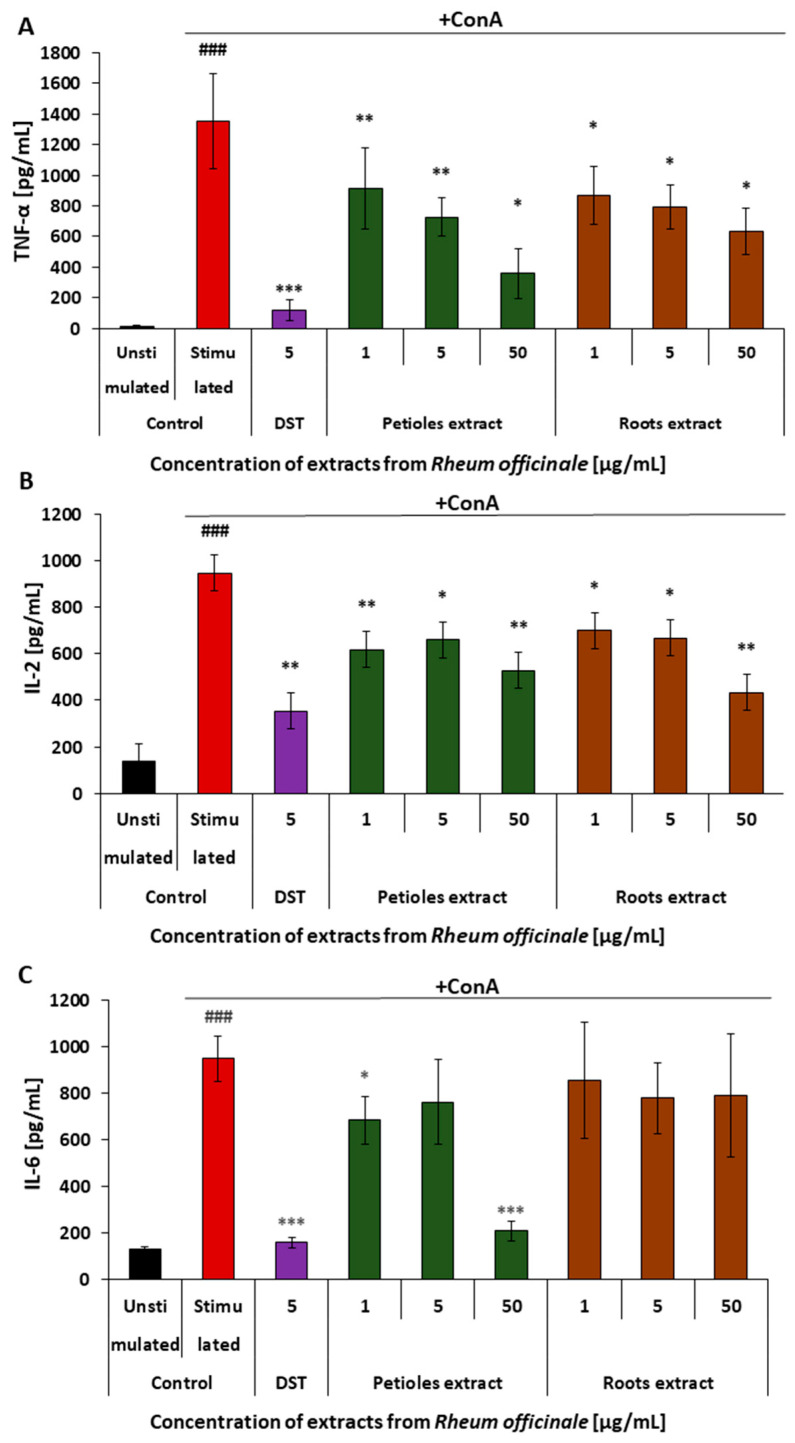 Figure 8
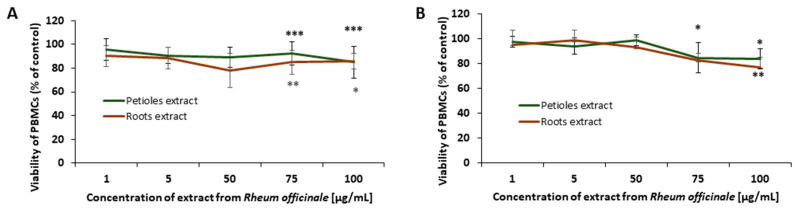 Figure 9
Peer Reviews
No public reviews on file for this paper yet. If you reviewed it on a platform where reviews are public (OpenReview, ICLR, NeurIPS, ICML), you can paste yours below so the community can read it here.
Videos
No videos yet. Explain this paper in a talk, walkthrough, or lecture? Add one.
Taxonomy
TopicsPhytochemistry and biological activity of medicinal plants · Plant-Derived Bioactive Compounds · Mangiferin and Mango Extracts