Developmental Differences in Myocardial Mitochondrial Reticulum Networks in the Offspring Exposed to Diabetic Pregnancy
Prathapan Ayyappan, Tyler C. T. Gandy, David Sturdevant, Tricia D. Larsen, Pradeeksha Mukuntharaj, Andrew Paulson, Trace A. Christensen, Jeffrey L. Salisbury, Michelle L. Baack

TL;DR
Exposure to diabetic pregnancy affects heart mitochondria in offspring, increasing future cardiovascular disease risk.
Contribution
This study reveals developmental changes in mitochondrial networks in offspring of diabetic pregnancies using 3D electron microscopy.
Findings
Diabetic pregnancy leads to fewer perinuclear and intrafibrillar mitochondria in newborn rat hearts.
Mitochondrial counts increase rapidly in diabetes-exposed offspring, but volumes remain lower at all stages.
Malformed mitochondrial networks in early development may contribute to adult cardiovascular disease risk.
Abstract
Diabetic pregnancy increases the offspring’s risk of neonatal and adult cardiovascular disease (CVD). We previously used a rat model (Sprague–Dawley) to show that diabetic pregnancy impairs mitochondrial bioenergetics, dynamics, mitophagy, and quality control in the offspring’s heart, and we hypothesized that mitochondrial dysfunction during early development influences the adult myocardium structure to confer cardiometabolic disease risk with aging. Here, we used 3D serial block face-scanning electron microscopy (SBF-SEM) to analyze perinuclear (PN) and intrafibrillar (IF) mitochondrial networks in the left ventricular sections from control and pregestational diabetes-exposed newborn (NB) rats that were three-week-old and four-month-old. Diabetes-exposed myocardium had 50% fewer PN and 20% fewer IF mitochondria at birth but counts increased more rapidly, resulting in no difference at…
Genes, proteins, chemicals, diseases, species, mutations and cell lines named across the full text — each resolved to its canonical identifier and authoritative record.
Click any figure to enlarge with its caption.
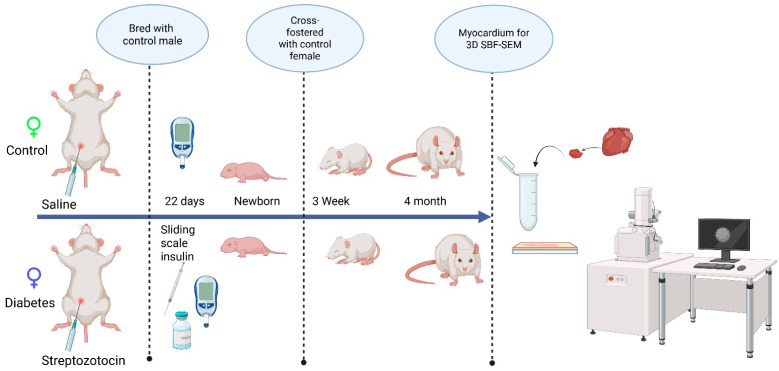 Figure 1
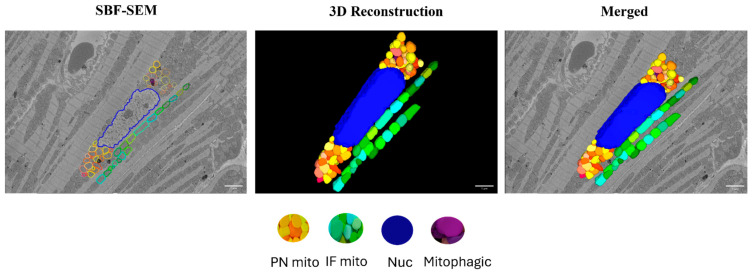 Figure 2
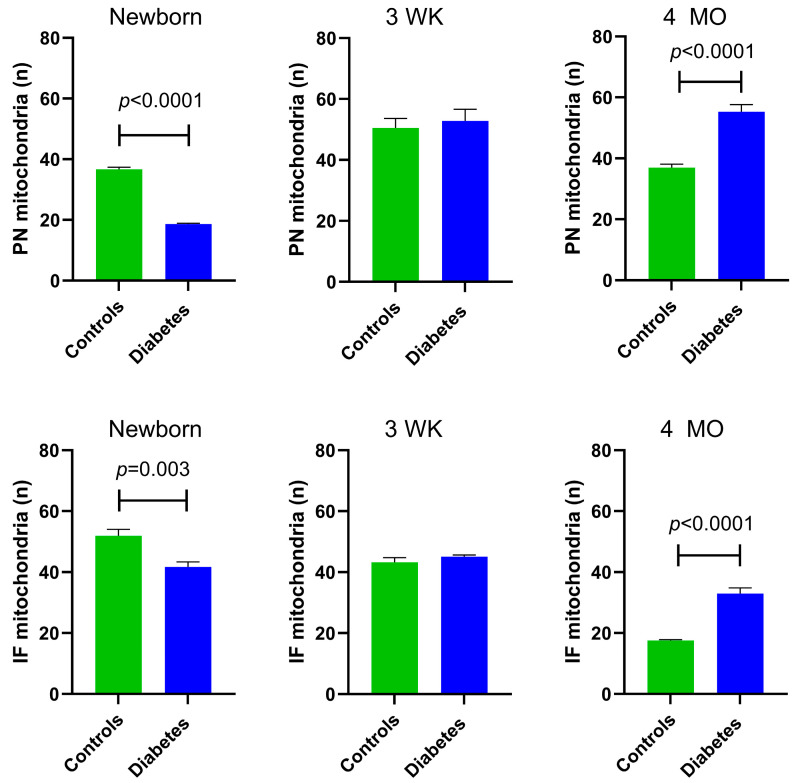 Figure 3
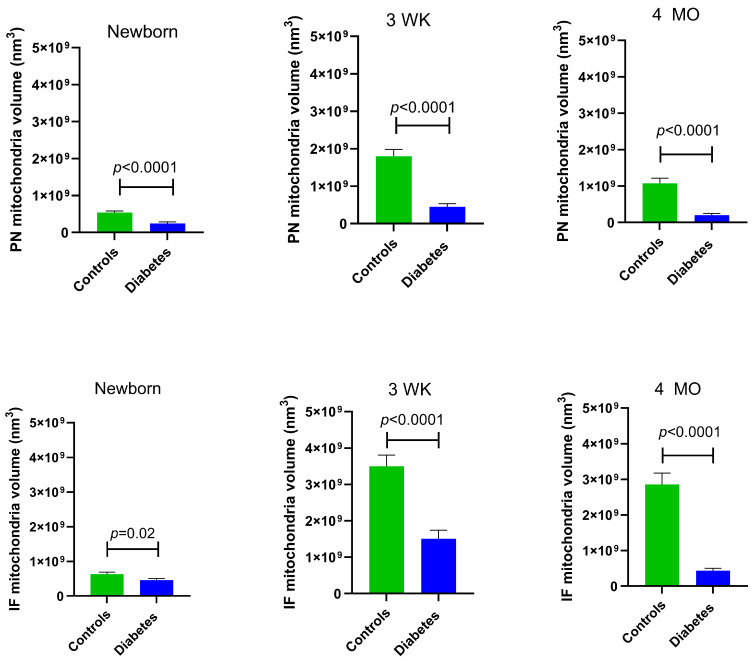 Figure 4
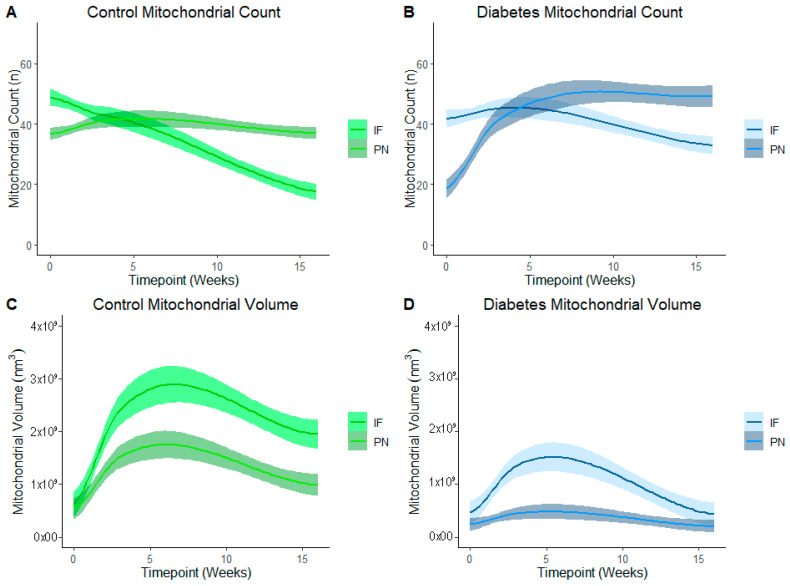 Figure 5
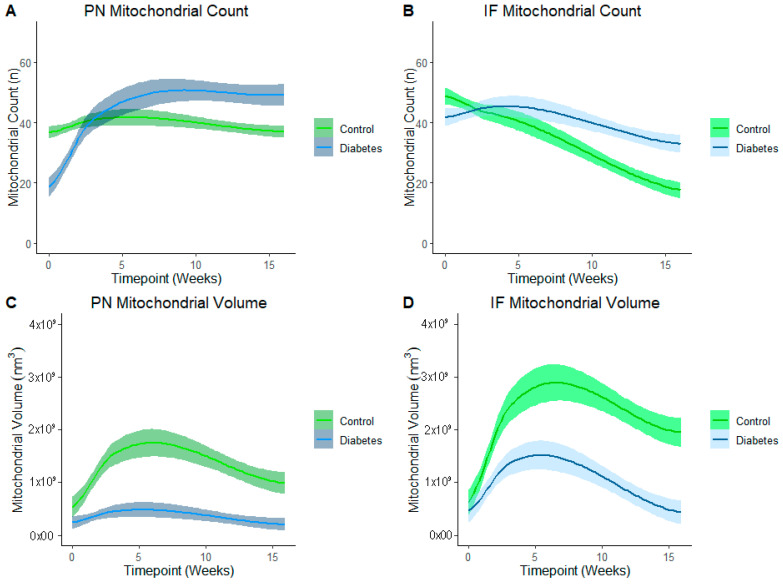 Figure 6
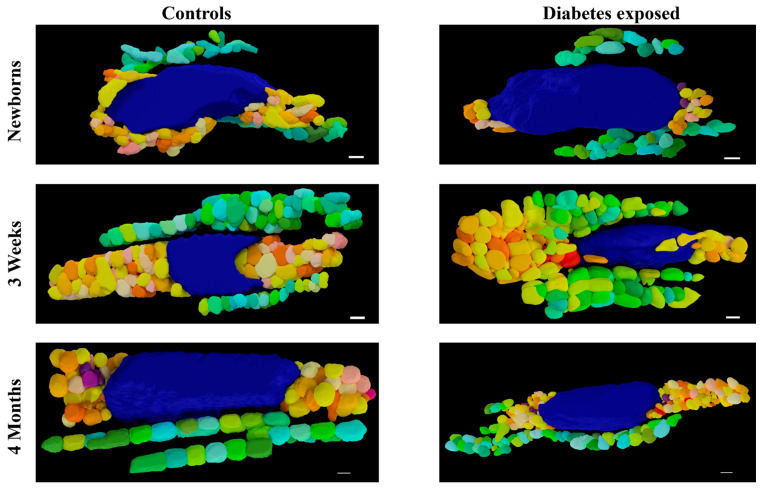 Figure 7
Peer Reviews
No public reviews on file for this paper yet. If you reviewed it on a platform where reviews are public (OpenReview, ICLR, NeurIPS, ICML), you can paste yours below so the community can read it here.
Videos
No videos yet. Explain this paper in a talk, walkthrough, or lecture? Add one.
Taxonomy
TopicsCardiovascular Function and Risk Factors · Birth, Development, and Health · Mitochondrial Function and Pathology