Tuning Excited-State Properties in Pyrrolo[3,2-b]pyrrole-Based Donor–Acceptor Emitters via Molecular Conformation and Conjugation Control
Taotao Gan, Jie Su, Feiyang Li, Qiuxia Li, Chao Shi

TL;DR
This paper shows how adjusting molecular structure in nitrogen-based compounds can control their light-emitting properties for better optoelectronic applications.
Contribution
A strategy for tuning excited-state properties in PP-based emitters through molecular conformation and conjugation control is demonstrated.
Findings
PP-6F shows efficient π-electron delocalization and dominant local excitation emission.
PPA-3F exhibits a hybrid ICT/LE excited state due to increased dihedral angle and reduced conjugation.
Rigid anthracene in PPA-3F suppresses nonradiative decay and maintains high oscillator strength.
Abstract
Nitrogen-fused conjugated heterocycles have attracted growing interest owing to their tunable electronic properties and potential in organic optoelectronics. In this study, two centrosymmetric donor–acceptor-type emitters PP-6F and PPA-3F were designed by incorporating trifluorophenyl and anthracene acceptor units into a pyrrolo[3,2-b]pyrrole (PP) framework. The experimental and theoretical results reveal that subtle modulations in molecular conformation and π-conjugation pathways strongly affect the excited-state characteristics. PP-6F, featuring a nearly coplanar donor–acceptor configuration, exhibits efficient π-electron delocalization and a dominant local excitation (LE) emission with a large oscillator strength. In contrast, the bulky anthracene in PPA-3F increases the donor–acceptor dihedral angle, reduces conjugation coupling, and promotes orbital separation, leading to a hybrid…
Genes, proteins, chemicals, diseases, species, mutations and cell lines named across the full text — each resolved to its canonical identifier and authoritative record.
Click any figure to enlarge with its caption.
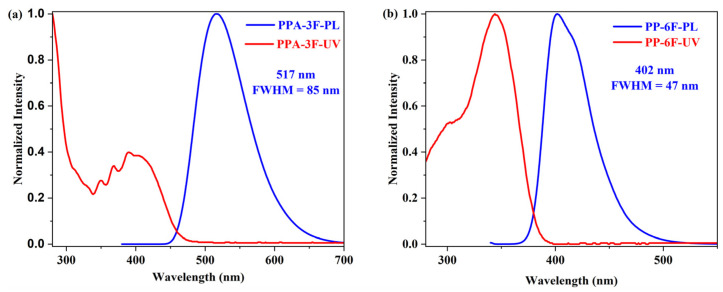 Figure 1
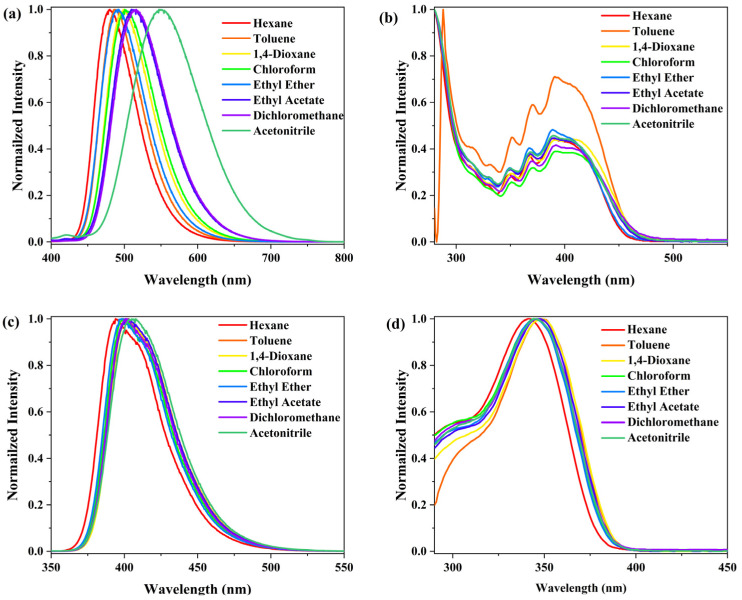 Figure 2
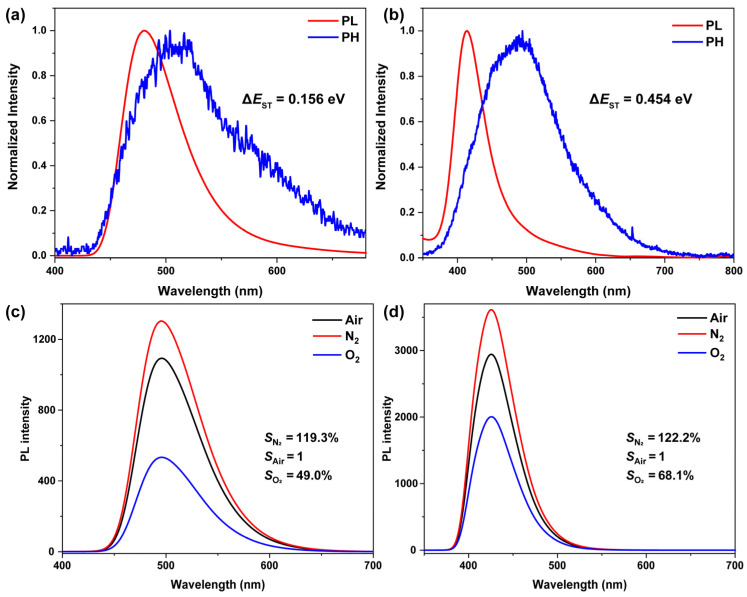 Figure 3
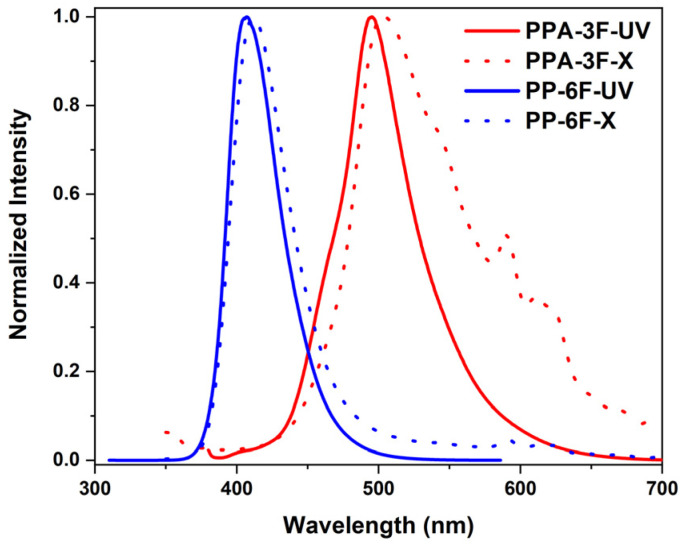 Figure 4
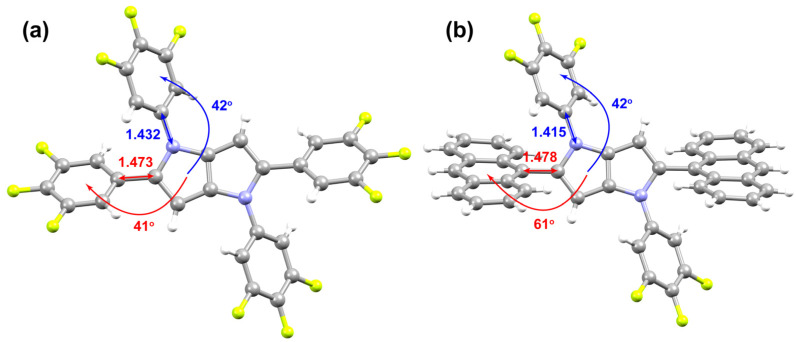 Figure 5
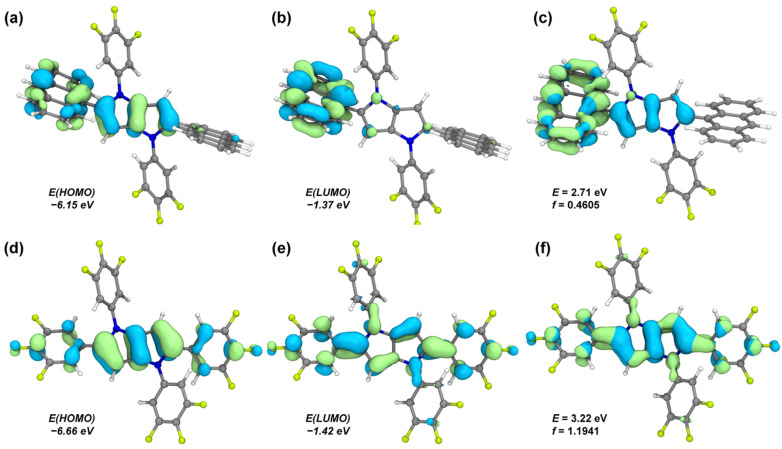 Figure 6
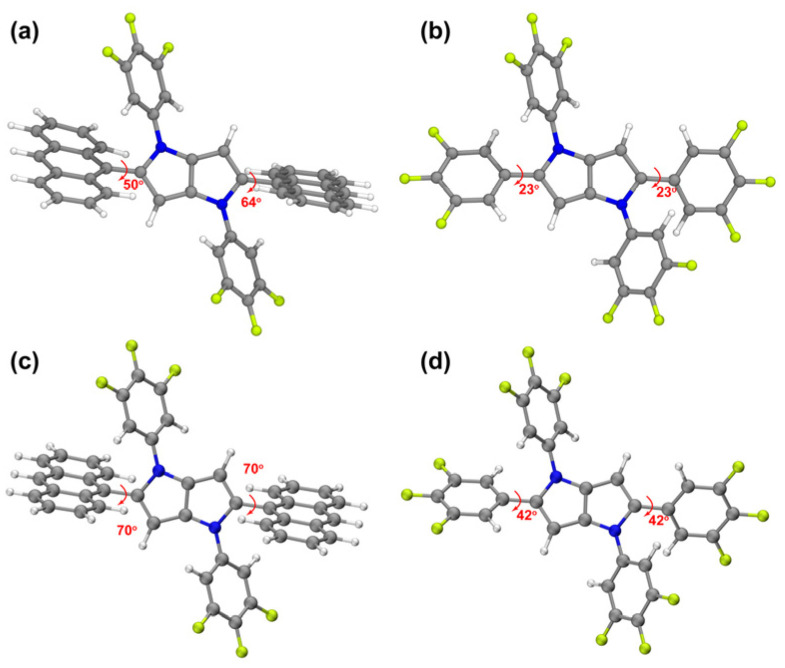 Figure 7
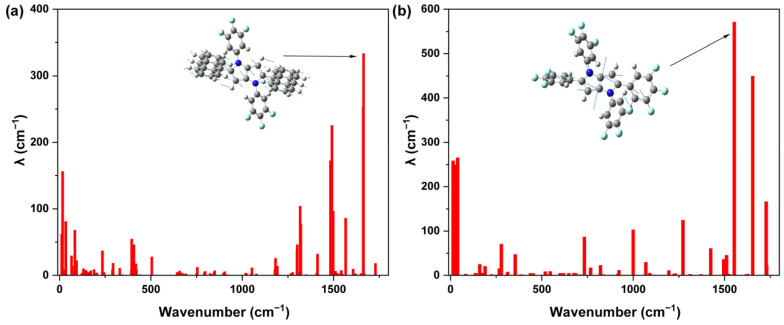 Figure 8
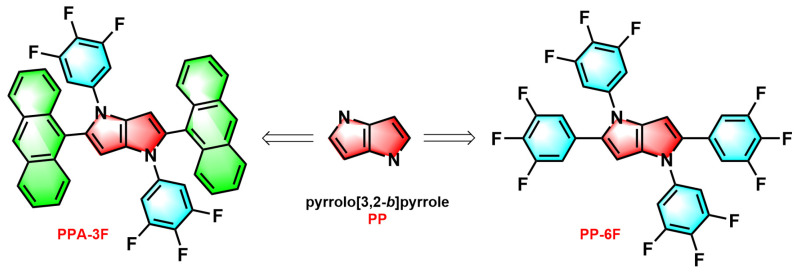 Figure 9
Peer Reviews
No public reviews on file for this paper yet. If you reviewed it on a platform where reviews are public (OpenReview, ICLR, NeurIPS, ICML), you can paste yours below so the community can read it here.
Videos
No videos yet. Explain this paper in a talk, walkthrough, or lecture? Add one.
Taxonomy
TopicsSynthesis and Properties of Aromatic Compounds · Organic Light-Emitting Diodes Research · Organic Electronics and Photovoltaics