Prevalence of the Sphenoidal Emissary Foramen in a Chilean Osteological Sample: Anatomical and Surgical Implications
Juan José Valenzuela Fuenzalida, Catalina Alcaíno Adasme, Trinidad Soublette Tocornal, Felipe Alvial-Ahumada, Macarena Perez Gutierrez, Alejandro Bruna-Mejias, Mathias Orellana-Donoso, Pablo Nova-Baeza, Alejandra Suazo-Santibañez, Hector Gutierrez-Espinoza, Juan Sanchis-Gimeno

TL;DR
This study examines the occurrence of a small skull opening in a Chilean sample and its implications for surgical procedures.
Contribution
The study reports the prevalence and laterality of the sphenoidal emissary foramen in a Chilean population.
Findings
The sphenoidal emissary foramen was present in 40.17% of the Chilean skulls examined.
Left-sided foramina were more common than right-sided ones, showing mild asymmetry.
The Chilean prevalence aligns with international data and suggests normal morphological variation.
Abstract
Background: The sphenoidal emissary foramen (SEF) is an inconstant foramen of the sphenoid bone that facilitates venous communication between the pterygoid venous plexus and the cavernous sinus. Understanding its prevalence and laterality is crucial to preventing vascular injury during skull base procedures. Methods: A cross-sectional observational study was conducted on 133 adult Chilean dried skulls. Each specimen was examined both internally and externally to record SEF presence and laterality. Three independent observers performed the assessments under direct lighting, achieving excellent interobserver agreement (κ = 0.87, 95% CI = 0.81–0.92). Descriptive statistics, Chi-square tests, and Cramer’s V coefficients were calculated to evaluate side dominance and effect size at a significance level of p < 0.05. Results: The SEF was present in 40.17%. Bilateral foramina were observed in…
Genes, proteins, chemicals, diseases, species, mutations and cell lines named across the full text — each resolved to its canonical identifier and authoritative record.
Click any figure to enlarge with its caption.
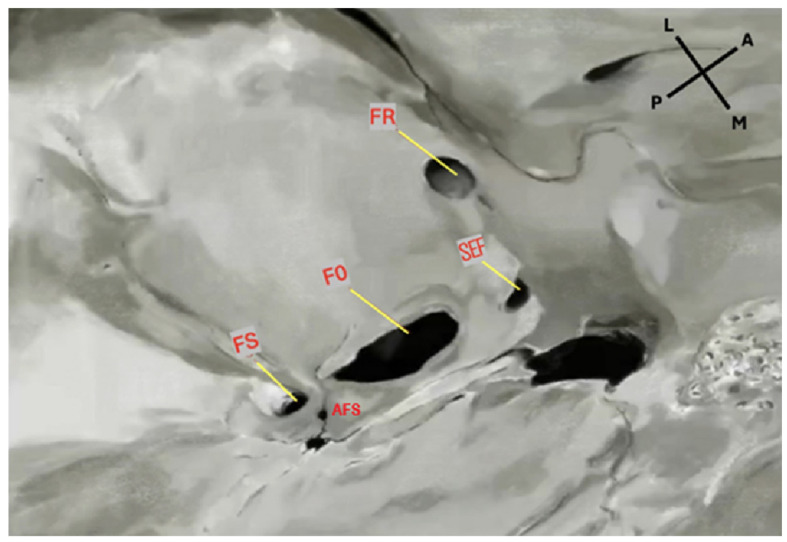 Figure 1
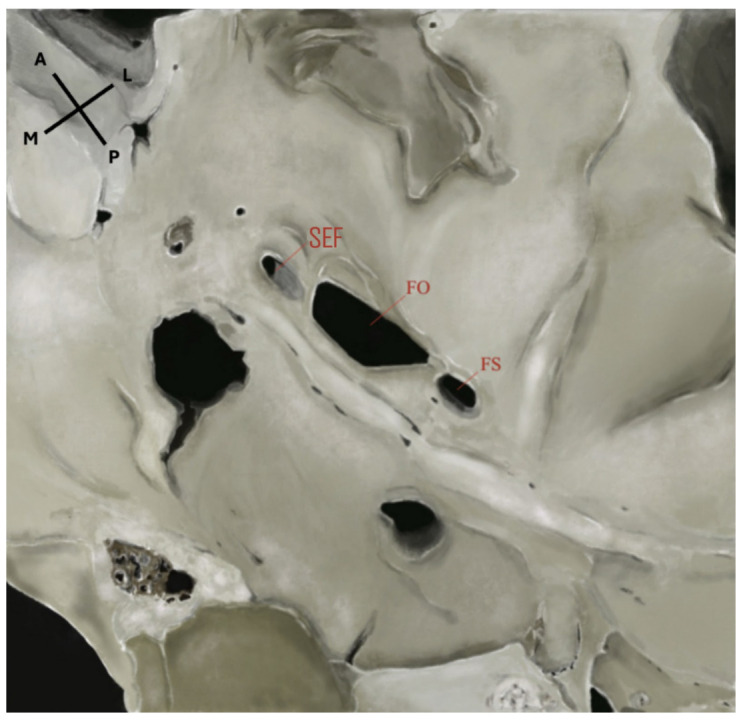 Figure 2
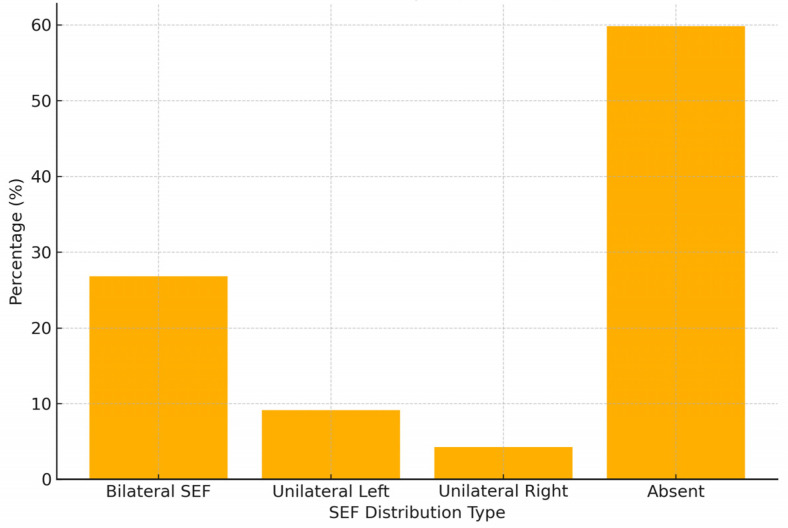 Figure 3
Peer Reviews
No public reviews on file for this paper yet. If you reviewed it on a platform where reviews are public (OpenReview, ICLR, NeurIPS, ICML), you can paste yours below so the community can read it here.
Videos
No videos yet. Explain this paper in a talk, walkthrough, or lecture? Add one.
Taxonomy
TopicsTrigeminal Neuralgia and Treatments · Sinusitis and nasal conditions · Head and Neck Surgical Oncology