Targeted Analysis of Placental Steroid Hormones in Relation to Maternal Tobacco Smoke Exposure: Early Markers Relevant to DOHaD (Developmental Origins of Health and Disease)
Alicja Kotłowska, Sebastian Fitzek, Rafał Stettner, Sylwia Narkowicz, Bogumiła Kiełbratowska, Piotr Szefer

TL;DR
This study finds that maternal smoking disrupts placental steroid hormones, which could affect fetal development and long-term health.
Contribution
The study identifies specific placental steroid hormone changes linked to maternal tobacco exposure, independent of birth weight.
Findings
All six measured placental steroids differed significantly between smoking and non-smoking groups.
Active smoking reduced estrogens and progestins while increasing testosterone, even after adjusting for birth weight.
A steroid panel accurately classified smoking exposure status with high cross-validated accuracy.
Abstract
Maternal tobacco smoke exposure is associated with impaired fetal growth and long-term disease risk (DOHaD, Developmental Origins of Health and Disease). Whether placental steroid hormones are independently altered remains a matter of debate. We quantified six placental steroids (estradiol, estriol, estrone, progesterone, testosterone, and pregnanediol) using HPLC–Corona CAD in 70 deliveries (C = 30; PS = 20; AS = 20). Distributional differences were assessed with Kruskal–Wallis and pairwise Mann–Whitney tests with Benjamini–Hochberg (BH) control. Adjusted associations used log-linear OLS with HC3 robust SE: Model A (gestational age, maternal BMI, newborn sex) and Model B (Model A + birth weight), reported as percent change vs. controls, computed as (exp(β) − 1) × 100 with 95% CI. Secondary analyses tested (i) multiclass logistic classification of C/PS/AS from the steroid panel (5-fold…
Genes, proteins, chemicals, diseases, species, mutations and cell lines named across the full text — each resolved to its canonical identifier and authoritative record.
Click any figure to enlarge with its caption.
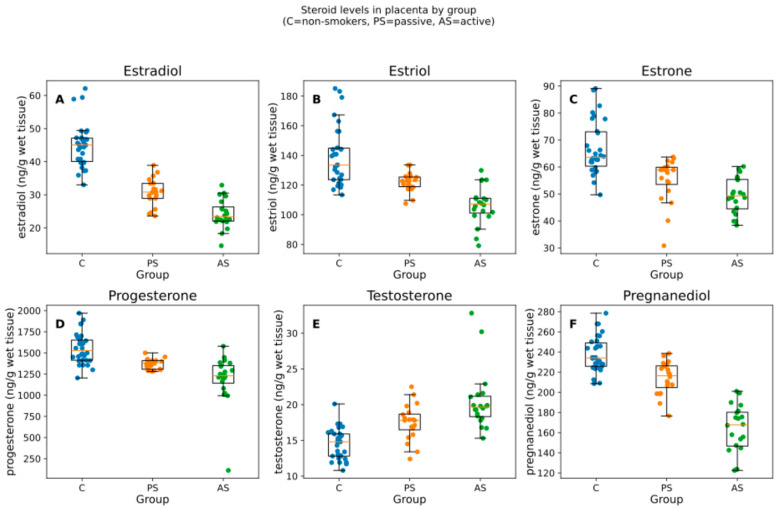 Figure 1
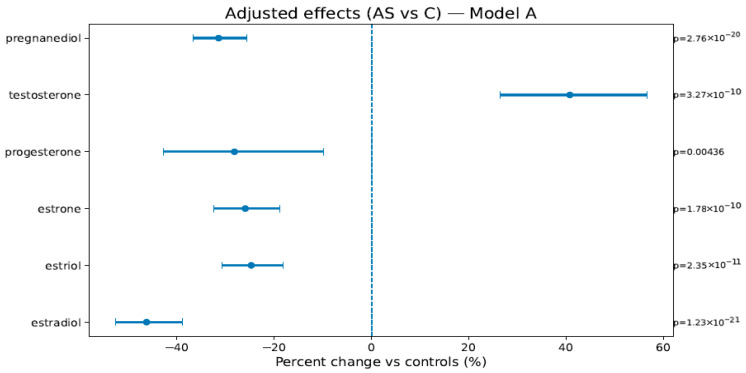 Figure 2
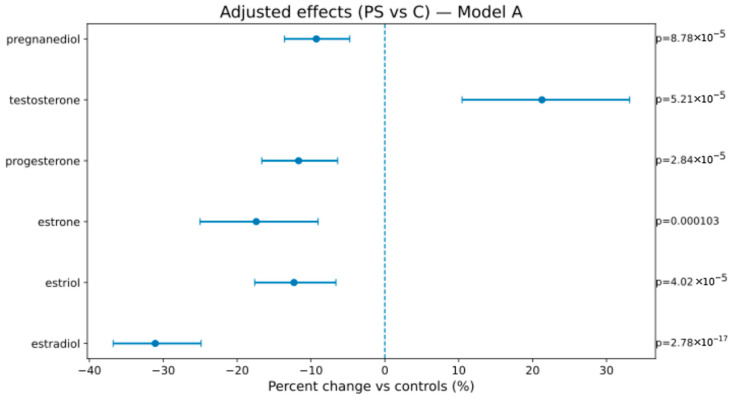 Figure 3
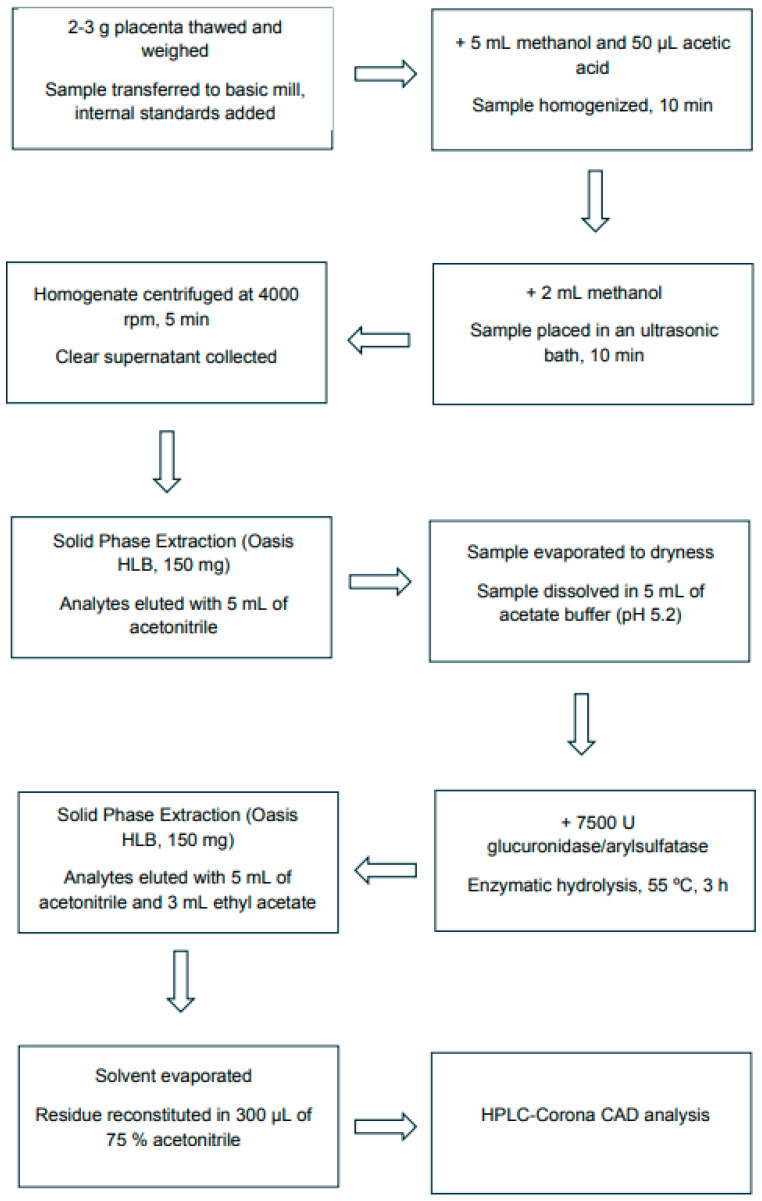 Figure 4
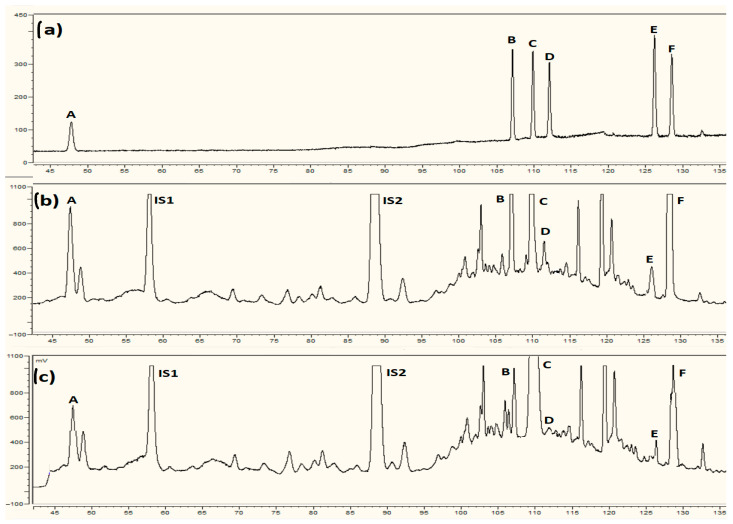 Figure 5
Peer Reviews
No public reviews on file for this paper yet. If you reviewed it on a platform where reviews are public (OpenReview, ICLR, NeurIPS, ICML), you can paste yours below so the community can read it here.
Videos
No videos yet. Explain this paper in a talk, walkthrough, or lecture? Add one.
Taxonomy
TopicsPregnancy and preeclampsia studies · Birth, Development, and Health · Cancer Risks and Factors