Method for Suppressing Non-Stationary Interference in the Main-Lobe Based on a Multi-Polarized Array
Jie Wang, Shujuan Ding, Na Wei, Jinzhi Bi, Rongqiu Zheng

TL;DR
A new method uses multi-polarized arrays to suppress interference without needing target parameters.
Contribution
The method uses signal waveform and polarization information to suppress non-stationary interference without estimating target parameters.
Findings
The method calculates steering vectors using matched filtering.
It extracts high-energy frequency points for beamforming.
Simulations show effective suppression of non-stationary interference.
Abstract
To suppress non-stationary main-lobe interference, we utilized the waveform information of the transmitted signal and proposed an interference suppression method based on a multi-polarized array without the need for calculating the target parameters. This method calculates the steering vector of the target through matched filtering. Additionally, for non-stationary interference whose statistical characteristics change over time, we extract high-energy frequency points from the time–frequency joint domain to obtain the time–frequency covariance matrix for subsequent beamforming. Simulation experiments demonstrate that this method leverages the signal polarization information sensed by the multi-polarized array, effectively suppressing non-stationary main-lobe interference in the polarization domain. This method does not require estimation of the target’s polarization parameters and is…
Genes, proteins, chemicals, diseases, species, mutations and cell lines named across the full text — each resolved to its canonical identifier and authoritative record.
Click any figure to enlarge with its caption.
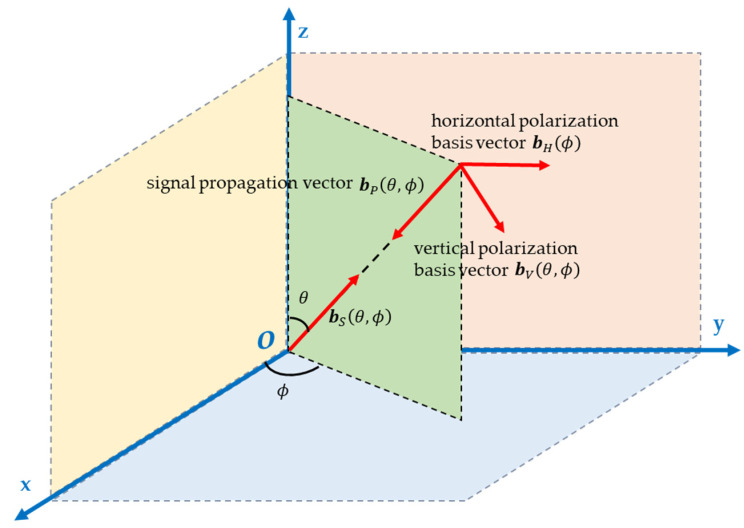 Figure 1
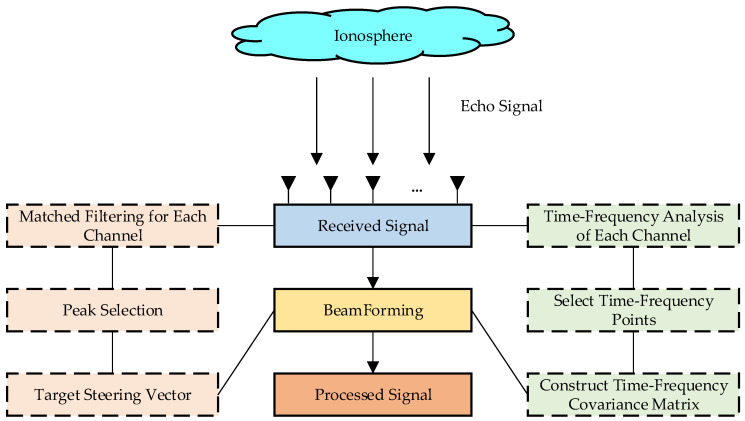 Figure 2
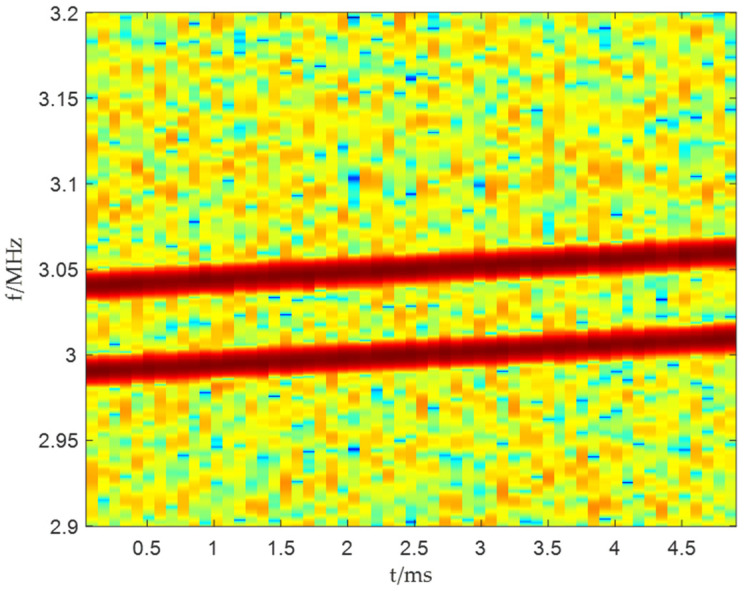 Figure 3
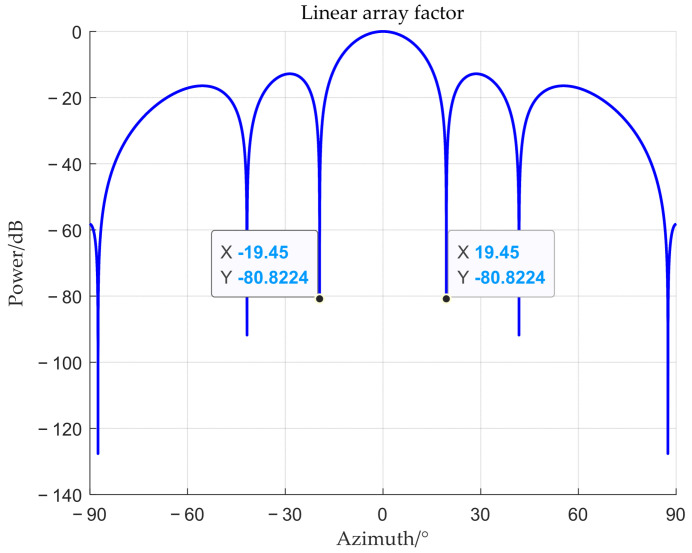 Figure 4
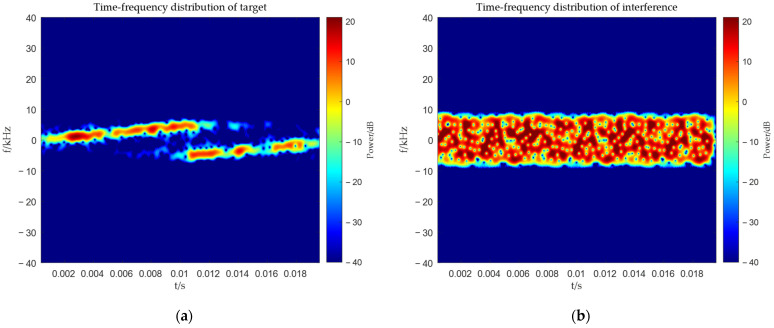 Figure 5
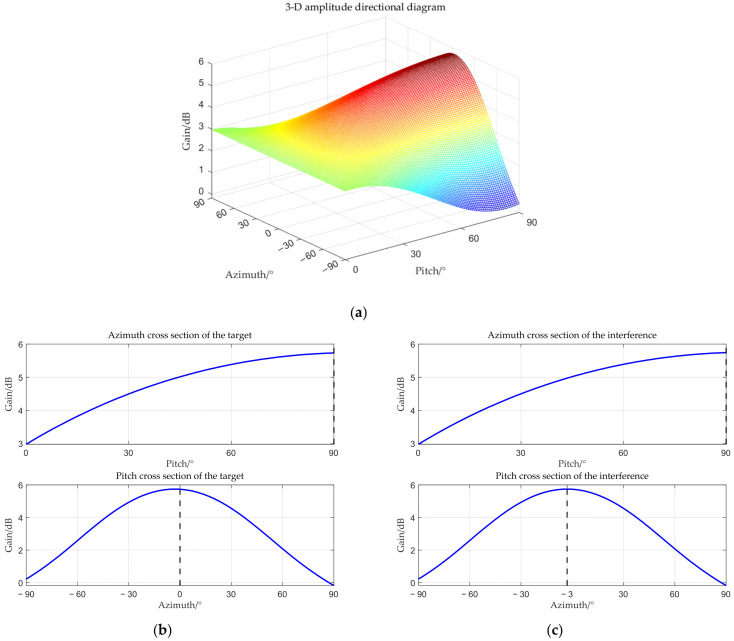 Figure 6
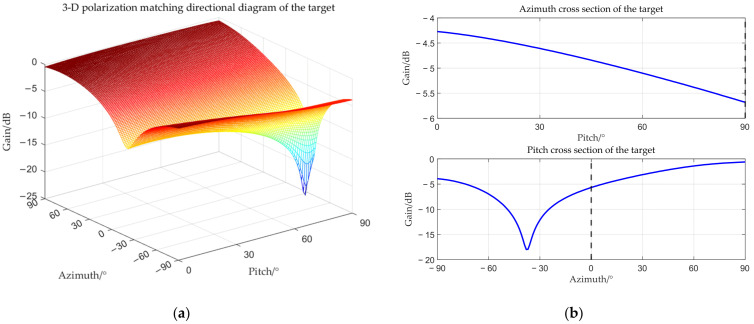 Figure 7
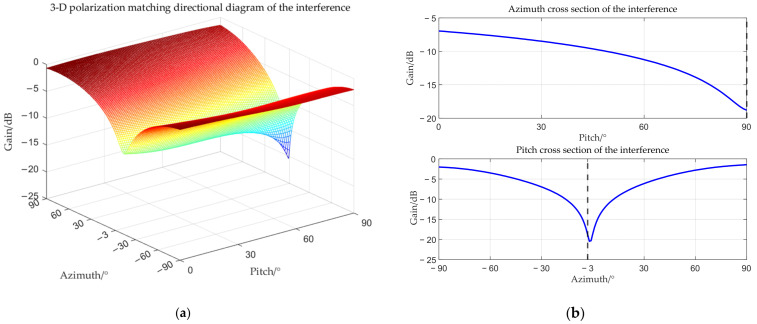 Figure 8
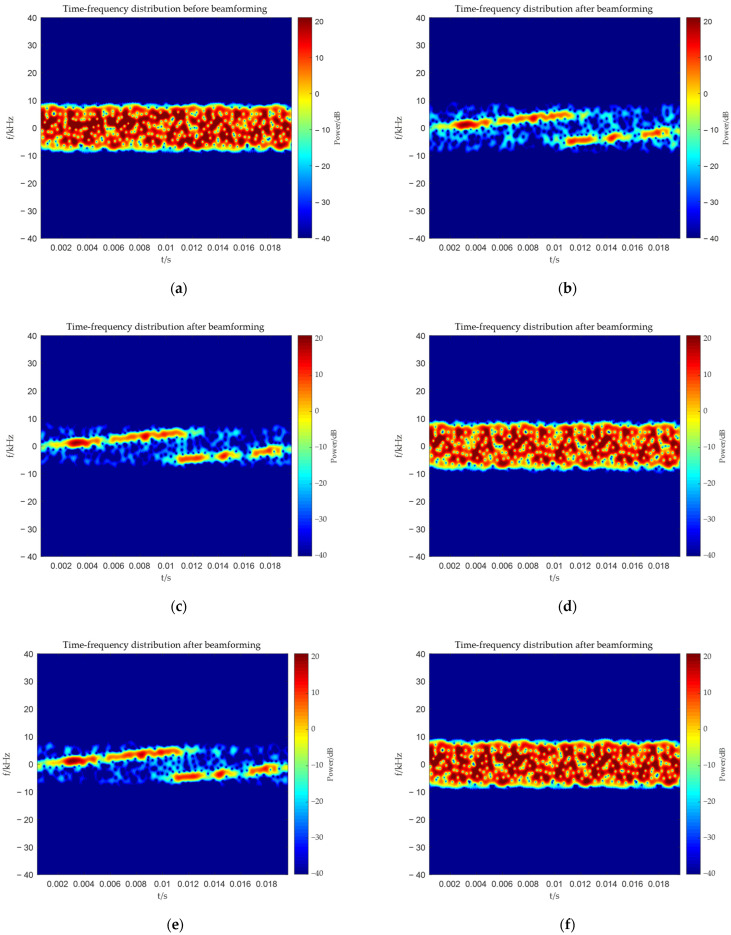 Figure 9
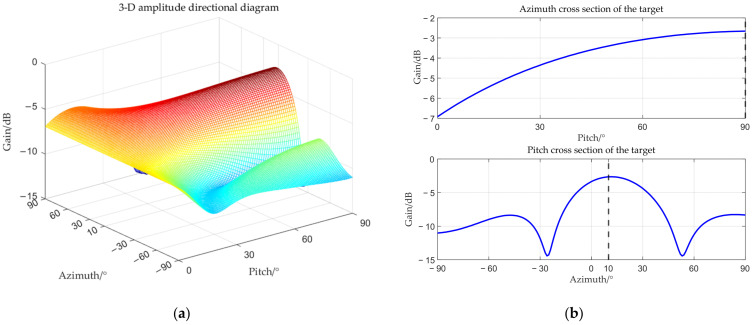 Figure 10
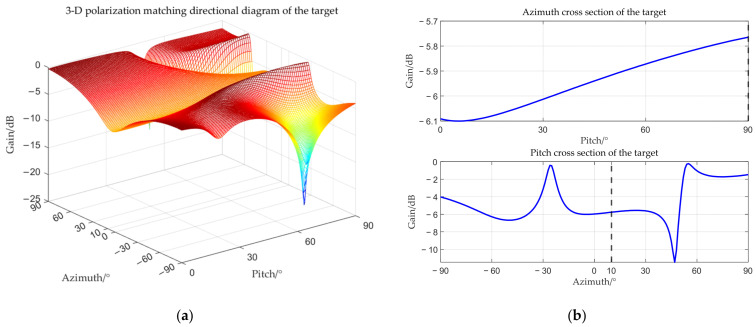 Figure 11
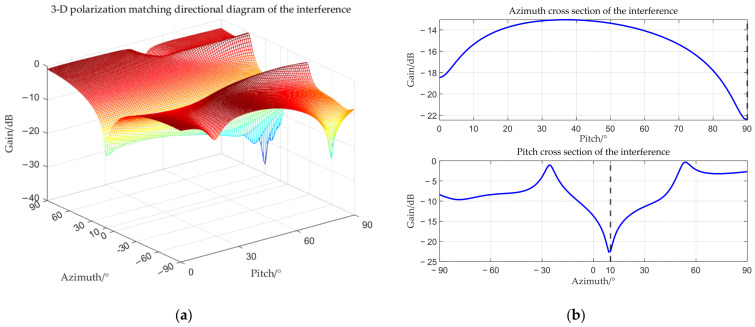 Figure 12
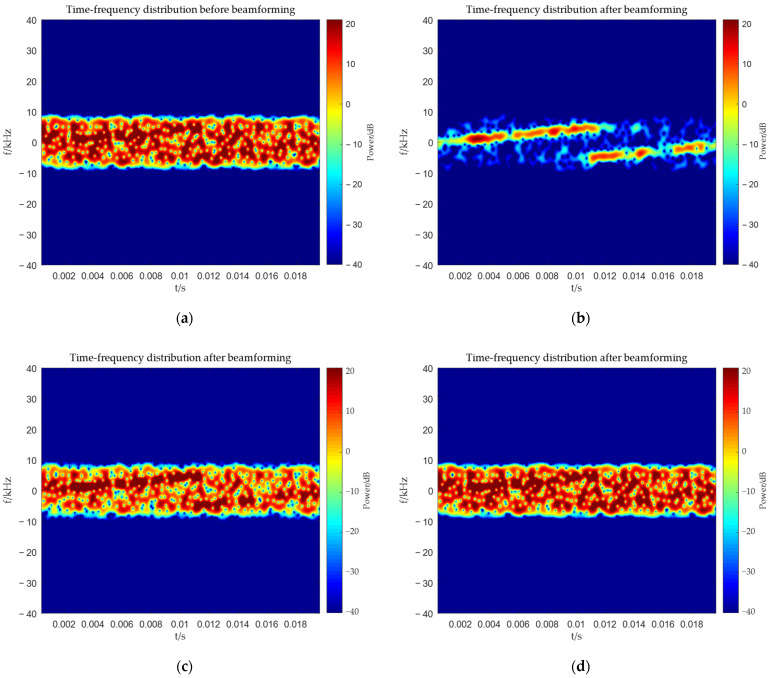 Figure 13
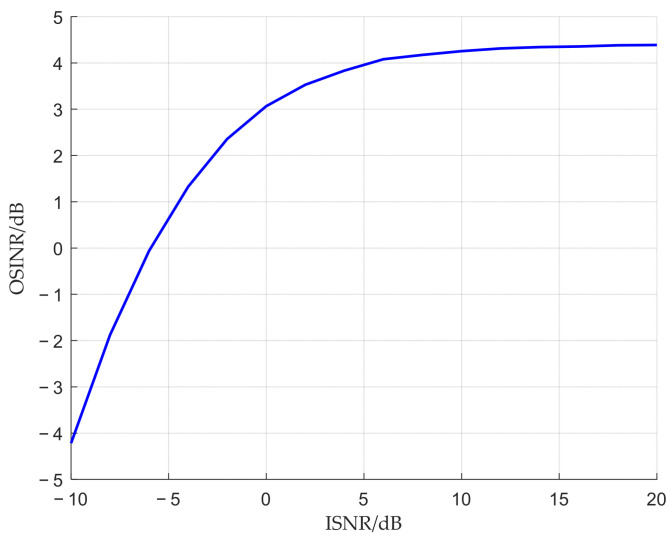 Figure 14
Peer Reviews
No public reviews on file for this paper yet. If you reviewed it on a platform where reviews are public (OpenReview, ICLR, NeurIPS, ICML), you can paste yours below so the community can read it here.
Videos
No videos yet. Explain this paper in a talk, walkthrough, or lecture? Add one.
Taxonomy
TopicsRadar Systems and Signal Processing · Direction-of-Arrival Estimation Techniques · Advanced SAR Imaging Techniques