Integration of Transcriptome, miRNA-Omics, and Hormone Metabolism Analysis Reveals the Regulatory Network of Camellia drupifera Fruit Maturation
Jin Zhao, Xue Sun, Yanqiang Yao, Ya Liu, Dongmei Yang, Huageng Yang, Jing Yu, Daojun Zheng, Yougen Wu

TL;DR
This study explores how hormones, genes, and miRNAs work together to regulate fruit maturation in Camellia drupifera, an important oil crop.
Contribution
The study identifies a novel 'hormone–miRNA–mRNA' regulatory network involved in fruit maturation and lipid accumulation in Camellia drupifera.
Findings
IAA and GA3 levels peak during early fruit development, promoting growth via genes like AUX1 and ARF.
ABA levels rise during maturation, activating genes like PYR/PYL and ABF while IAA and GA3 decline.
miRNAs such as miR393-z and novel-m0146-5p regulate hormone signaling and fruit maturation processes.
Abstract
Camellia drupifera is an important woody oil crop with high economic and medicinal value. Fruit maturation is a complex process regulated by hormones and gene networks, yet its molecular basis remains unclear. Here, we integrated hormone profiling (IAA, GA3, ABA), transcriptomics, and miRNA-omics across three key stages: nutrient synthesis (S1), lipid accumulation (S4), and maturation (S7). During early development (S1), IAA and GA3 levels peaked, accompanied by the upregulation of growth-related genes (AUX1, ARF, GID1), which promote fruit growth. By maturation (S7), ABA content increased markedly, activating PYR/PYL, PP2C, and ABF, while IAA and GA3 declined. Transcriptome analysis revealed 45 key differentially expressed genes correlated with hormone levels. In parallel, miRNAs such as miR393-z (targeting TIR1) and novel-m0146-5p (targeting ARF1) were identified as regulators of…
Genes, proteins, chemicals, diseases, species, mutations and cell lines named across the full text — each resolved to its canonical identifier and authoritative record.
Click any figure to enlarge with its caption.
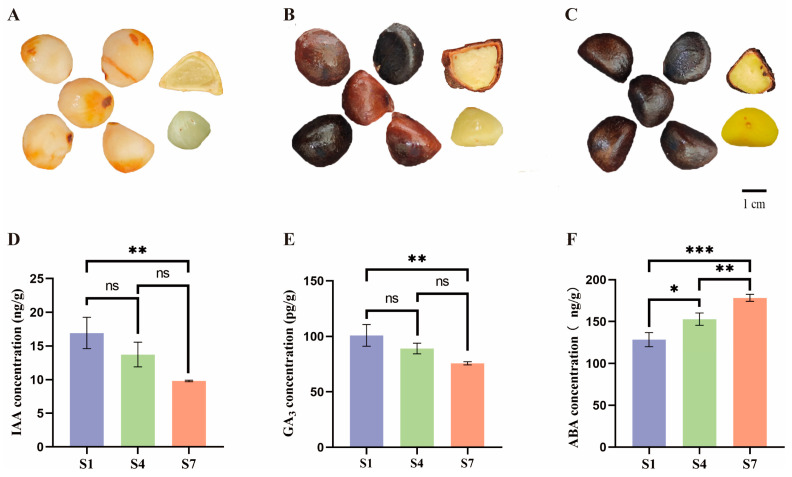 Figure 1
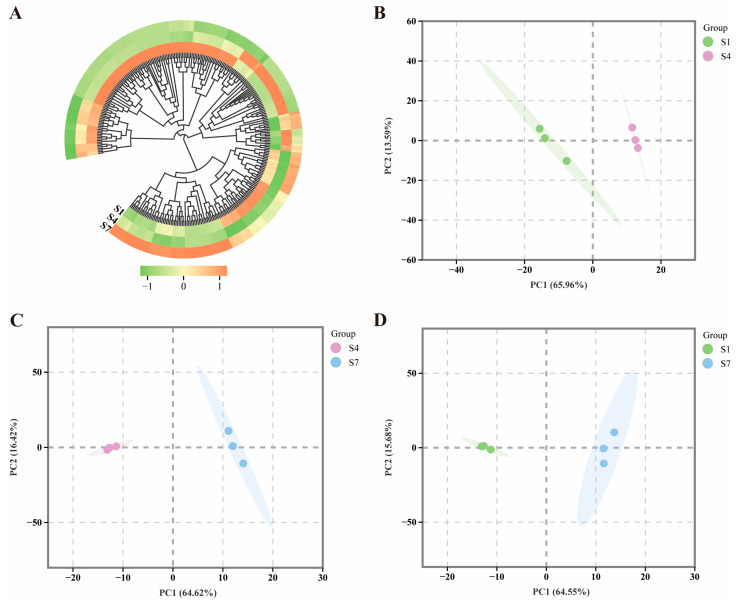 Figure 2
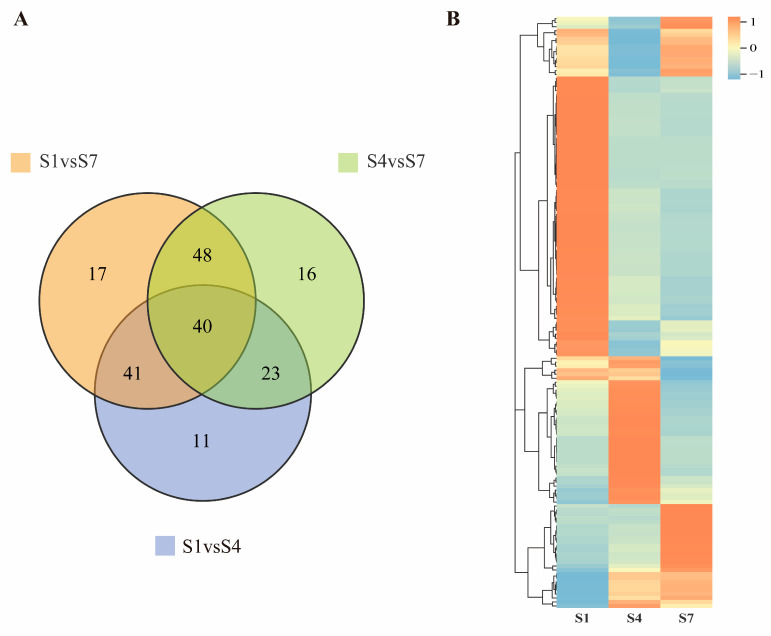 Figure 3
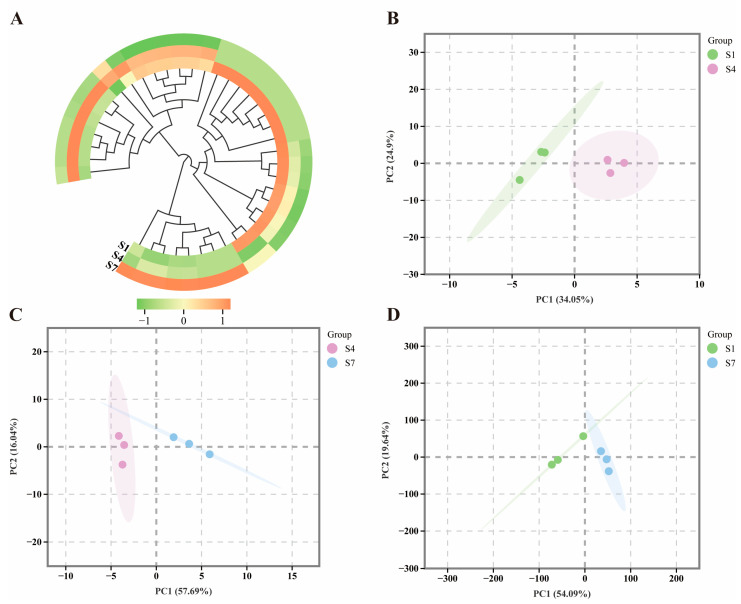 Figure 4
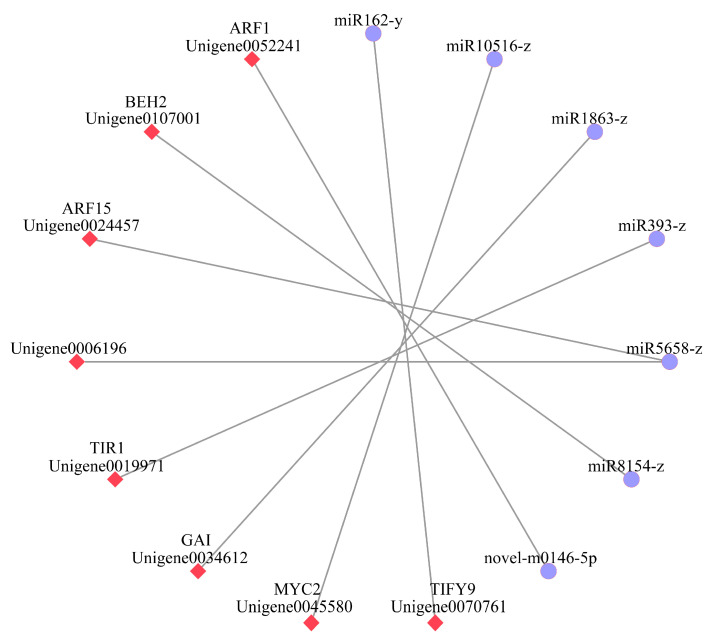 Figure 5
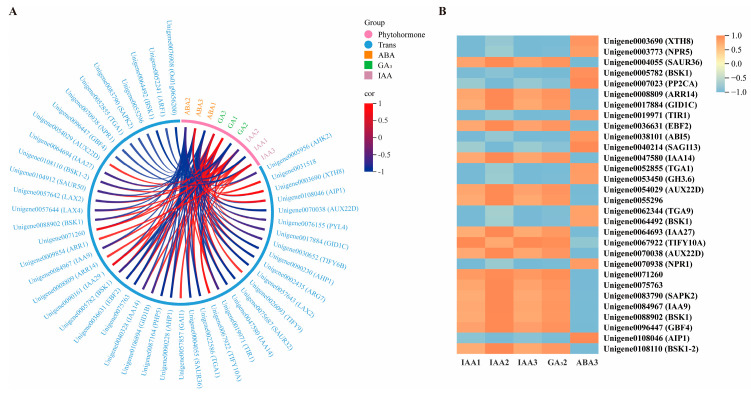 Figure 6
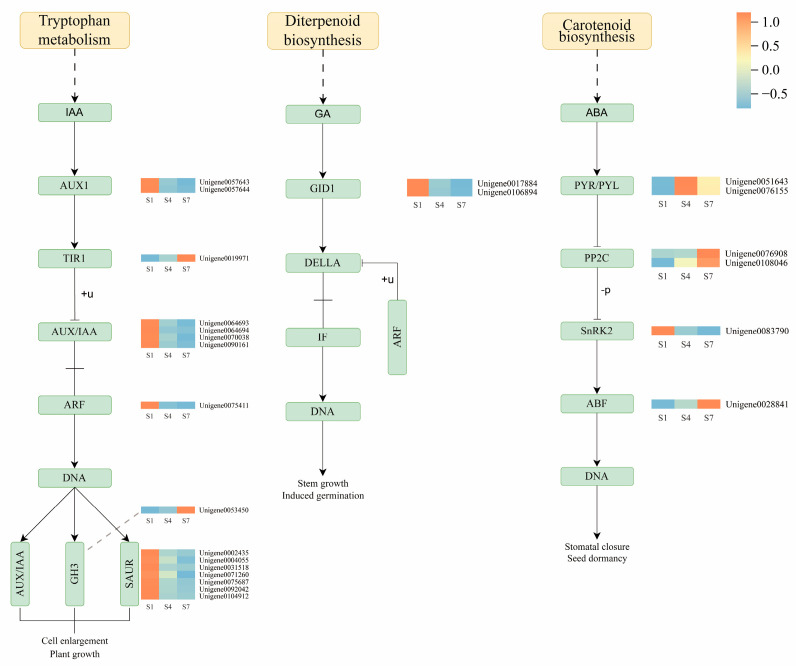 Figure 7
Peer Reviews
No public reviews on file for this paper yet. If you reviewed it on a platform where reviews are public (OpenReview, ICLR, NeurIPS, ICML), you can paste yours below so the community can read it here.
Videos
No videos yet. Explain this paper in a talk, walkthrough, or lecture? Add one.
Taxonomy
TopicsPlant Molecular Biology Research · Lipid metabolism and biosynthesis · Plant Physiology and Cultivation Studies