Persistence-Weighted Performance Metric for PID Gain Optimization in Optical Tracking of Unknown Space Objects
Chul Hyun, Donggeon Kim, Hyunseung Kim, Seungwook Park

TL;DR
This paper introduces a new metric for optimizing PID controllers in optical tracking of unknown space objects, improving accuracy and stability.
Contribution
The novel Persistence-Weighted Tracking Index (PWTI) combines spatial precision and temporal continuity for controller tuning.
Findings
PWTI outperforms RMS and PT metrics in alignment accuracy and consistency.
A genetic algorithm using PWTI effectively tunes PID gains for optical tracking.
Results validate PWTI as a better performance indicator for unknown space object identification.
Abstract
Optical tracking of unknown space objects requires both spatial accuracy and temporal stability to enable high-resolution identification through narrow field-of-view sensors. Traditional performance indices such as RMS error and persistence time (PT) have been used for controller tuning, but they each capture only a subset of the requirements for successful optical identification. This paper proposes a new composite metric, the Persistence-Weighted Tracking Index (PWTI), which combines spatial precision and segment-level continuity into a single measure. The metric assigns a frame-level score based on positional error and accumulates weighted scores over the longest continuous in-threshold segment. Using PWTI as the optimization objective, a genetic algorithm (GA) is employed to tune the PID gains of a frame-by-frame offset correction controller. Comparative simulations under various…
Genes, proteins, chemicals, diseases, species, mutations and cell lines named across the full text — each resolved to its canonical identifier and authoritative record.
Click any figure to enlarge with its caption.
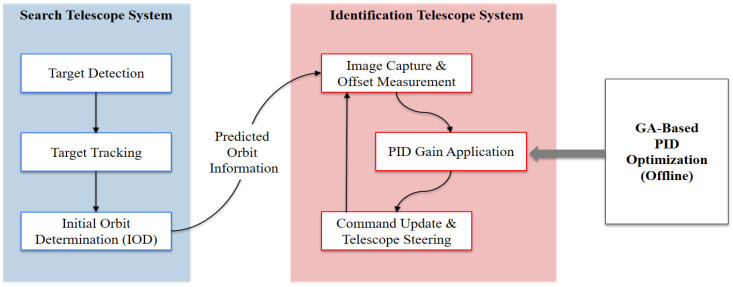 Figure 1
 Figure 2
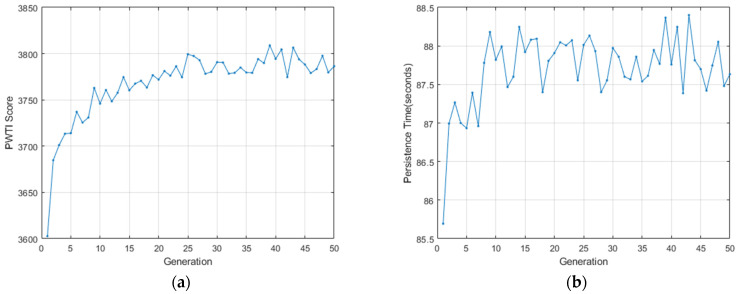 Figure 3
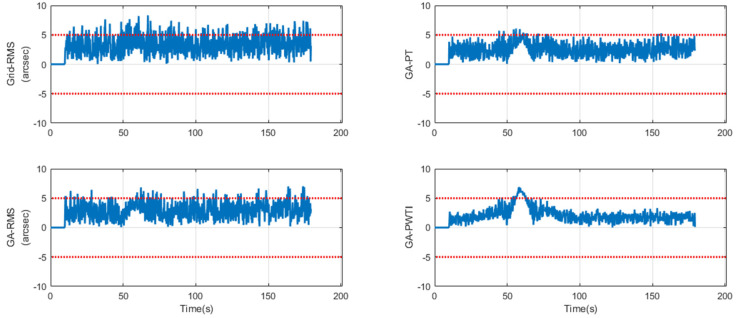 Figure 4
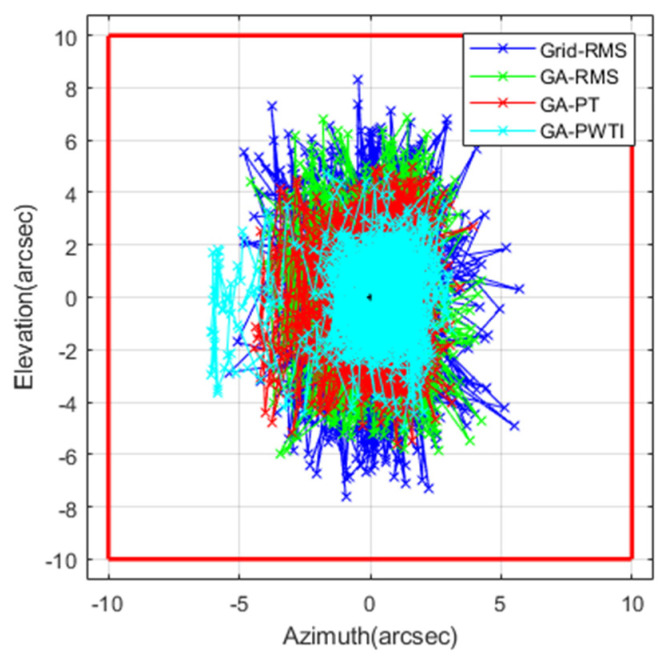 Figure 5
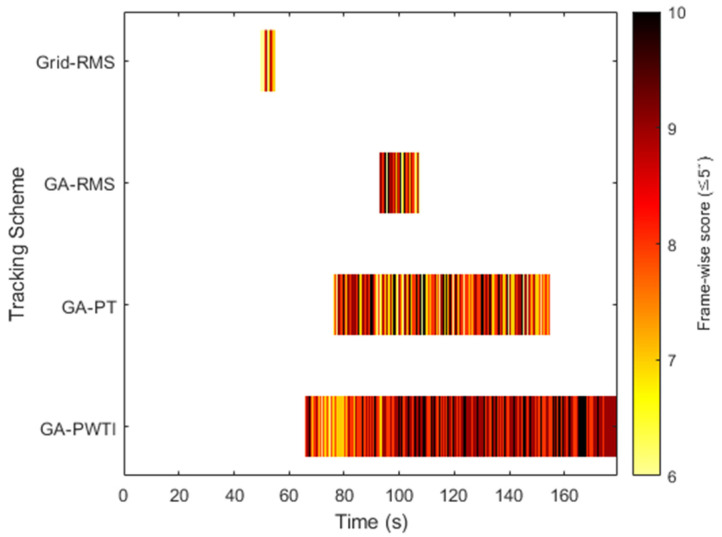 Figure 6
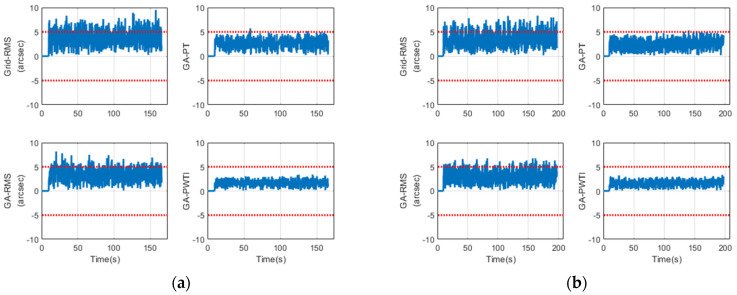 Figure 7
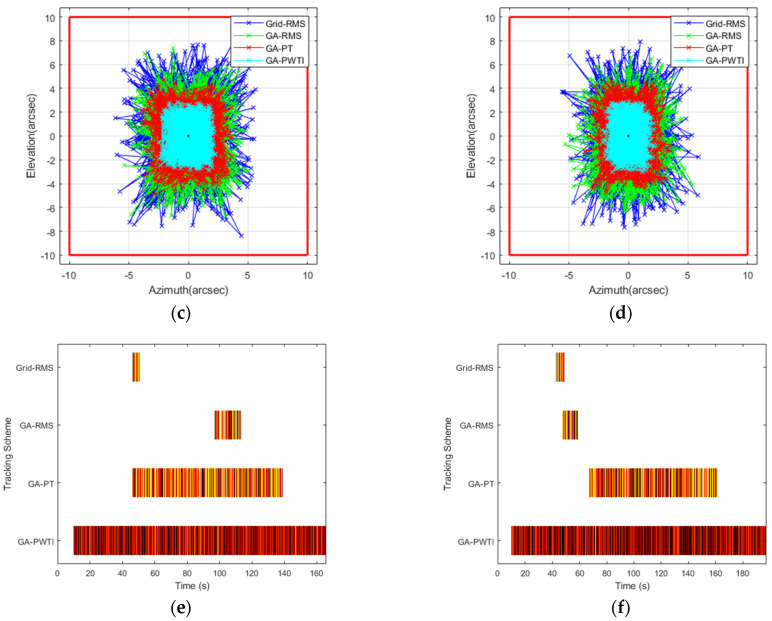 Figure 8
Peer Reviews
No public reviews on file for this paper yet. If you reviewed it on a platform where reviews are public (OpenReview, ICLR, NeurIPS, ICML), you can paste yours below so the community can read it here.
Videos
No videos yet. Explain this paper in a talk, walkthrough, or lecture? Add one.
Taxonomy
TopicsSpace Satellite Systems and Control · Inertial Sensor and Navigation · Spacecraft Dynamics and Control