Global Myocardial Wall Thickness in Transfusion-Dependent Thalassemia: A Cross-Sectional MRI Analysis
Antonella Meloni, Laura Pistoia, Giuseppe Peritore, Michela Zerbini, Stefania Renne, Priscilla Fina, Antonino Vallone, Filomena Longo, Anna Spasiano, Zelia Borsellino, Valerio Cecinati, Giuseppe Messina, Elisabetta Corigliano, Vincenzo Positano, Andrea Barison, Alberto Clemente

TL;DR
This study finds that global myocardial wall thickness is higher in transfusion-dependent thalassemia patients compared to healthy controls and is linked to factors like male sex and severe iron overload.
Contribution
The study introduces the global wall thickness index (GTI) as a novel CMR-derived metric for assessing TDT patients.
Findings
GTI better discriminates TDT patients from controls than LV end-diastolic volume index.
GTI is higher in males, those with diabetes, and severe myocardial iron overload.
GTI is associated with a history of heart failure and performs better than LV ejection fraction in this context.
Abstract
Background: This retrospective cross-sectional study evaluated the association of the global wall thickness index (GTI), derived from cardiovascular magnetic resonance (CMR), with demographic, clinical, and imaging findings, as well as heart failure history in transfusion-dependent thalassemia (TDT) patients. Methods: We analyzed 1154 TDT patients (52.9% female, 37.46 ± 10.67 years) from the Extension-Myocardial Iron Overload in Thalassemia project and 167 healthy controls (54.5% female, 36.33 ± 15.78 years). The CMR protocol included the T2* technique for the assessment of iron overload, cine imaging for the assessment of left ventricular (LV) function and size, and late gadolinium enhancement (LGE) imaging for the detection of replacement myocardial fibrosis (in the subset of 366 patients who underwent contrast administration). GTI (in mm/m2) was calculated from LV mass and…
Genes, proteins, chemicals, diseases, species, mutations and cell lines named across the full text — each resolved to its canonical identifier and authoritative record.
Click any figure to enlarge with its caption.
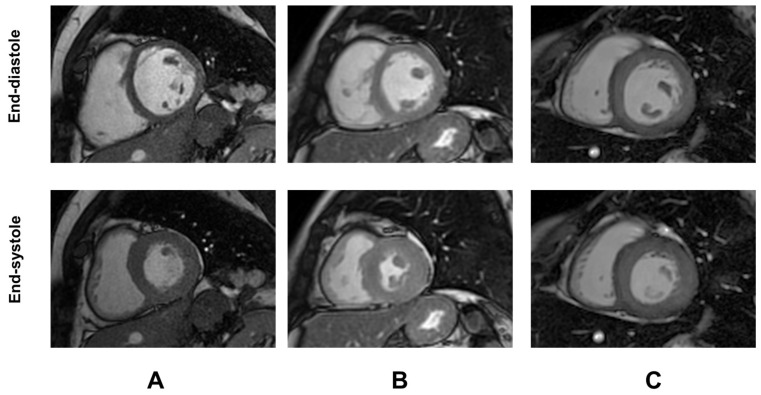 Figure 1
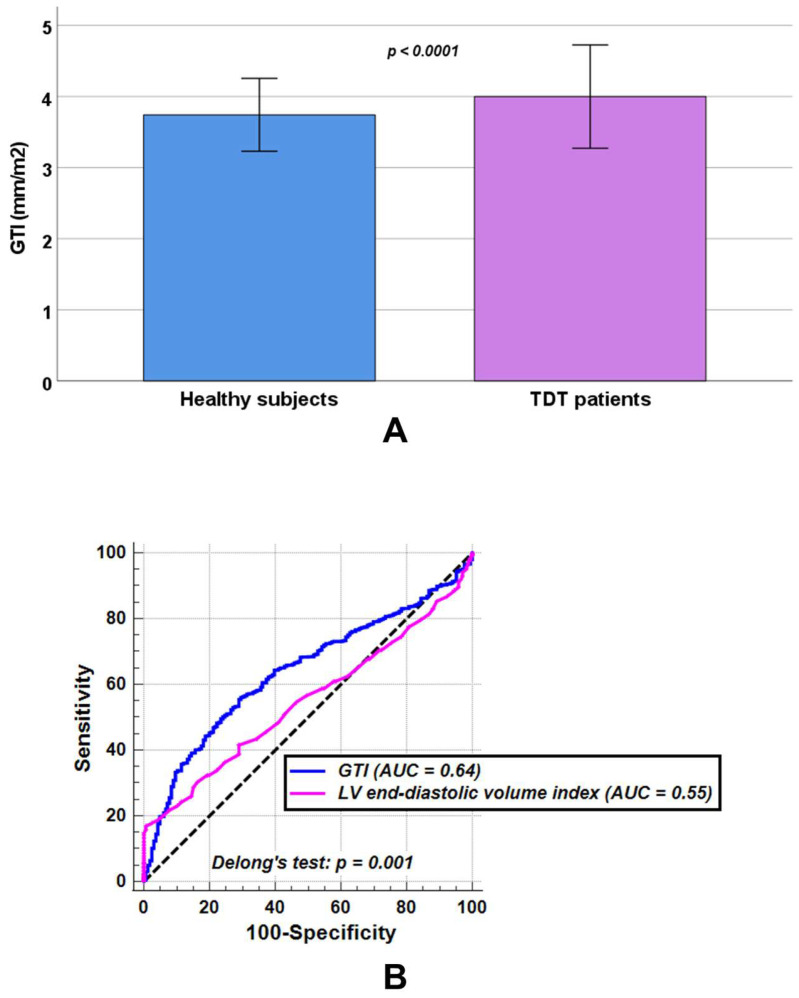 Figure 2
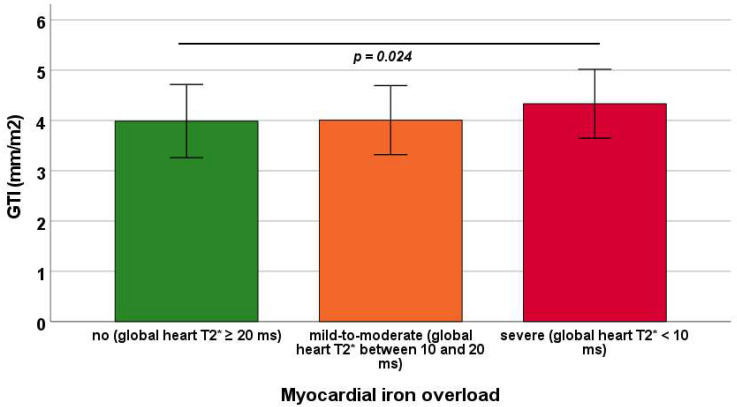 Figure 3
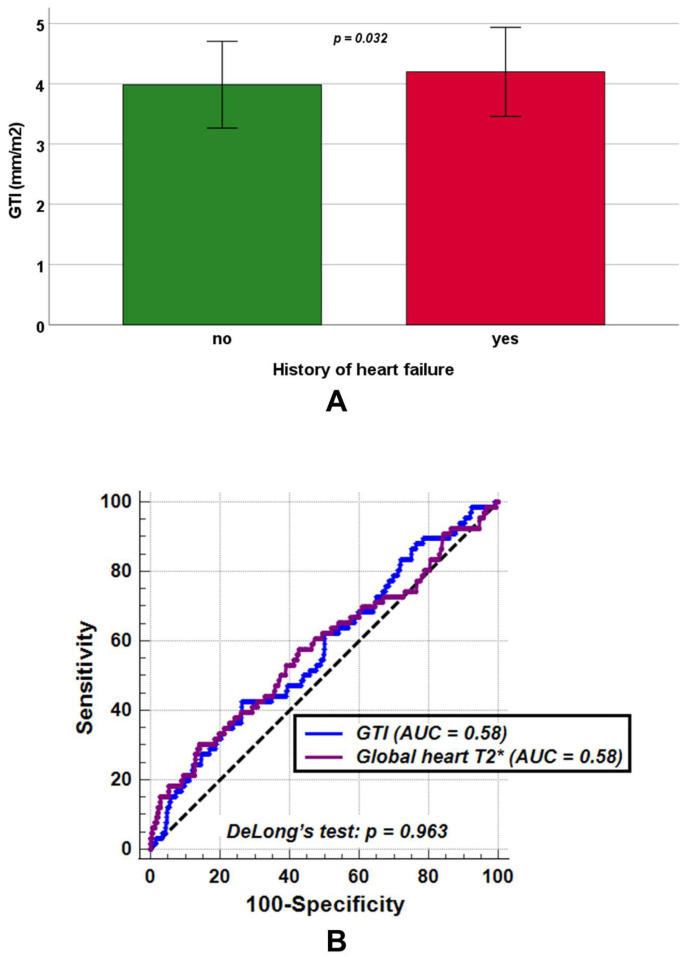 Figure 4
Peer Reviews
No public reviews on file for this paper yet. If you reviewed it on a platform where reviews are public (OpenReview, ICLR, NeurIPS, ICML), you can paste yours below so the community can read it here.
Videos
No videos yet. Explain this paper in a talk, walkthrough, or lecture? Add one.
Taxonomy
TopicsHemoglobinopathies and Related Disorders · Erythropoietin and Anemia Treatment · Myeloproliferative Neoplasms: Diagnosis and Treatment