Experimental Study on the Role of Bond Elasticity and Wafer Toughness in Back Grinding of Single-Crystal Wafers
Joong-Cheul Yun, Dae-Soon Lim

TL;DR
This study explores how bond elasticity and wafer toughness affect the back grinding of semiconductor wafers, offering practical insights for optimizing the process.
Contribution
The study derives a log-linear empirical model linking diamond protrusion height to bond elasticity and wafer toughness, validated experimentally.
Findings
A log-linear relationship between diamond protrusion height and bond elasticity and wafer toughness was experimentally verified.
Increasing bond modulus from 95.24 to 131.38 GPa reduced diamond protrusion height for SiC wafers.
Optimal grinding conditions were identified to balance removal rate, surface quality, and subsurface damage.
Abstract
Grinding semiconductor wafers with high hardness, such as SiC, remains a significant challenge due to the need to maximize material removal rates while minimizing subsurface damage. In the back-grinding process, two key parameters—the elastic modulus (Eb) of the grinding wheel bond and the fracture toughness (KIC) of the wafer—play a critical role in governing the behavior of diamond and the extent of wafer damage. This study systematically investigated the effect of Eb and KIC on diamond protrusion height (hp), surface roughness (Ra), grinding forces, and the morphology of generated debris. The study encompassed four wafer types—Si, GaP, sapphire, and ground SiC—using five Back-Grinding Wheels (BGWs), with Eb ranging from 95.24 to 131.38 GPa. A log–linear empirical relationship linking hp to Eb and KIC was derived and experimentally verified, demonstrating high predictive accuracy…
Genes, proteins, chemicals, diseases, species, mutations and cell lines named across the full text — each resolved to its canonical identifier and authoritative record.
Click any figure to enlarge with its caption.
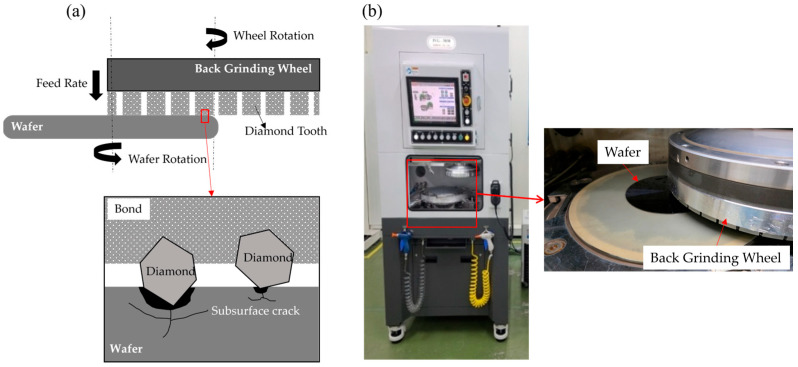 Figure 1
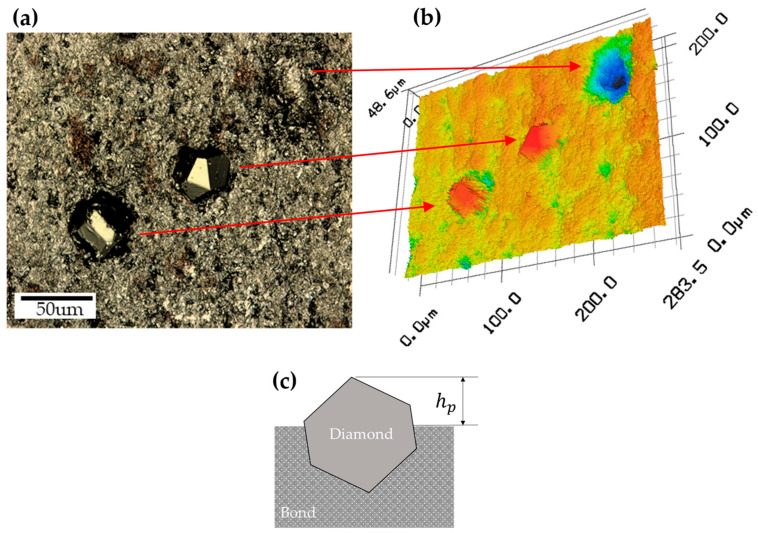 Figure 2
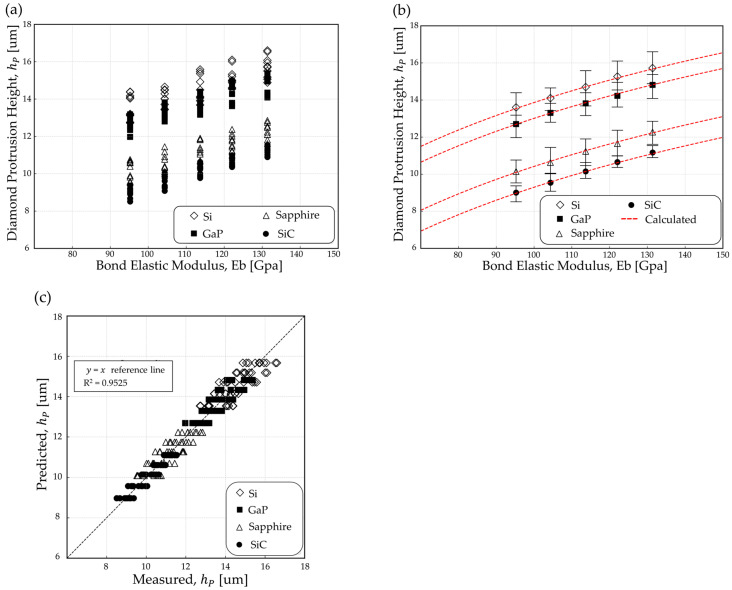 Figure 3
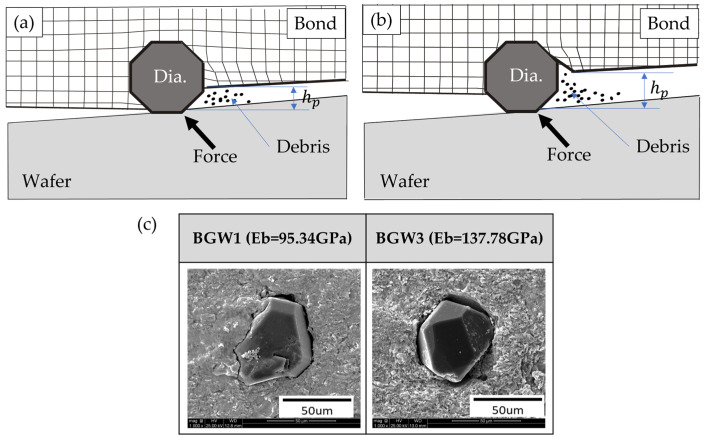 Figure 4
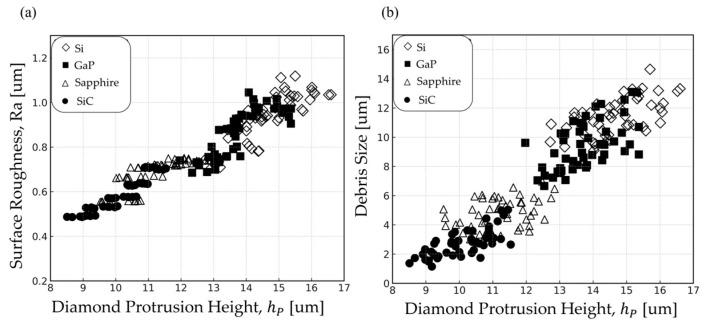 Figure 5
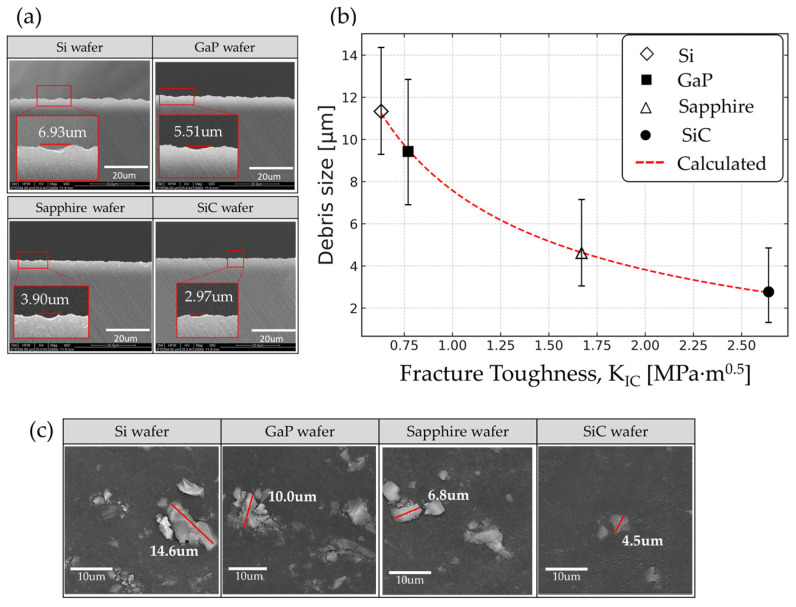 Figure 6
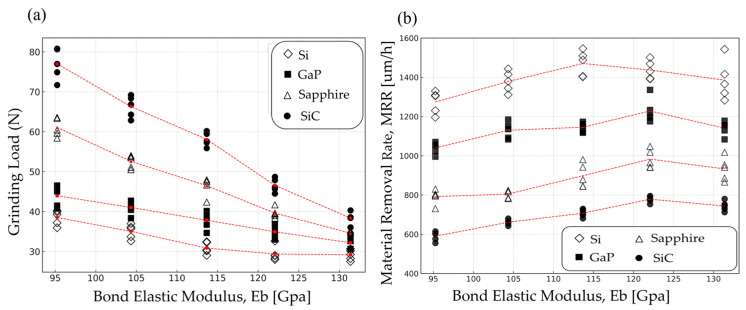 Figure 7
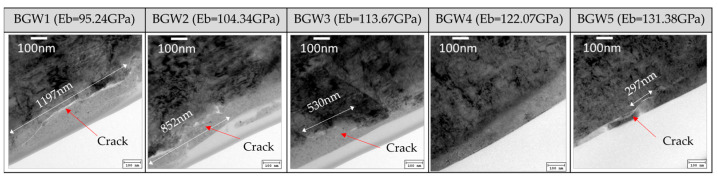 Figure 8
Peer Reviews
No public reviews on file for this paper yet. If you reviewed it on a platform where reviews are public (OpenReview, ICLR, NeurIPS, ICML), you can paste yours below so the community can read it here.
Videos
No videos yet. Explain this paper in a talk, walkthrough, or lecture? Add one.
Taxonomy
TopicsAdvanced Surface Polishing Techniques · Advanced machining processes and optimization · Tunneling and Rock Mechanics