Association Between Dietary Tomato Intake and Blood Eosinophil Count in Middle-Aged and Older Japanese Individuals: A Population-Based Cross-Sectional Study
Akinori Hara, Hiromasa Tsujiguchi, Rio Fukuchi, Masaharu Nakamura, Jam Camara, Marama Talica, Jiaye Zhao, Chie Takazawa, Fumihiko Suzuki, Haruhiko Ogawa, Takayuki Kannon, Takehiro Sato, Atsushi Tajima, Hiroyuki Nakamura

TL;DR
Higher tomato intake in middle-aged and older Japanese individuals is linked to lower blood eosinophil counts, suggesting a potential role in managing allergic and inflammatory diseases.
Contribution
This study identifies an inverse association between dietary tomato intake and elevated blood eosinophil counts in Japanese adults.
Findings
An increase in tomato intake of 10 g was inversely associated with elevated blood eosinophil counts (OR, 0.895; 95% CI, 0.834–0.961).
Except for chronic kidney disease, baseline characteristics did not influence the association between tomato intake and eosinophil counts.
Abstract
Background/Objectives: Although tomato consumption has been associated with positive health outcomes, it remains unclear whether it can prevent or exacerbate allergic diseases by regulating eosinophils. We explored the association between dietary tomato intake and blood eosinophil counts in Japanese individuals. Methods: This population-based, cross-sectional study included 1013 participants aged ≥ 40 years. The dietary intake of tomatoes was assessed using a validated, self-administered diet history questionnaire. The peripheral blood eosinophil count was measured, and an elevated blood eosinophil count was defined as a value that exceeded the ≥75th percentile. Results: The mean age of the participants was 62.5 ± 11.2 years, with 474 (46.8%) being male. Overall, 252 participants exhibited elevated blood eosinophil counts (≥204/μL). In the multivariable logistic regression model with…
Genes, proteins, chemicals, diseases, species, mutations and cell lines named across the full text — each resolved to its canonical identifier and authoritative record.
Click any figure to enlarge with its caption.
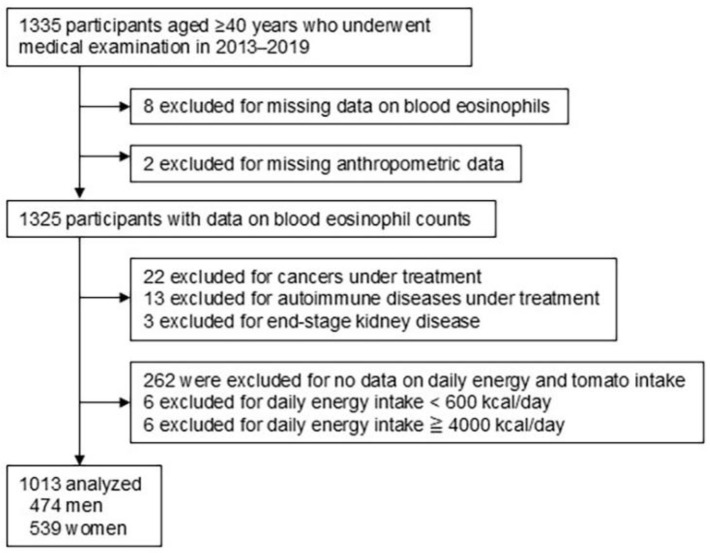 Figure 1
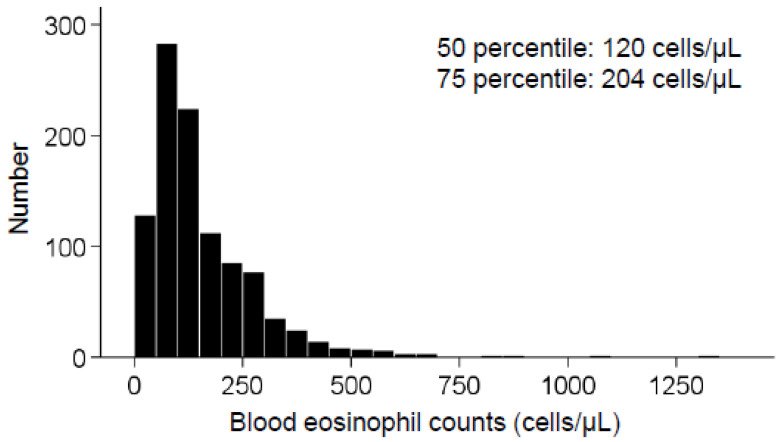 Figure 2
Peer Reviews
No public reviews on file for this paper yet. If you reviewed it on a platform where reviews are public (OpenReview, ICLR, NeurIPS, ICML), you can paste yours below so the community can read it here.
Videos
No videos yet. Explain this paper in a talk, walkthrough, or lecture? Add one.
Taxonomy
TopicsAsthma and respiratory diseases · Eosinophilic Esophagitis · Eosinophilic Disorders and Syndromes