Seasonal Trends in Cardiac Troponin I Concentration and Creatine Kinase and Aspartate Aminotransferase Enzyme Activity in Relation to Myocardial Velocity Rates in Eventing Horses
Insa Rump-Dierig, Johanna Giers, Charlotte Frenzel, Sabita Stöckle, Heidrun Gehlen

TL;DR
This study tracks heart and muscle stress in eventing horses during a competition season, finding that blood tests and heart ultrasounds can detect overexertion.
Contribution
The study identifies a novel correlation between cardiac troponin I levels and early diastolic myocardial velocity in eventing horses.
Findings
Blood levels of CK, AST, and cTnI showed seasonal variation and partial normalization after exercise.
Early diastolic myocardial velocity (Em) correlated with cTnI levels, suggesting sensitivity to myocardial injury.
Biomarkers and echocardiography can detect subclinical fatigue in high-performance horses.
Abstract
In this study, eventing horses were monitored over the course of a competition season. This study examined the extent to which their skeletal and cardiac muscles were stressed by training and competition. After riding, creatine kinase (CK) and aspartate aminotransferase (AST), as well as cardiac troponin I (cTnI), levels rose briefly but mostly returned to normal. Echocardiographic measurements demonstrated that myocardial velocities remained largely stable but showed slight seasonal fluctuations. A significant correlation was found between cTnI levels and early diastolic myocardial velocity (Em). We conclude that blood tests and cardiac ultrasound can be used to determine whether a horse is overexerting itself. Therefore, regular check-ups help to better protect the health and performance of horses. This study examines seasonal changes in muscle and heart parameters in eventing horses…
Genes, proteins, chemicals, diseases, species, mutations and cell lines named across the full text — each resolved to its canonical identifier and authoritative record.
Click any figure to enlarge with its caption.
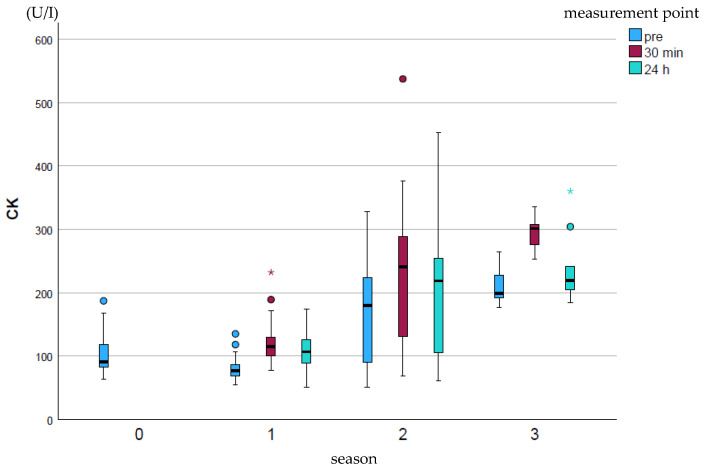 Figure 1
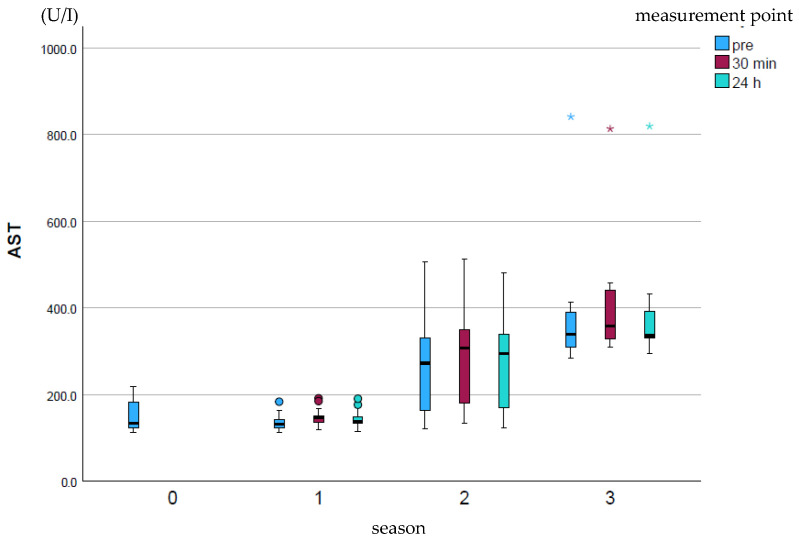 Figure 2
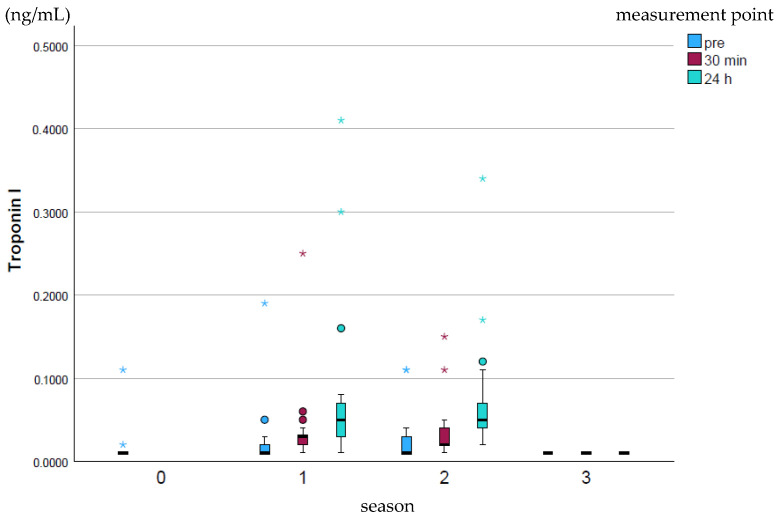 Figure 3
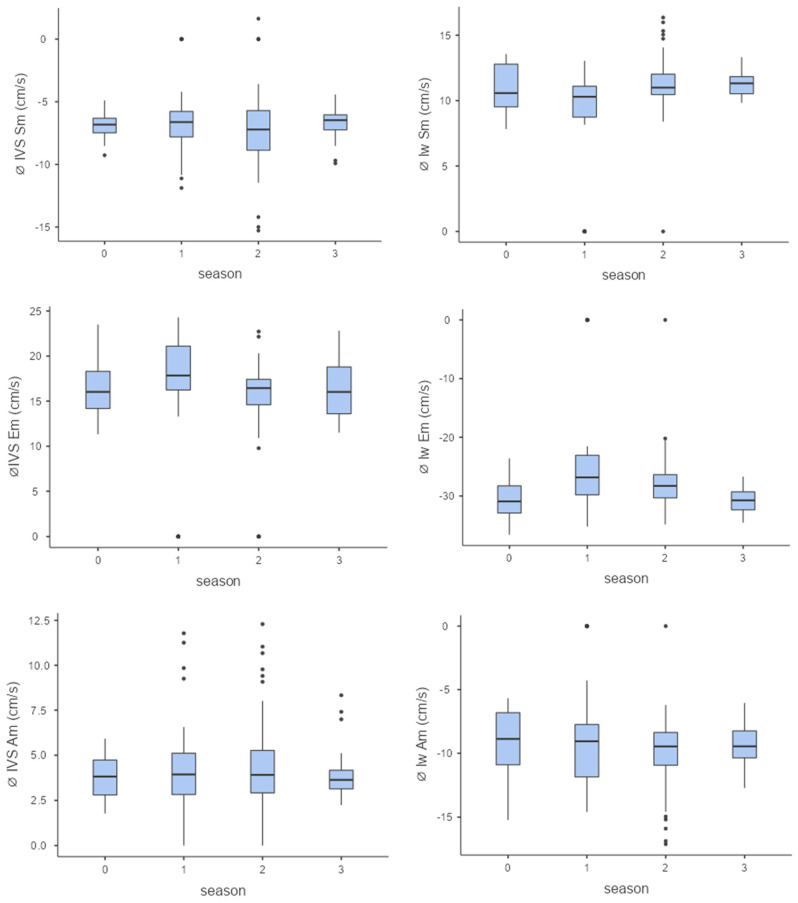 Figure 4
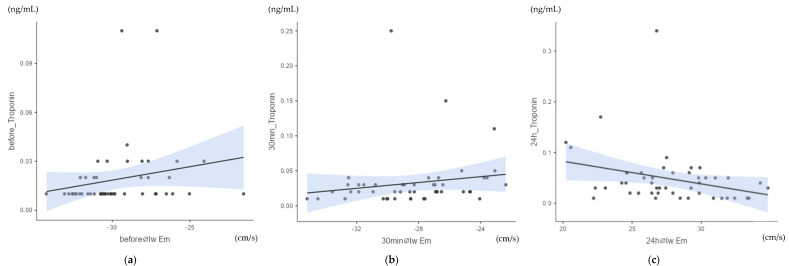 Figure 5
Peer Reviews
No public reviews on file for this paper yet. If you reviewed it on a platform where reviews are public (OpenReview, ICLR, NeurIPS, ICML), you can paste yours below so the community can read it here.
Videos
No videos yet. Explain this paper in a talk, walkthrough, or lecture? Add one.
Taxonomy
TopicsVeterinary Equine Medical Research · Exercise and Physiological Responses · Cardiovascular Effects of Exercise