Prolonged Normal Thyroid Function After 131I Radioiodine Therapy Using a Minute LT3 Suppression Test (LT3s-RIT) in Patients with Thyroid Unifocal Autonomy and Baseline Detectable TSH
Jérôme Clerc, Paul Bodin-Cufi, Louise Giraud, Aurélie Forbes, Emmanuelle Laroche-Masse, Lionel Groussin Rouiller, Louis Schubert, Yvan Mouraeff, Kawtar Hilmy, Anne-Ségolène Cottereau, Eve Piekarski

TL;DR
A new method using low-dose thyroid hormone before radioiodine treatment helps most patients with thyroid autonomy maintain normal thyroid function long-term.
Contribution
LT3-induced TSH suppression during 131I-RIT preserves euthyroidism in UFA patients with SCH G1, avoiding hypothyroidism.
Findings
93% of patients maintained normal thyroid function after 88 months.
LT3 suppression reduced extra-nodular radiation dose without adverse effects.
Low 131I doses achieved effective treatment with minimal hypothyroidism.
Abstract
Background: Subclinical hyperthyroidism grade 1 (SCH G1, TSH > 0.1 mU/L) is common in patients with thyroid unifocal autonomy (UFA) and associated with cardiovascular risks and increased mortality. While 131I radioiodine therapy (131I-RIT) effectively treats UFA, it frequently induces hypothyroidism, partly due to extra-nodular absorbed dose (AD) enhanced by residual TSH stimulation. Objective: We hypothesized that short-term LT3-induced TSH suppression at the time of RIT would promote long-term euthyroidism. Patients and Methods: A retrospective study was conducted on 95 UFA patients with SCH G1 (2001–2024). Patients underwent baseline and post-LT3 thyroid scintigraphy, and then received 131I-RIT with individualized dosimetry. Long-term bioclinical follow-up was achieved. Results: Short-term low-dose LT3 suppression caused no adverse events and significantly reduced TSH (0.45 to 0.047…
Genes, proteins, chemicals, diseases, species, mutations and cell lines named across the full text — each resolved to its canonical identifier and authoritative record.
Click any figure to enlarge with its caption.
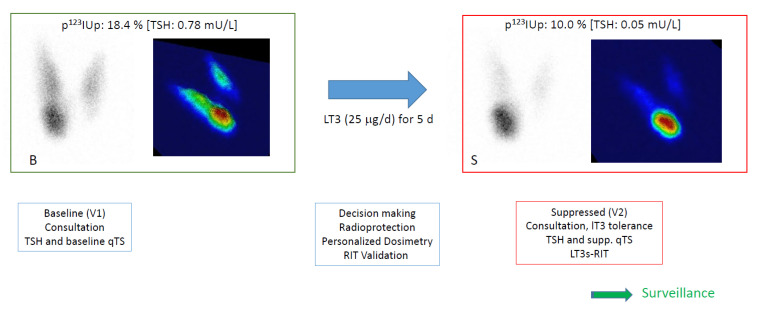 Figure 1
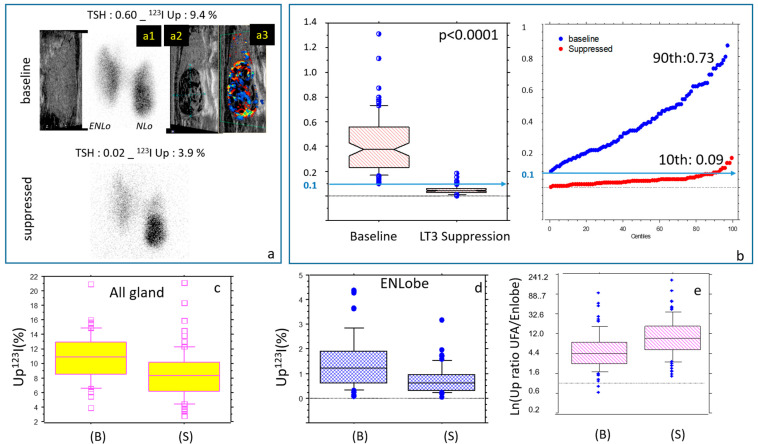 Figure 2
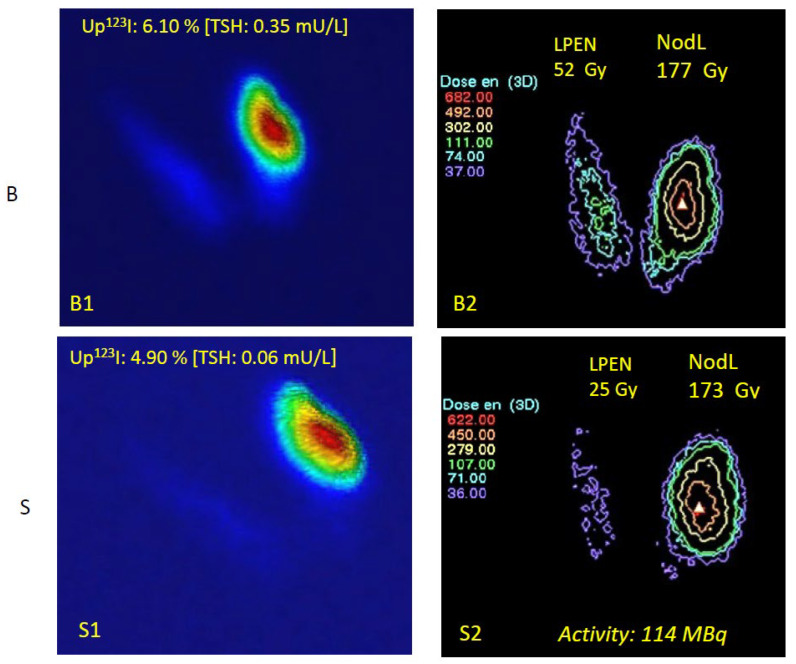 Figure 3
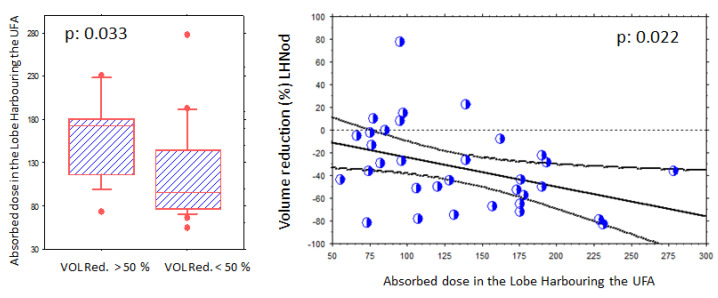 Figure 4
Peer Reviews
No public reviews on file for this paper yet. If you reviewed it on a platform where reviews are public (OpenReview, ICLR, NeurIPS, ICML), you can paste yours below so the community can read it here.
Videos
No videos yet. Explain this paper in a talk, walkthrough, or lecture? Add one.
Taxonomy
TopicsThyroid Disorders and Treatments · Thyroid Cancer Diagnosis and Treatment · Ophthalmology and Eye Disorders