iGlucoSnFR2: A genetically encoded fluorescent sensor for measuring intracellular or extracellular glucose in vivo in mouse brain
Jonathan S. Marvin, Philipp Mächler, Chengbo Meng, Tayfun Ates, Ronak H. Patel, Raghabendra Adhikari, Monika A. Makurath, Zaneta Ku, Daniel Feliciano, Deniz Atasoy, Guohong Cui, David Kleinfeld, Timothy A. Brown

TL;DR
A new fluorescent sensor called iGlucoSnFR2 can measure glucose levels inside and outside cells in the mouse brain, offering high-resolution insights into glucose dynamics.
Contribution
iGlucoSnFR2 is a second-generation sensor that improves on the original by enabling in vivo measurements of both intracellular and extracellular glucose in live mice.
Findings
iGlucoSnFR2 reports intracellular glucose consumption and gluconeogenesis in cell culture.
The sensor outperforms the original iGlucoSnFR in detecting glucose changes in the mouse brain in vivo.
Membrane-targeted iGlucoSnFR2 can measure absolute extracellular glucose concentration in awake mice.
Abstract
Continuous glucose monitors have proven invaluable for monitoring blood glucose levels for diabetics, but they are of limited use for observing glucose dynamics at the cellular (or subcellular) level. We have developed a second generation, genetically encoded intensity-based glucose sensing fluorescent reporter (iGlucoSnFR2). We show that when it is targeted to the cytosol, it reports intracellular glucose consumption and gluconeogenesis in cell culture, along with efflux from the endoplasmic reticulum. It outperforms the original iGlucoSnFR in vivo when observed by fiber photometry in mouse brain and reports transient increase in glucose concentration when stimulated by noradrenaline or electrical stimulation. Last, we demonstrate that membrane localized iGlucoSnFR2 can be calibrated in vivo to indicate absolute changes in extracellular glucose concentration in awake mice. We…
Genes, proteins, chemicals, diseases, species, mutations and cell lines named across the full text — each resolved to its canonical identifier and authoritative record.
Click any figure to enlarge with its caption.
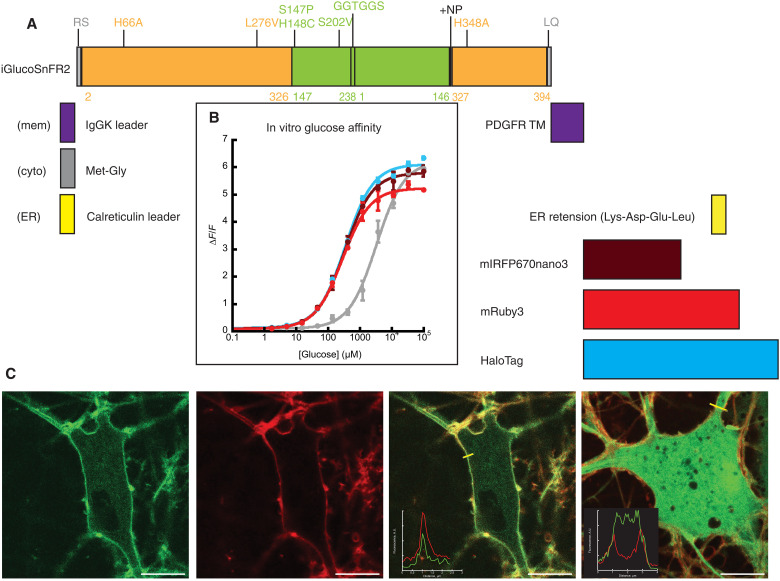 Figure 1
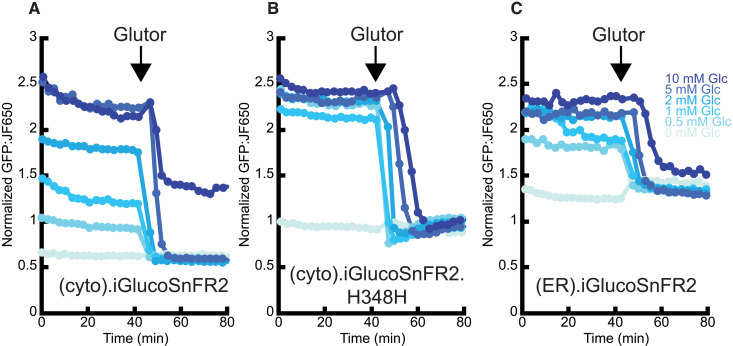 Figure 2
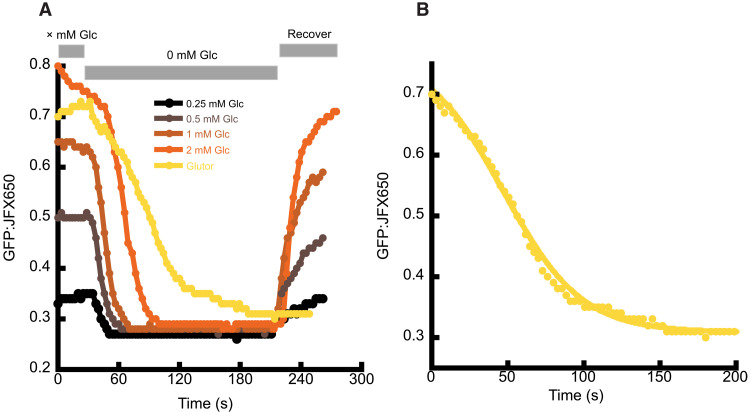 Figure 3
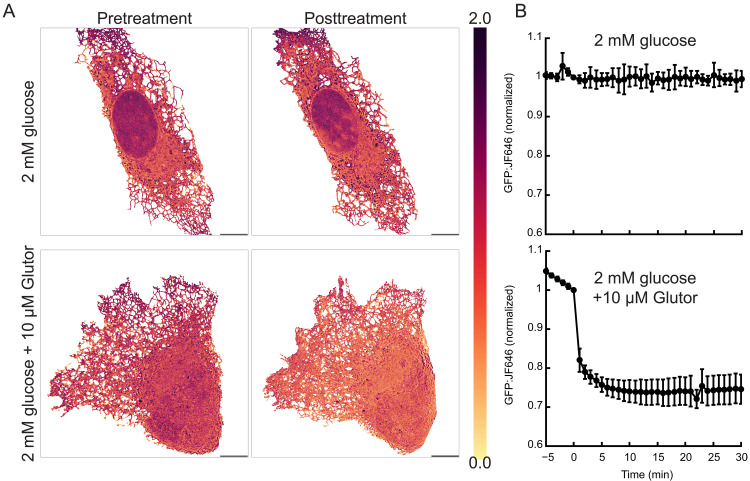 Figure 4
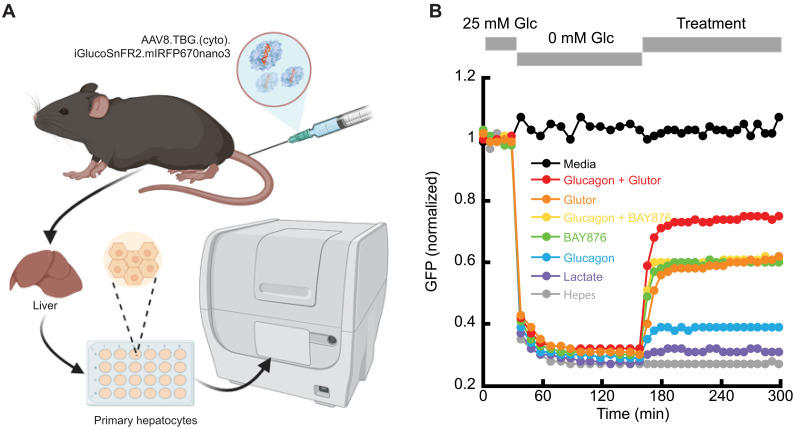 Figure 5
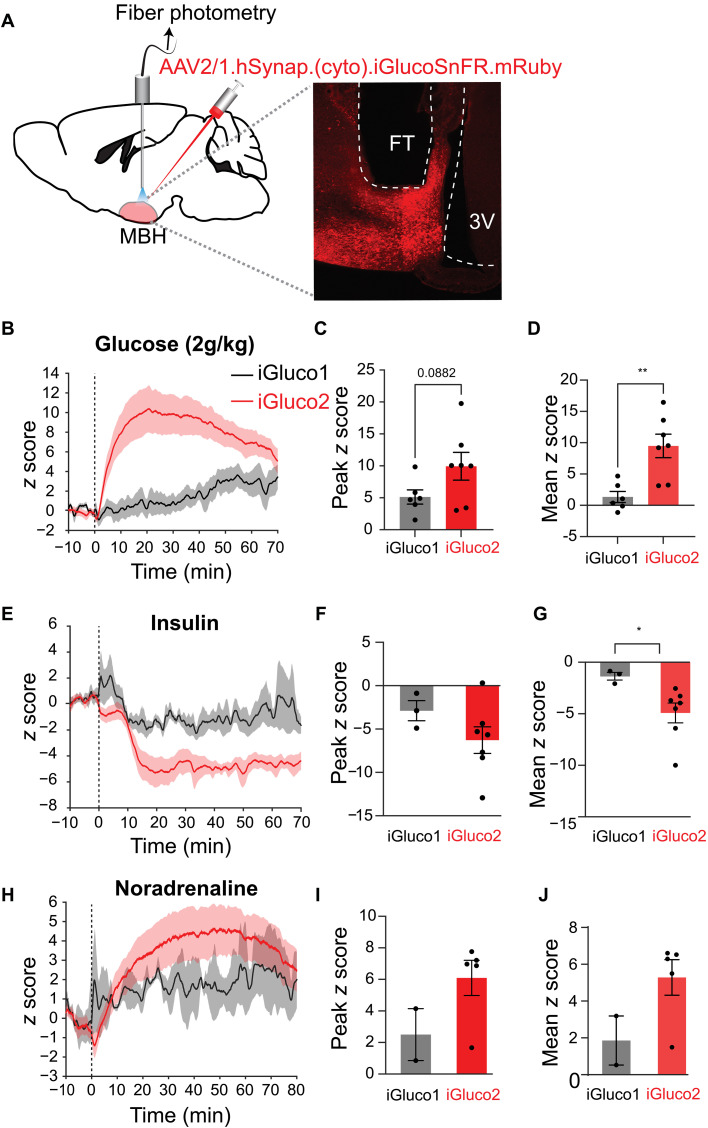 Figure 6
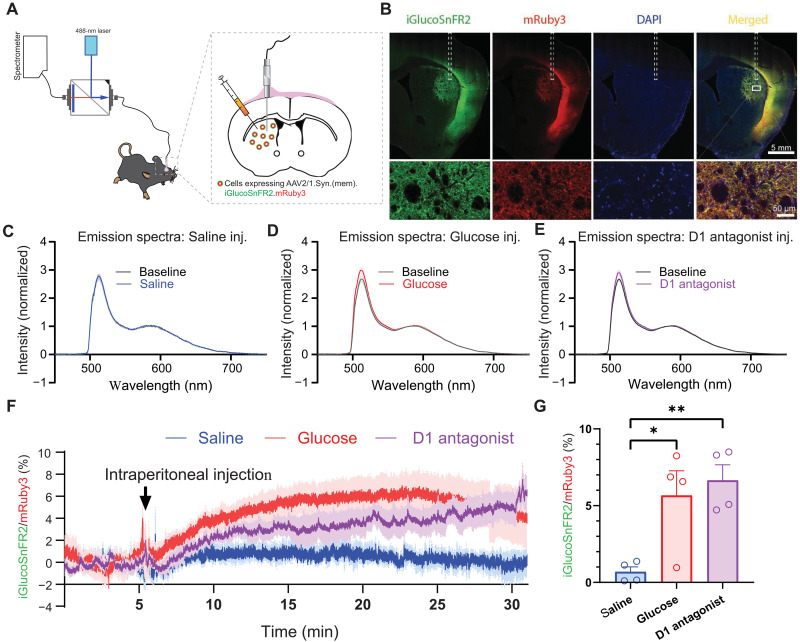 Figure 7
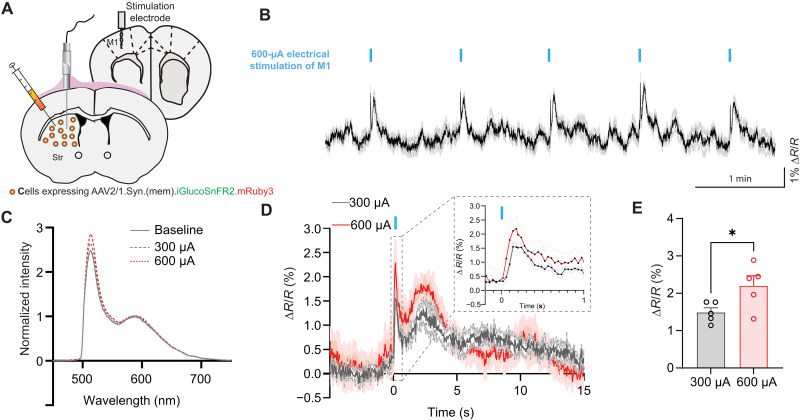 Figure 8
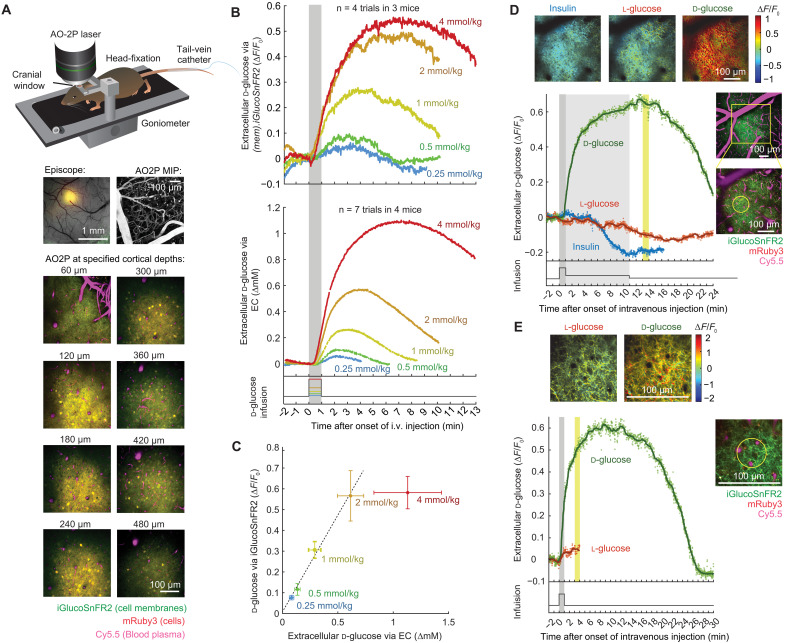 Figure 9
Peer Reviews
No public reviews on file for this paper yet. If you reviewed it on a platform where reviews are public (OpenReview, ICLR, NeurIPS, ICML), you can paste yours below so the community can read it here.
Videos
No videos yet. Explain this paper in a talk, walkthrough, or lecture? Add one.
Taxonomy
TopicsSpectroscopy Techniques in Biomedical and Chemical Research · Metabolism, Diabetes, and Cancer · Advanced Fluorescence Microscopy Techniques