Deep Sequencing Analysis of Hepatitis C Virus Subtypes and Resistance-Associated Substitutions in Genotype 4 Patients Resistant to Direct-Acting Antiviral (DAA) Treatment in Egypt
Damir Garcia-Cehic, Asmaa Mosbeh, Heba A. Gad, Asmaa Ibrahim Gomaa, Marta Ibañez Lligoña, Josep Gregori, Sergi Colomer-Castell, Carolina Campos, Francisco Rodriguez-Frias, Juan Ignacio Esteban, Mohamed S. Kohla, Mohamed Helmy Abdel-Rahman, Josep Quer

TL;DR
This study analyzes HCV subtypes and resistance mutations in Egyptian patients who failed DAA treatment, finding that rare subtypes show distinct resistance patterns.
Contribution
The study identifies unique resistance-associated substitutions in rare HCV genotype 4 subtypes using deep sequencing in Egypt.
Findings
HCV genotype 4 subtypes G4a, G4o, and G4m show distinct resistance-associated substitution patterns.
Next-generation sequencing reveals reinfection and polymorphism variations in the Nile Delta region.
Resistance patterns in NS5A differ among subtypes, affecting treatment outcomes.
Abstract
Egypt has the highest global prevalence of hepatitis C virus (HCV), with genotype 4 (G4) in over 94% of cases. Direct-acting antivirals (DAAs) yield sustained virologic response (SVR) rates above 95%. Second-generation DAAs are recommended for patients with virological failure, achieving over 90% eradication. This study aimed to classify and evaluate the pattern of HCV resistance-associated substitutions (RASs) in patients who failed DAA treatment in Egypt. A total of 1778 chronically infected HCV patients from Egypt’s Nile Delta were enrolled (2016–2018). Among them, 37 relapsed, and high-quality serum samples from 22 patients were available, including 6 cases with pre- and post-treatment samples. Next-generation sequencing (NGS) was performed for HCV subtyping and RAS identification. Among the 22 analyzed cases, 21 (95.4%) were G4: 11 were classified as subtype G4a, seven G4o, and…
Genes, proteins, chemicals, diseases, species, mutations and cell lines named across the full text — each resolved to its canonical identifier and authoritative record.
Click any figure to enlarge with its caption.
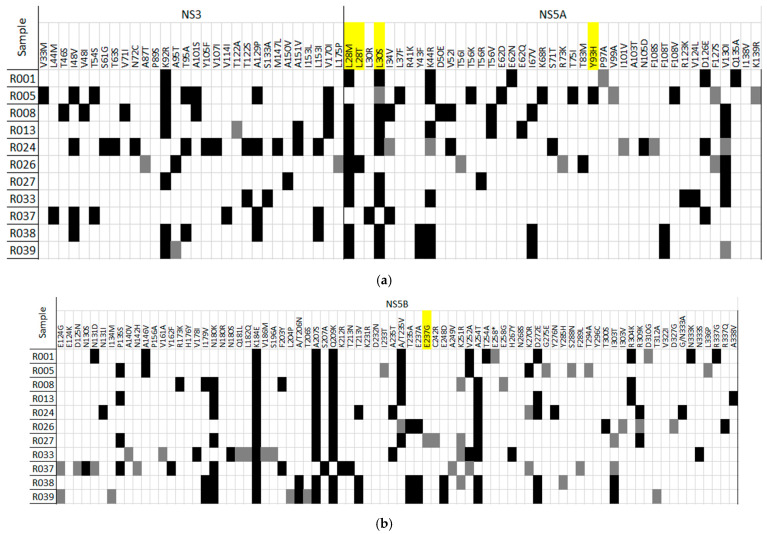 Figure 1
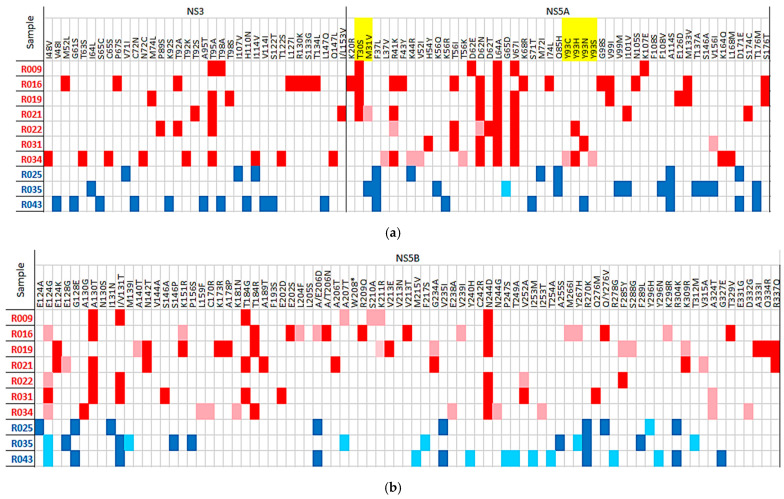 Figure 2
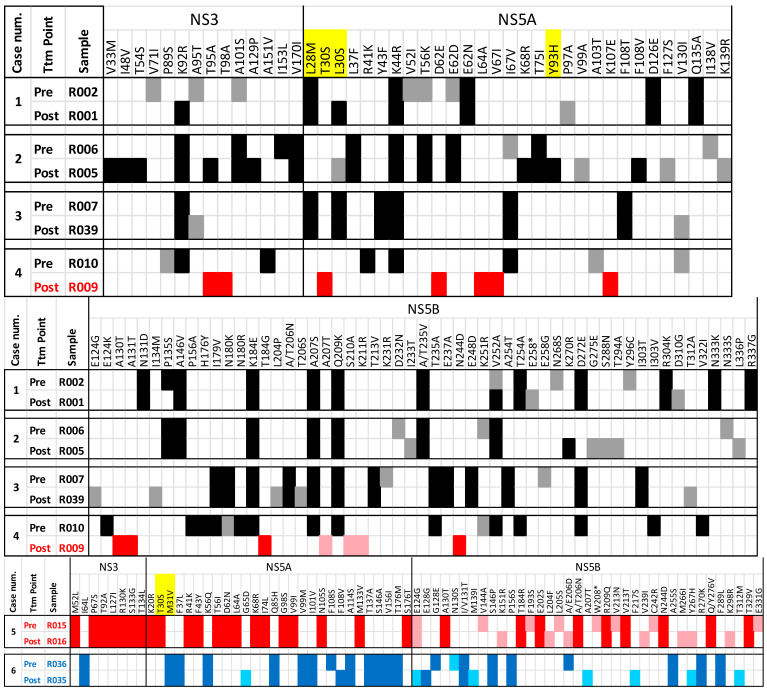 Figure 3
Peer Reviews
No public reviews on file for this paper yet. If you reviewed it on a platform where reviews are public (OpenReview, ICLR, NeurIPS, ICML), you can paste yours below so the community can read it here.
Videos
No videos yet. Explain this paper in a talk, walkthrough, or lecture? Add one.
Taxonomy
TopicsHepatitis C virus research · HIV/AIDS drug development and treatment · HIV-related health complications and treatments