Minimally Invasive Nephrectomy for the Management of Polycystic Kidney Disease: The Hilum-First Technique
Amir Shweiki, Harbi Khalayleh, Michael Rivin, Suha Shabaneh, Abed Khalaileh, Ashraf Imam

TL;DR
This paper introduces a new minimally invasive surgical technique for removing large polycystic kidneys, showing it is safe and effective with low complication rates.
Contribution
The paper presents a novel 'hilum-first' technique for laparoscopic nephrectomy in polycystic kidney disease.
Findings
The hilum-first technique was successfully used in 16 cases without conversion to open surgery.
Patients had low blood loss and short hospital stays, with 75% experiencing no complications.
Seven patients received kidney transplants within 132 days post-nephrectomy.
Abstract
Background: Nephrectomy in patients with polycystic kidney disease (PKD) is typically arduous due to the considerable size of the kidneys. The laparoscopic method has arisen as a minimally invasive substitute for open surgery. Nonetheless, conventional laparoscopic methods may be inadequate for tackling the distinct anatomical complexities of a large polycystic kidney. This study presents a unique method, “the hilum first technique”, specifically designed for nephrectomy in patients with PKD, emphasizing its safety and efficacy in addressing this intricate condition. Methods: A retrospective analysis of patients with PKD who underwent minimally invasive nephrectomy using “the hilum first technique” at our hospital between 2020 and 2025. Data on operative time, blood loss, conversion rates, hospital stay, and outcomes were analyzed to evaluate this technique’s safety and efficacy.…
Genes, proteins, chemicals, diseases, species, mutations and cell lines named across the full text — each resolved to its canonical identifier and authoritative record.
Click any figure to enlarge with its caption.
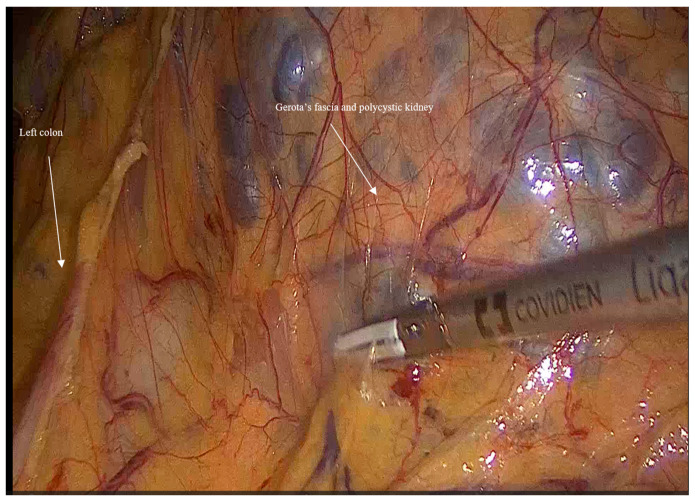 Figure 1
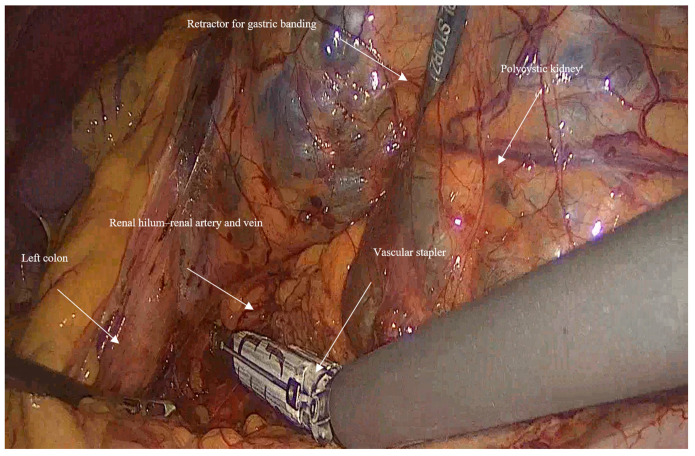 Figure 2
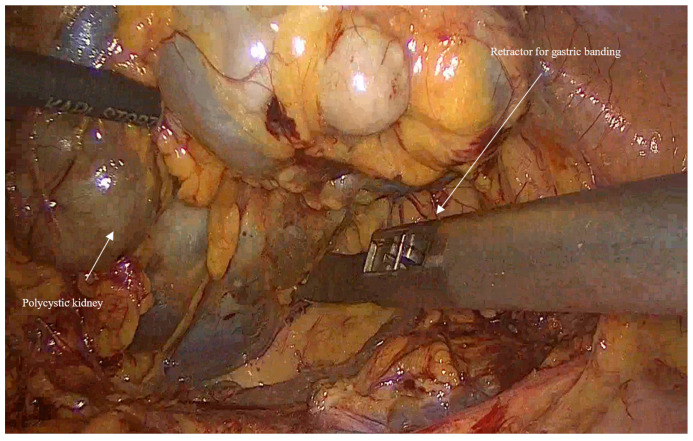 Figure 3
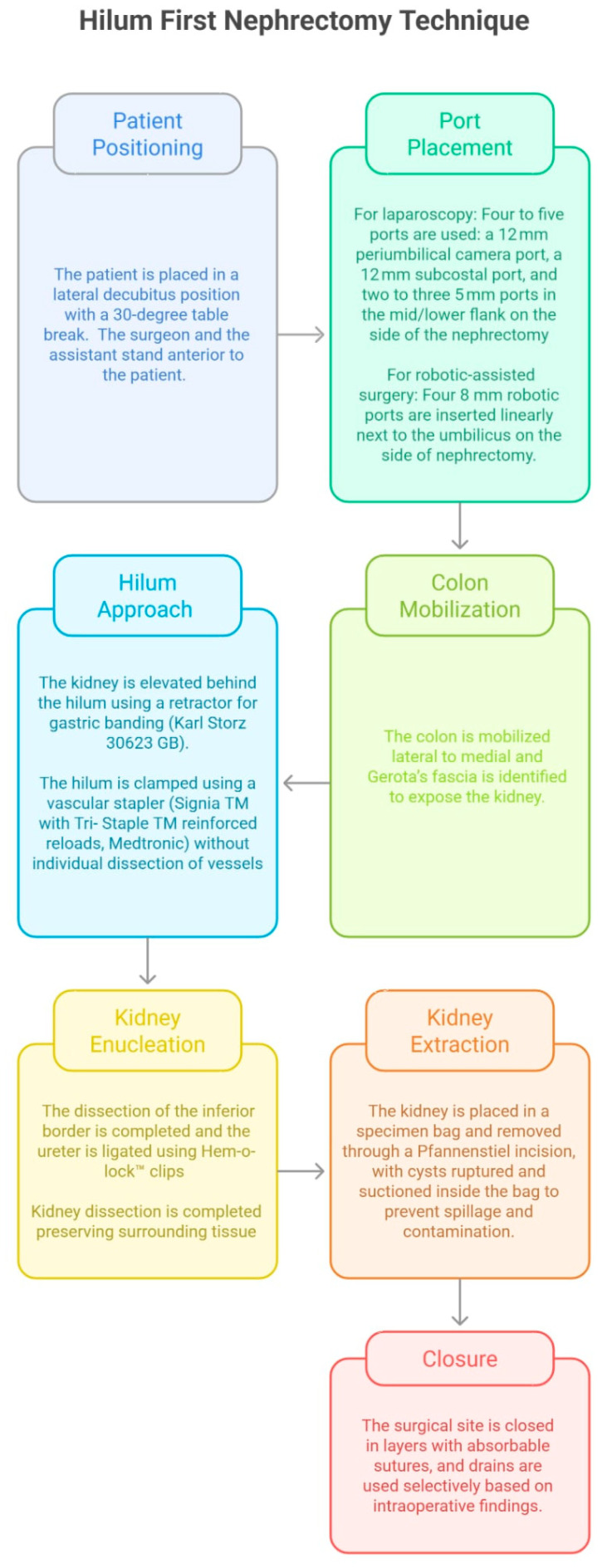 Figure 4
Peer Reviews
No public reviews on file for this paper yet. If you reviewed it on a platform where reviews are public (OpenReview, ICLR, NeurIPS, ICML), you can paste yours below so the community can read it here.
Videos
No videos yet. Explain this paper in a talk, walkthrough, or lecture? Add one.
Taxonomy
TopicsGenetic and Kidney Cyst Diseases · Fetal and Pediatric Neurological Disorders · Organ Donation and Transplantation