Replacing Manual Operation with Bio-Automation II: Construction of a Biological Digestion Gene Circuit to Eliminate the Interference of Food Matrices in the Rapid Detection of Heavy Metals
Shiqi Xia, Shijing Chen, Hongfei Su, Liangshu Hu, Xiaozhe Qi, Mingzhang Guo

TL;DR
This paper introduces a biological digestion system that improves heavy metal detection in food by breaking down interfering compounds like phytic acid and starch.
Contribution
A novel gene circuit was constructed to simultaneously detect mercury ions and digest food matrix components that interfere with detection.
Findings
Biosensor responses improved 1.43-fold for phytate digestion in the presence of mercury ions.
The detection limit of the BαAP biosensor was 0.082 μM for mercury ions.
The biosensor's performance in real samples was significantly enhanced by the bio-digestion pathway.
Abstract
Food matrices such as phytic acid, starch, and proteins can chelate heavy metals, acting as stabilizers that significantly hinder accurately detecting heavy metal contamination. This study proposes a biological digestion strategy to overcome such interference. The gene sequences for phytase (appA) from Escherichia coli (E. coli), α-amylase (amyA) from Escherichia coli (E. coli), and protease (AO090120000474) from Aspergillus oryzae were identified via bioinformatics screening. Whole-cell biosensors were then developed to simultaneously detect mercury ions (Hg2+) and digest phytate, starch, and proteins. In the presence of 100 μM Hg2+, biosensor responses improved by 1.43-, 1.38-, and 1.11-fold, respectively. A “heavy metal pollutant bio-digestion pathway” was constructed by integrating genes for synthesizing phytic acid, starch, and protein with those for Hg2+ detection. In the presence…
Genes, proteins, chemicals, diseases, species, mutations and cell lines named across the full text — each resolved to its canonical identifier and authoritative record.
Click any figure to enlarge with its caption.
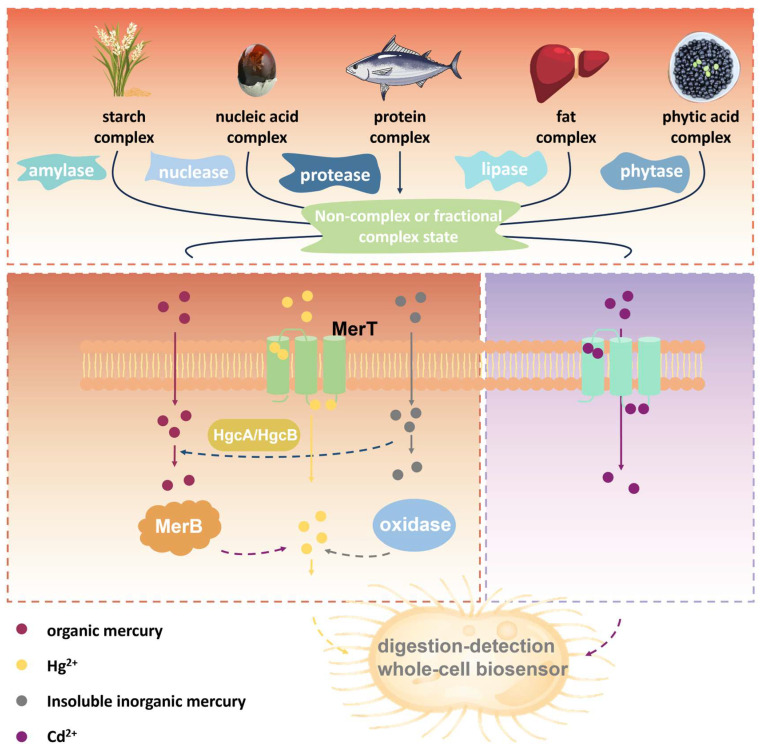 Figure 1
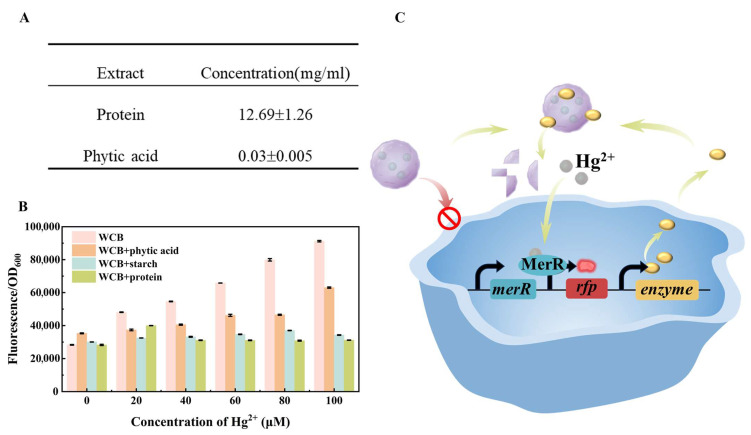 Figure 2
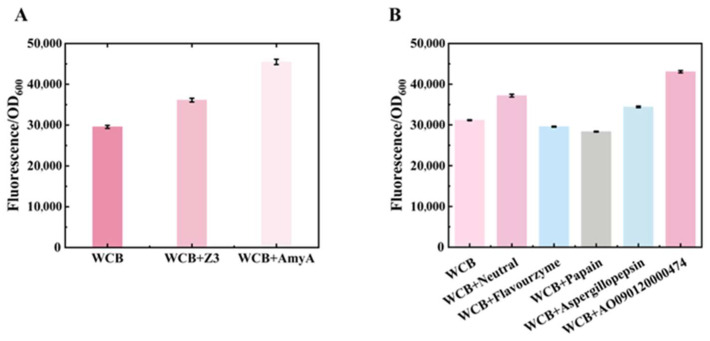 Figure 3
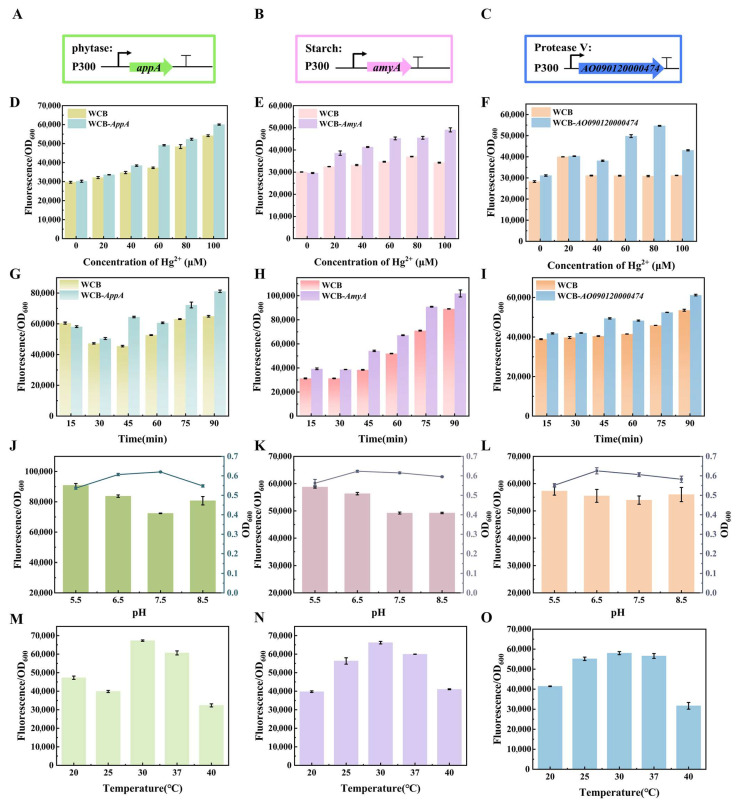 Figure 4
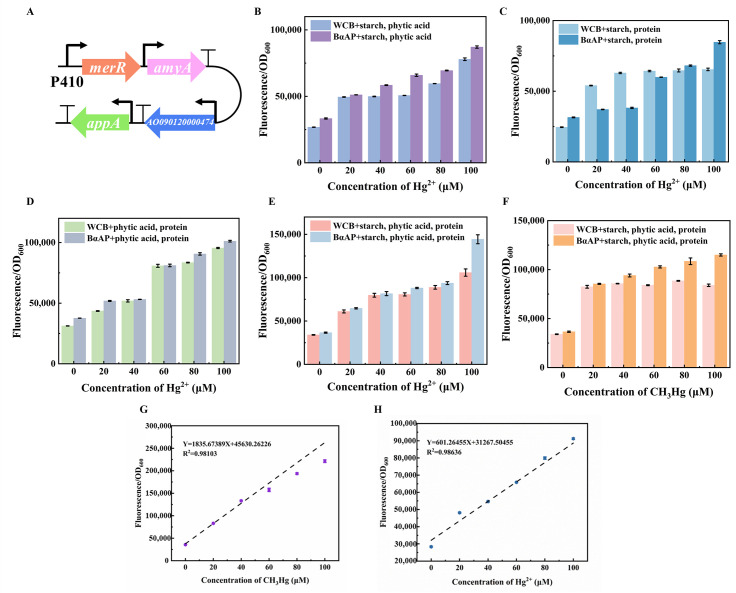 Figure 5
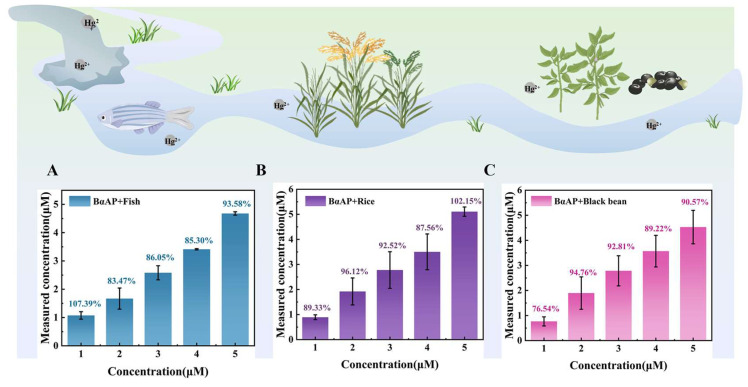 Figure 6
Peer Reviews
No public reviews on file for this paper yet. If you reviewed it on a platform where reviews are public (OpenReview, ICLR, NeurIPS, ICML), you can paste yours below so the community can read it here.
Videos
No videos yet. Explain this paper in a talk, walkthrough, or lecture? Add one.
Taxonomy
Topicsbioluminescence and chemiluminescence research · Advanced Proteomics Techniques and Applications · Chromium effects and bioremediation