Eight Triplex-Binding Molecules from Four Chemical Classes Broadly Recognize the MALAT1 Triple Helix
Madeline M. Mousseau, Krishna M. Shivakumar, Jaesang Yoo, Jessica A. Brown

TL;DR
This study explores how eight small molecules interact with the MALAT1 RNA triple helix, showing they can stabilize it and reduce MALAT1 levels in cancer cells.
Contribution
The study identifies specific sensitivities of triplex-binding molecules to the structure and composition of the MALAT1 triple helix.
Findings
Five TBMs selectively stabilize the Hoogsteen interface of the MALAT1 triple helix.
Three TBMs are more sensitive to nucleotide composition, while others respond to helix length.
Most TBMs could not outcompete binding proteins, but neomycin and others reduced MALAT1 levels in cancer cells.
Abstract
RNA triple helices are relatively understudied, including their interactions with small molecules. In this study, we evaluated eight previously reported triplex-binding molecules (TBMs) for their functional effects on the premature and mature MALAT1 triple helix. Based on UV thermal denaturation experiments, the TBMs berberine, coralyne, sanguinarine, berenil, and neomycin selectively stabilize the Hoogsteen interface of the MALAT1 triple helix. Moreover, fisetin, luteolin, and quercetin were more sensitive to nucleotide composition, whereas berberine, coralyne, sanguinarine, and berenil were more sensitive to changes in the length of the major-groove triple helix. Most TBMs could not outcompete MALAT1 triple helix-binding proteins, except for neomycin. Surface plasmon resonance experiments demonstrated that berberine and sanguinarine display relatively quick association and…
Genes, proteins, chemicals, diseases, species, mutations and cell lines named across the full text — each resolved to its canonical identifier and authoritative record.
Click any figure to enlarge with its caption.
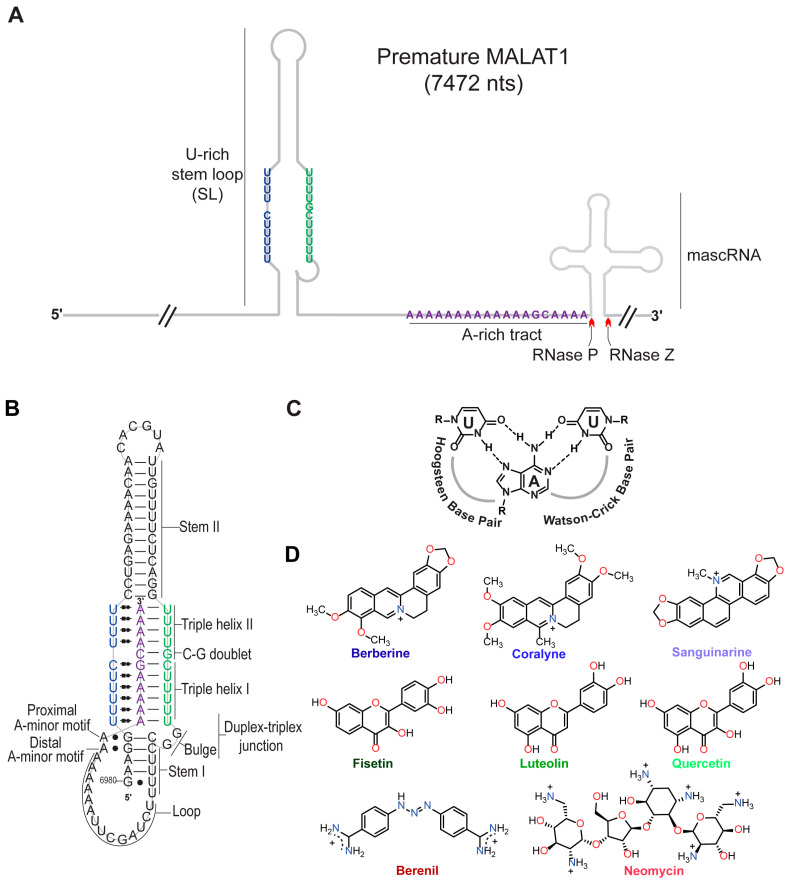 Figure 1
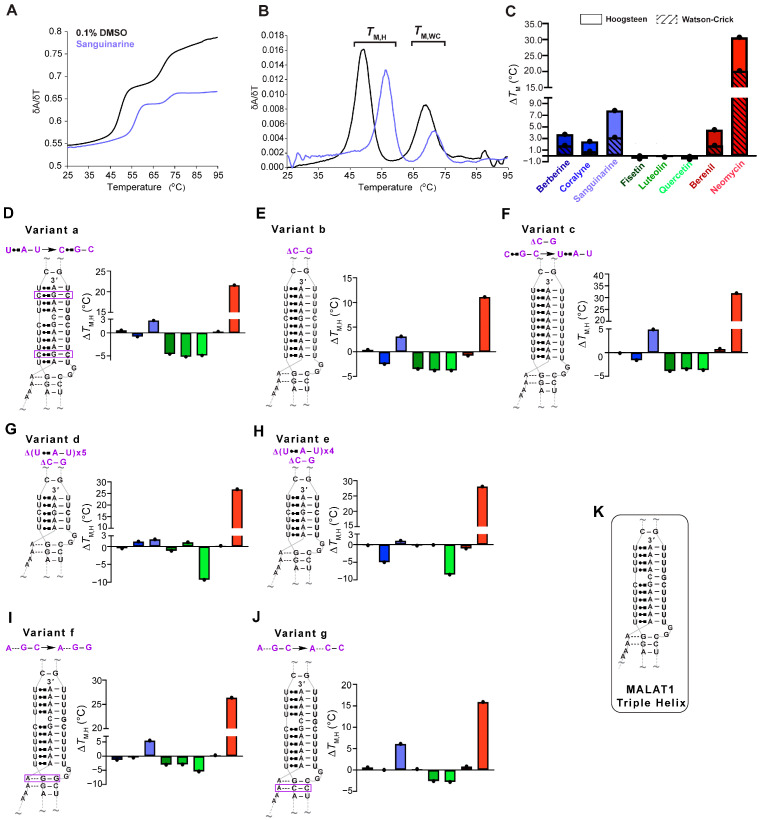 Figure 2
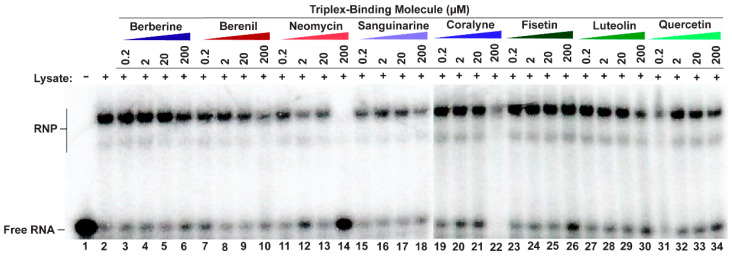 Figure 3
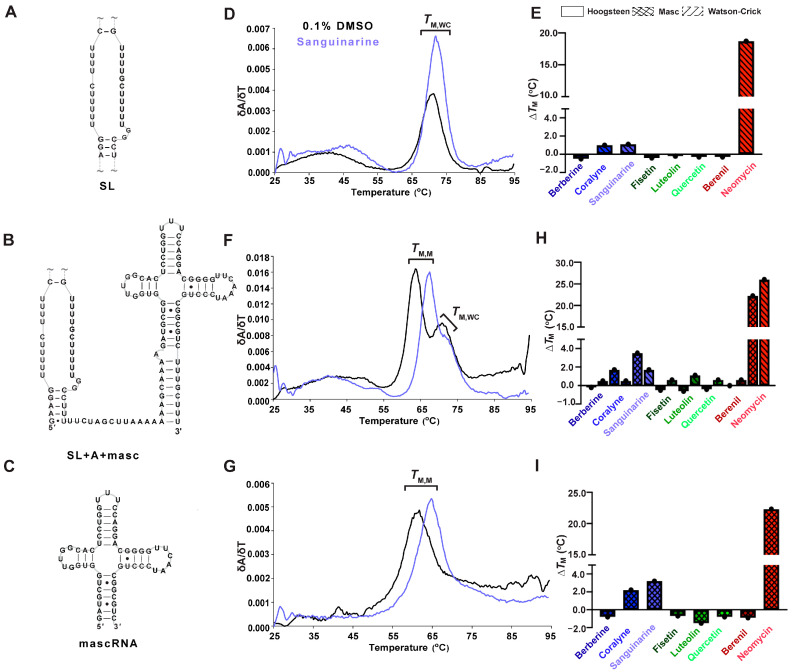 Figure 4
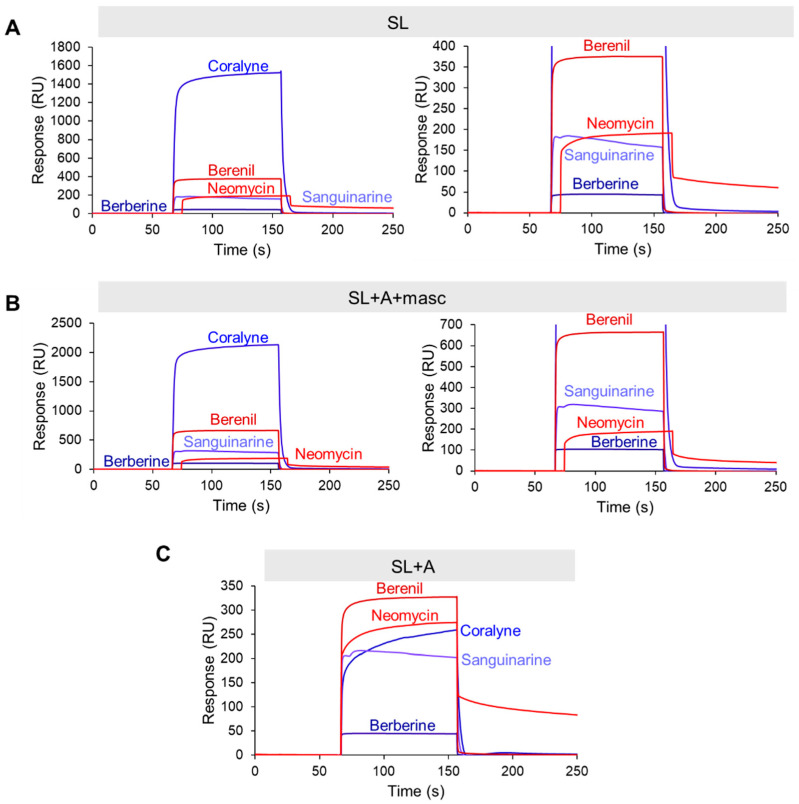 Figure 5
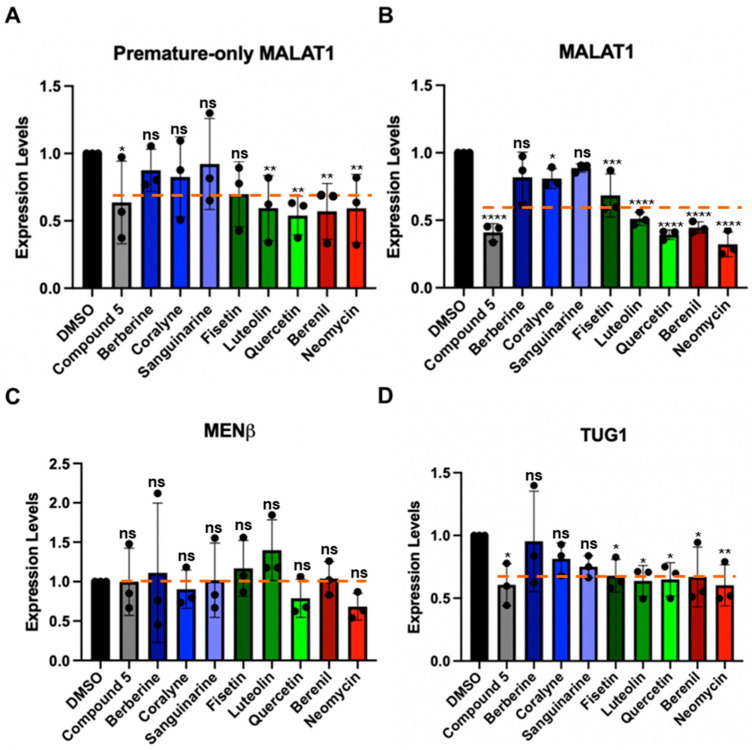 Figure 6
 Figure 7
 Figure 8
Peer Reviews
No public reviews on file for this paper yet. If you reviewed it on a platform where reviews are public (OpenReview, ICLR, NeurIPS, ICML), you can paste yours below so the community can read it here.
Videos
No videos yet. Explain this paper in a talk, walkthrough, or lecture? Add one.
Taxonomy
TopicsRNA and protein synthesis mechanisms · DNA and Nucleic Acid Chemistry · RNA modifications and cancer