The Human Shield in Time but Not in Space: Scale-Dependent Responses of Small Indian Civet–Prey Interactions to Anthropogenic Disturbance
Chengpeng Ji, Xiaochun Huang, Yufang Lin, Yanan Cheng, Tongchao Le, Fanglin Tan

TL;DR
Human activity affects predator-prey interactions differently over time and space, offering some protection to prey during the day but increasing encounters in other contexts.
Contribution
This study reveals scale-dependent effects of human disturbance on predator-prey interactions, showing temporal refuge but increased spatial overlap.
Findings
High human activity provides temporal refuge for diurnal prey from predation by small Indian civets.
Spatial and spatiotemporal human disturbance increases overlap between predators and prey, raising predation risk.
Wildlife interactions are influenced by human activities in a scale-dependent manner, requiring multi-dimensional conservation approaches.
Abstract
Human activities are increasingly altering natural ecosystems, but their effects on predator–prey interactions are not fully understood. We used camera traps to study how human activity (human presence, roads, and settlements) as well as altitudes and seasons influence the spatiotemporal relationships between the small Indian civet and its potential prey (nocturnal rats, diurnal Pallas’s squirrels, and Chinese bamboo partridges) in southeastern China. Our results show that human disturbance caused both predators and prey to shift their daily activity patterns. Temporally, high human activity provided diurnal prey with a refuge from small Indian civet predation, supporting the “human shield” hypothesis. However, spatially and spatiotemporally, higher human disturbance increased overlap between small Indian civets and prey, potentially raising encounter rates and predation risk. These…
Genes, proteins, chemicals, diseases, species, mutations and cell lines named across the full text — each resolved to its canonical identifier and authoritative record.
Click any figure to enlarge with its caption.
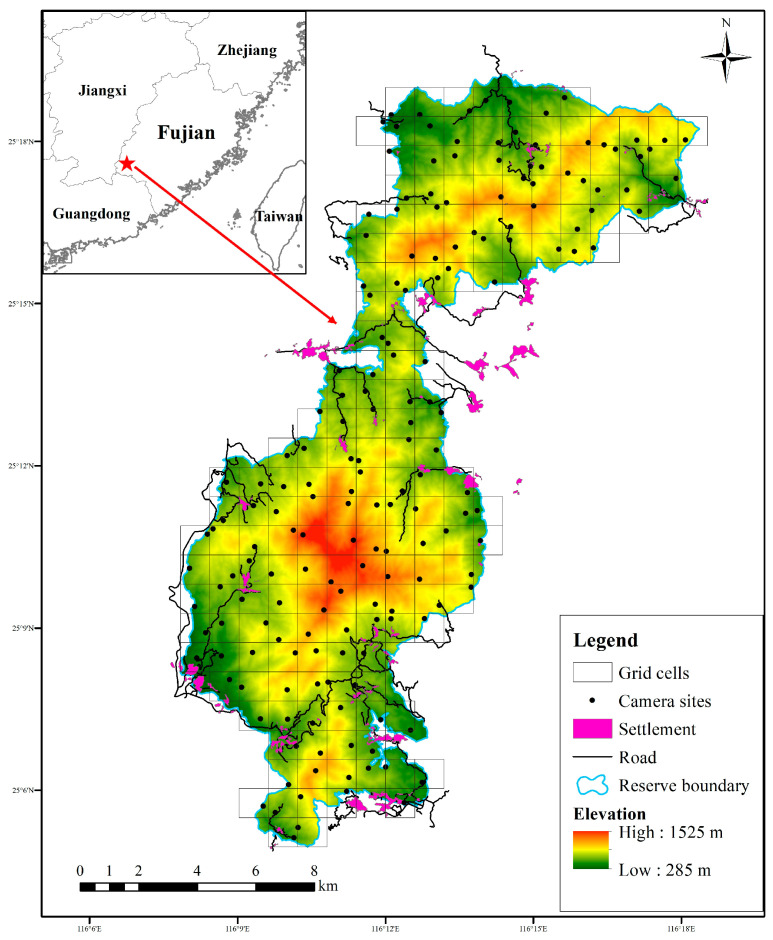 Figure 1
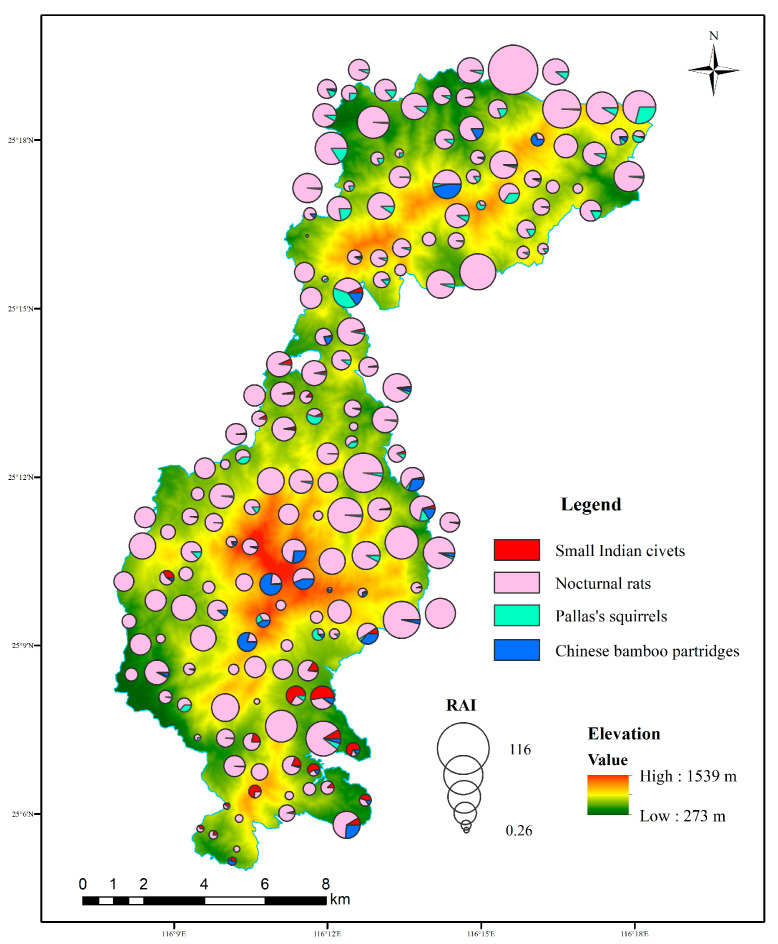 Figure 2
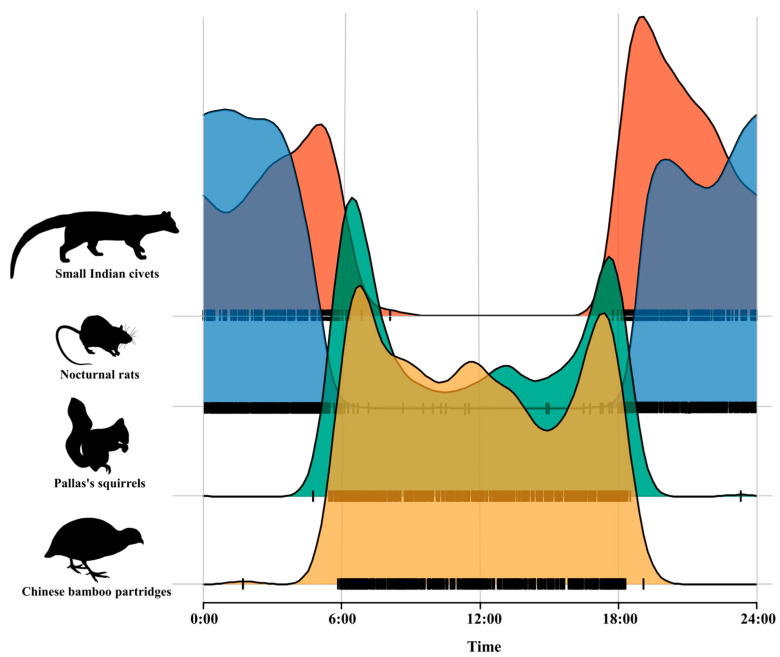 Figure 3
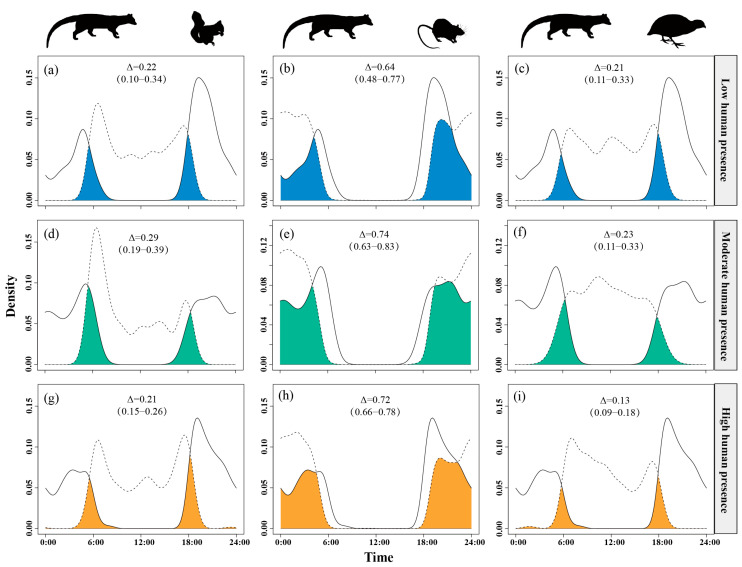 Figure 4
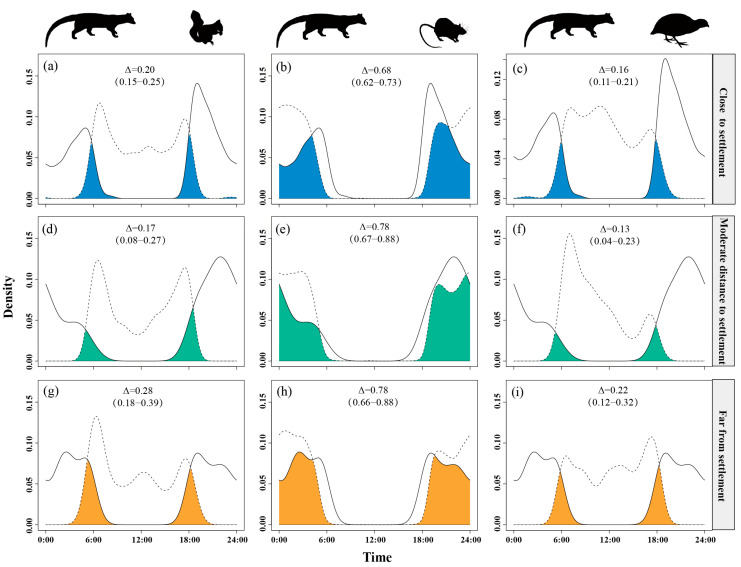 Figure 5
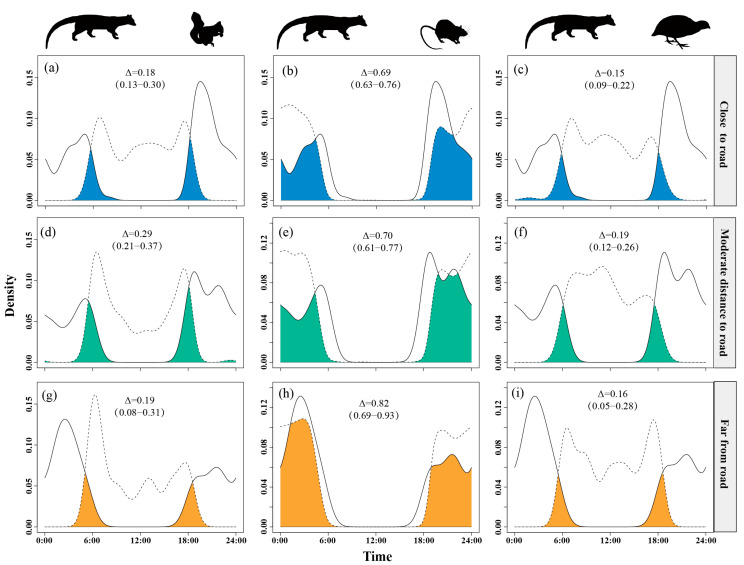 Figure 6
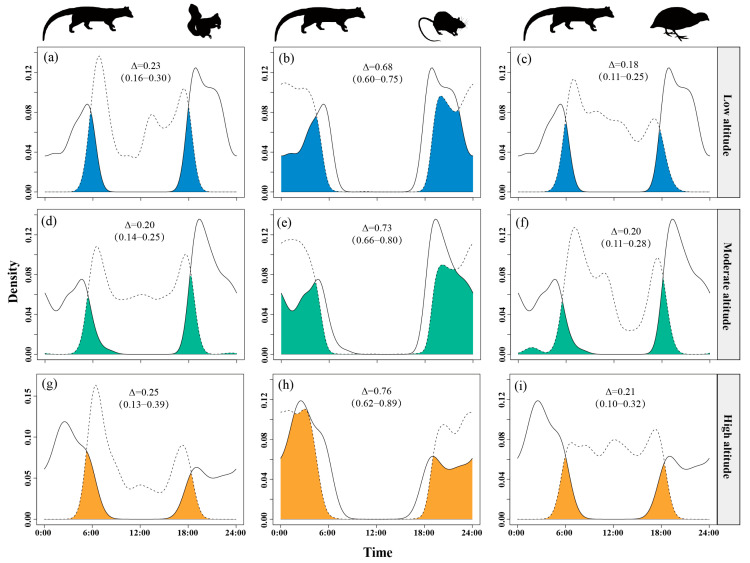 Figure 7
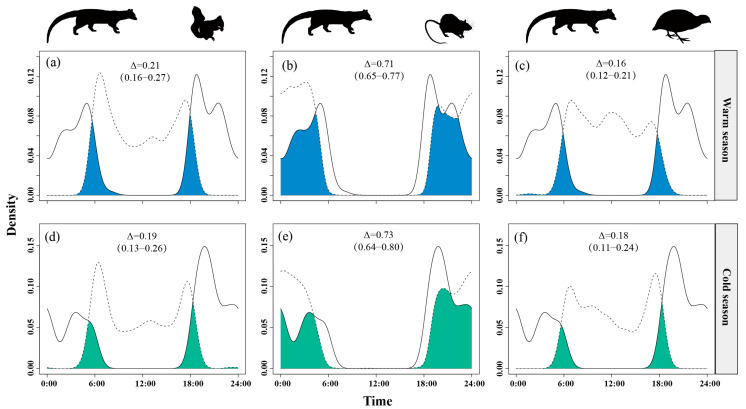 Figure 8
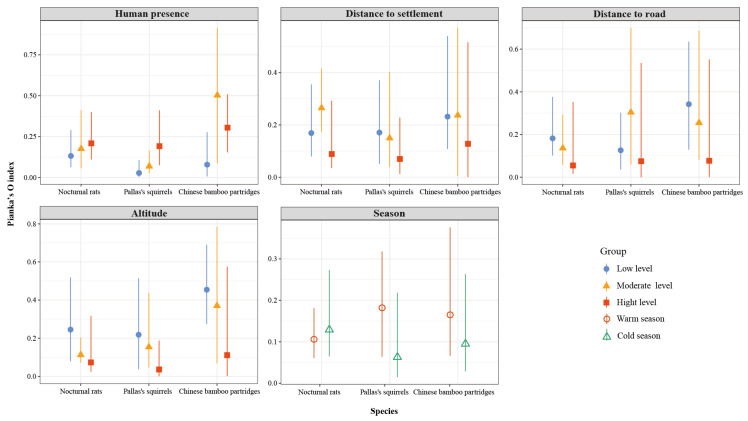 Figure 9
Peer Reviews
No public reviews on file for this paper yet. If you reviewed it on a platform where reviews are public (OpenReview, ICLR, NeurIPS, ICML), you can paste yours below so the community can read it here.
Videos
No videos yet. Explain this paper in a talk, walkthrough, or lecture? Add one.
Taxonomy
TopicsWildlife Ecology and Conservation · Animal Ecology and Behavior Studies · Species Distribution and Climate Change