Comparative Analysis of Cholinergic Machinery in Carcinomas: Discovery of Membrane-Tethered ChAT as Evidence for Surface-Based ACh Synthesis in Neuroblastoma Cells
Banita Thakur, Samar Tarazi, Lada Doležalová, Homira Behbahani, Taher Darreh-Shori

TL;DR
This study shows that several cancer cell lines have a functional cholinergic system, with a unique finding of membrane-bound ChAT in neuroblastoma cells, suggesting new therapeutic possibilities.
Contribution
The discovery of extracellular membrane-bound ChAT in neuroblastoma cells reveals a novel mechanism for in situ acetylcholine signaling.
Findings
All tested cancer cell lines express and functionally utilize the cholinergic system for ACh synthesis and release.
SH-SY5Y neuroblastoma cells uniquely exhibit membrane-bound ChAT and BChE as the main ACh-degrading enzyme.
The cholinergic system in these cells may act as a survival checkpoint relevant for therapeutic targeting.
Abstract
The cholinergic system is one of the most ancient and widespread signaling systems in the body, implicated in a range of pathological conditions—from neurodegenerative disorders to cancer. Given its broad relevance, there is growing interest in characterizing this system across diverse cellular models to enable drug screening, mechanistic studies, and exploration of new therapeutic avenues. In this study, we investigated four cancer cell lines: one of neuroblastoma origin previously used in cholinergic signaling studies (SH-SY5Y), one non-small cell lung adenocarcinoma line (A549), and two small cell lung carcinoma lines (H69 and H82). We assessed the expression and localization of key components of the cholinergic system, along with the cellular capacity for acetylcholine (ACh) synthesis and release. Whole-cell flow cytometry following membrane permeabilization revealed that all cell…
Genes, proteins, chemicals, diseases, species, mutations and cell lines named across the full text — each resolved to its canonical identifier and authoritative record.
Click any figure to enlarge with its caption.
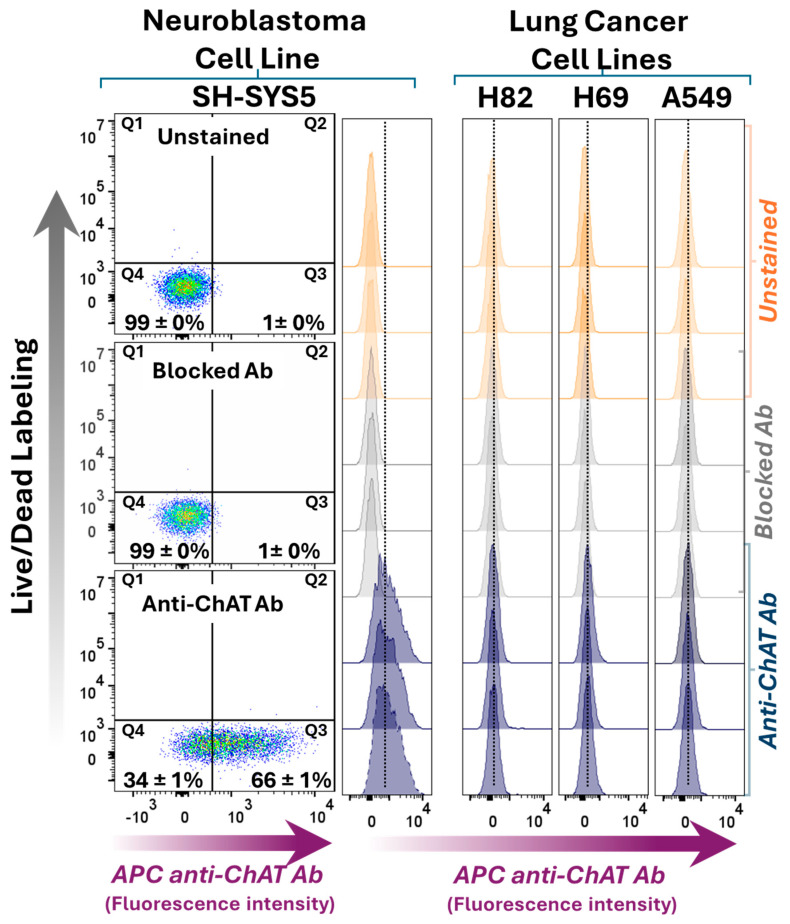 Figure 1
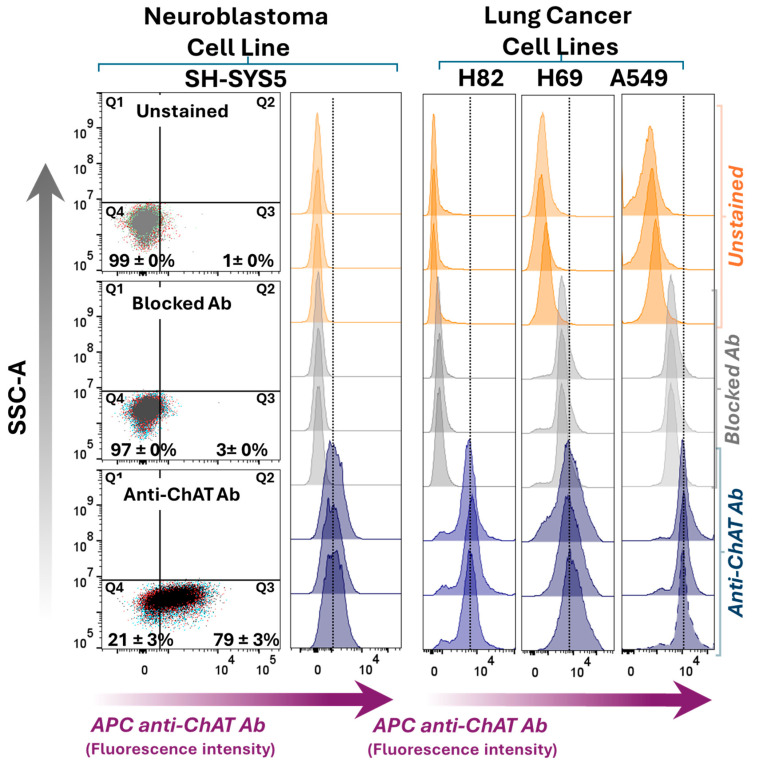 Figure 2
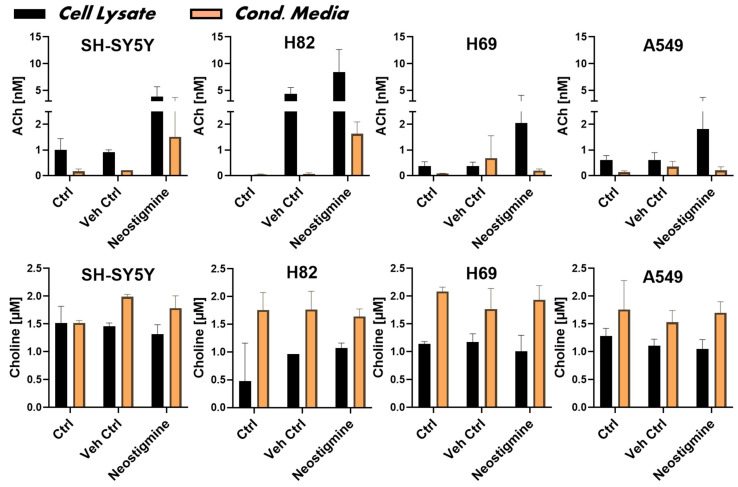 Figure 3
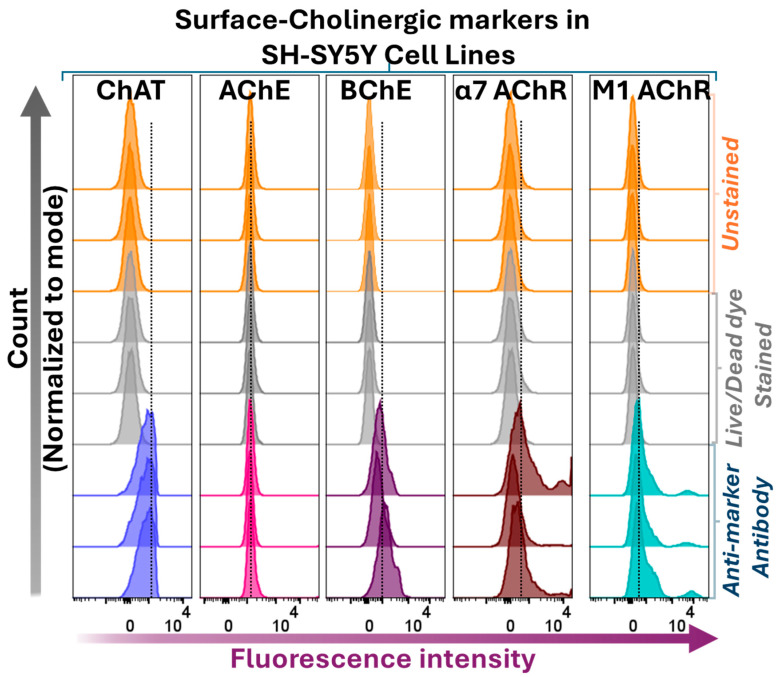 Figure 4
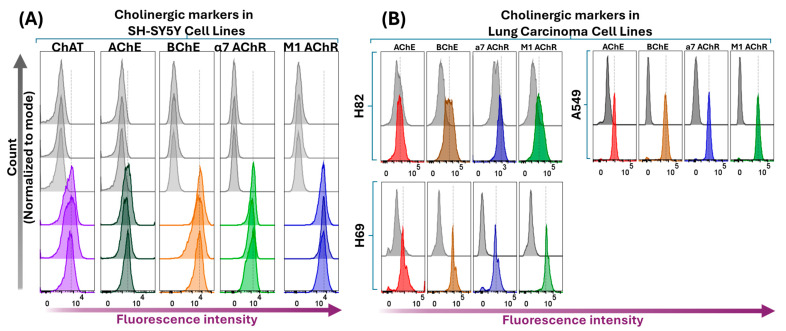 Figure 5
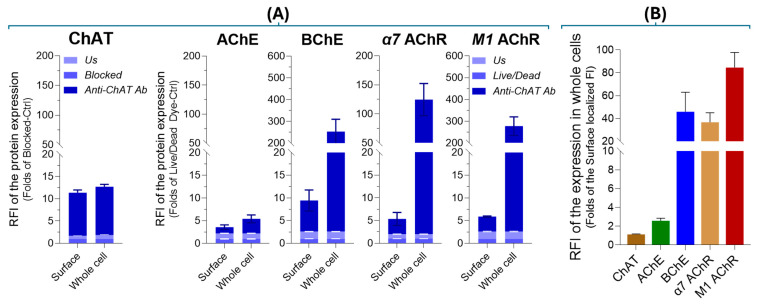 Figure 6
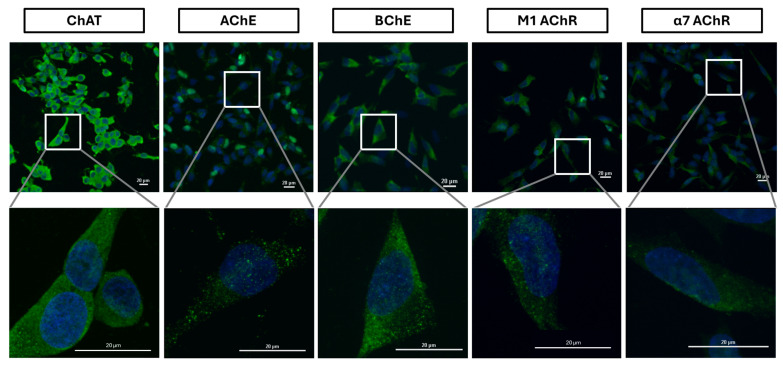 Figure 7
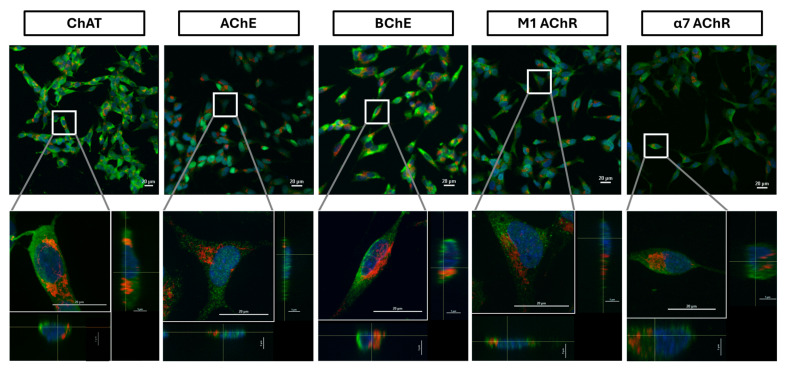 Figure 8
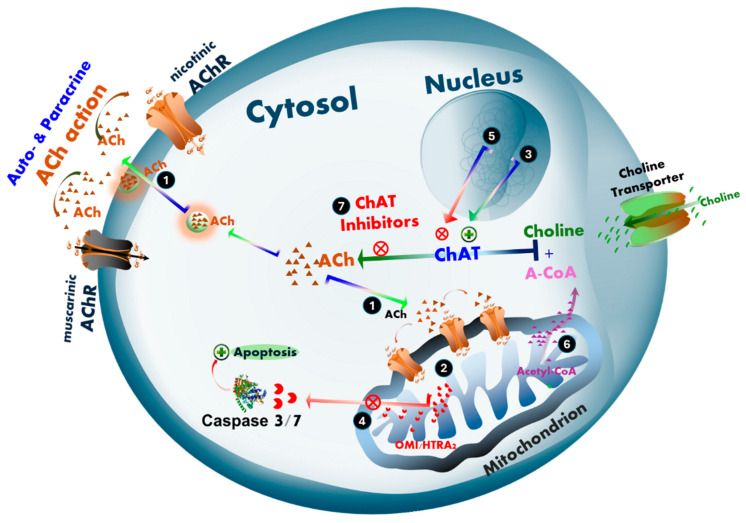 Figure 9
Peer Reviews
No public reviews on file for this paper yet. If you reviewed it on a platform where reviews are public (OpenReview, ICLR, NeurIPS, ICML), you can paste yours below so the community can read it here.
Videos
No videos yet. Explain this paper in a talk, walkthrough, or lecture? Add one.
Taxonomy
TopicsCholinesterase and Neurodegenerative Diseases · Nicotinic Acetylcholine Receptors Study · Neuroscience and Neural Engineering