Computer-Aided Drug Design Across Breast Cancer Subtypes: Methods, Applications and Translational Outlook
Wei Tian, Ying Hu, Xinyu Gao, Jinghui Yang, Wei Jiang

TL;DR
This review explores how computer-aided drug design helps develop better breast cancer treatments by targeting specific cancer subtypes more efficiently.
Contribution
The paper provides a comprehensive overview of CADD methods tailored to breast cancer subtypes and highlights AI-driven approaches for drug discovery.
Findings
CADD techniques like molecular docking and virtual screening are used to identify subtype-specific drug targets in breast cancer.
AI and machine learning are being integrated with traditional simulations to speed up drug discovery and improve candidate drug refinement.
Future progress depends on combining AI, multi-omics data, and digital pathology to enable personalized breast cancer therapies.
Abstract
Breast cancer is a heterogeneous malignancy with distinct molecular subtypes that complicate the development of effective therapies. Traditional drug discovery methods are often constrained by high cost and long development timelines, underscoring the need for more efficient, subtype-aware approaches. Computer-aided drug design (CADD) has emerged as a valuable strategy to accelerate therapeutic discovery and improve lead optimization. This review synthesizes advances from a subtype-centric perspective and outlines the application of CADD techniques, including molecular docking, virtual screening (VS), pharmacophore modeling, and molecular dynamics (MD) simulations, to identify potential targets and inhibitors in receptor-positive (Luminal), HER2-positive (HER2+), and triple-negative breast cancer (TNBC). In addition to traditional pipelines, we highlight artificial intelligence…
Genes, proteins, chemicals, diseases, species, mutations and cell lines named across the full text — each resolved to its canonical identifier and authoritative record.
Click any figure to enlarge with its caption.
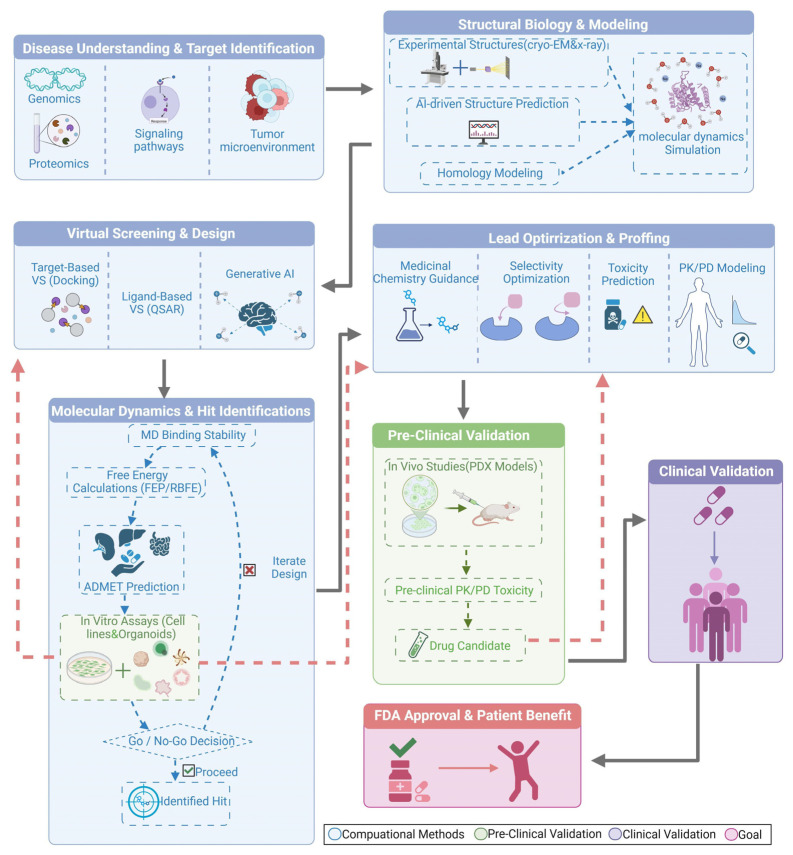 Figure 1
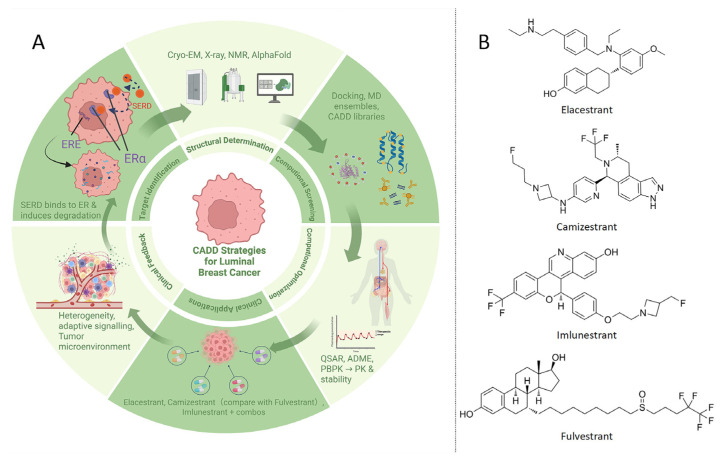 Figure 2
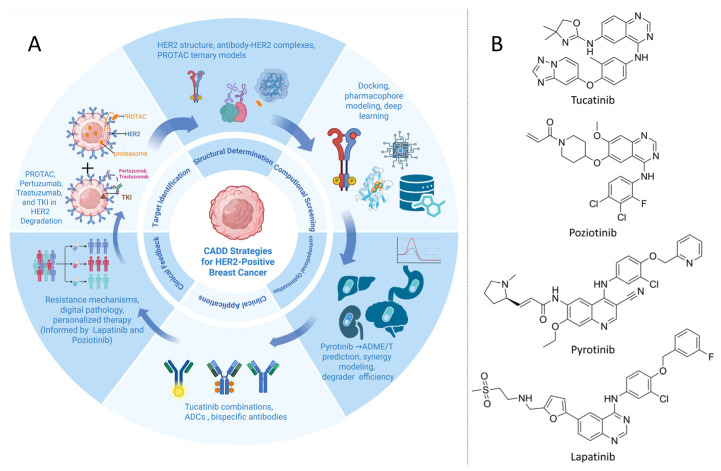 Figure 3
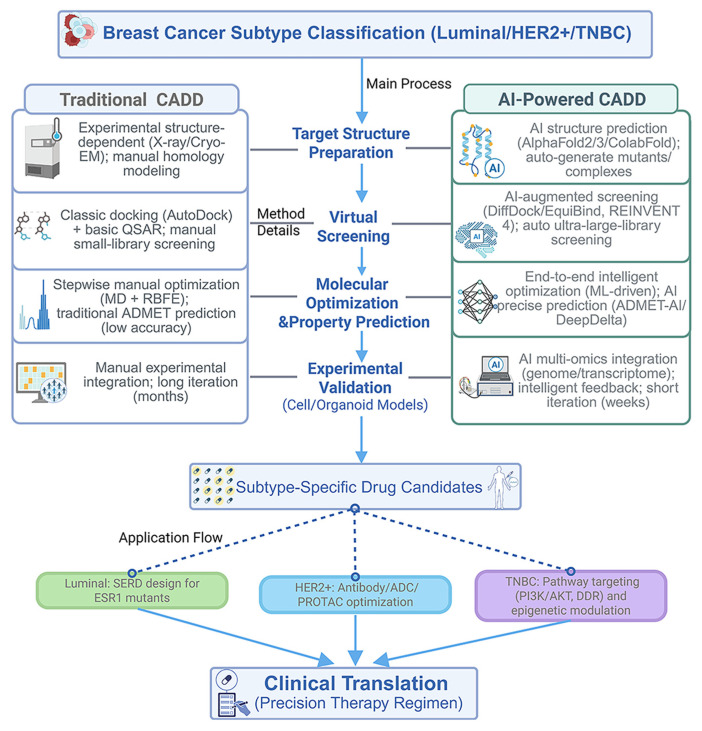 Figure 4
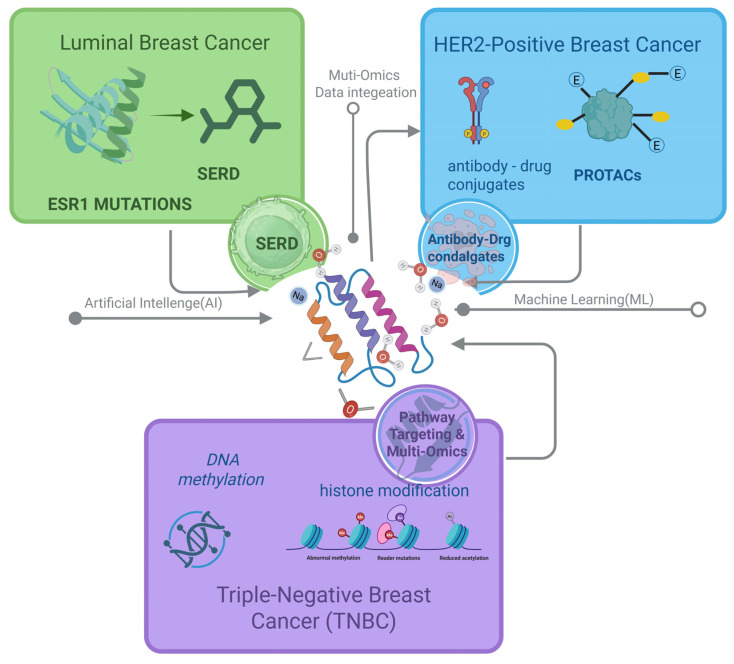 Figure 5
Peer Reviews
No public reviews on file for this paper yet. If you reviewed it on a platform where reviews are public (OpenReview, ICLR, NeurIPS, ICML), you can paste yours below so the community can read it here.
Videos
No videos yet. Explain this paper in a talk, walkthrough, or lecture? Add one.
Taxonomy
TopicsComputational Drug Discovery Methods · Melanoma and MAPK Pathways · Bioinformatics and Genomic Networks