Ternary Blends of PLA with ATEC and TMC-200 as Medical-Grade Biodegradable Monofilaments for FDM 3D-Printing Applications
Manasanan Namhongsa, Tanyaluck Mekpothi, Kittisak Yarungsee, Donraporn Daranarong, Gareth M. Ross, Sukunya Ross, Winita Punyodom

TL;DR
This paper introduces a new flexible and biocompatible PLA filament for 3D printing by blending it with ATEC and TMC-200, improving its mechanical properties and printability.
Contribution
The study presents a ternary blend of PLA with ATEC and TMC-200 that enhances flexibility, tensile strength, and biocompatibility for medical-grade 3D printing.
Findings
PLA blended with 3.0 wt% ATEC and 0.3 wt% TMC-200 achieved 232% elongation at break and 35.0 MPa tensile strength.
The ternary blend increased crystallinity from 4.7% to 45.0% and showed over 99% cell viability in L929 fibroblasts.
PLA/T/A monofilaments retained mechanical and thermal performance after FDM printing and 8 weeks of shelf-life testing.
Abstract
Poly(L-lactide) (PLA) is a promising biopolymer for biomedical applications due to its biodegradability and biocompatibility; however, its brittleness restricts its use in fused deposition modeling (FDM). To overcome this limitation, flexible PLA monofilaments with enhanced mechanical performance and printability were developed. In this study, PLA was melt-blended with acetyl triethyl citrate (ATEC, 1.0–5.0 wt%) as a plasticizer and zinc phenyl phosphonate (TMC-200, 0.3 wt%) as a nucleating agent. It was found that the PLA with 3.0 wt% ATEC (PLA/A) exhibited the greatest flexibility, while the addition of TMC-200 further improved tensile strength and ductility. Specifically, the ternary blend of PLA/TMC-200/ATEC (PLA/T/A) exhibited a synergistic effect, achieving superior mechanical properties (tensile strength: 35.0 MPa, elongation at break: 232.0%, compared to 12.1% for pure PLA) and…
Genes, proteins, chemicals, diseases, species, mutations and cell lines named across the full text — each resolved to its canonical identifier and authoritative record.
Click any figure to enlarge with its caption.
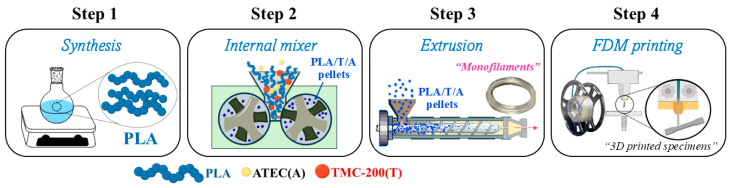 Figure 1
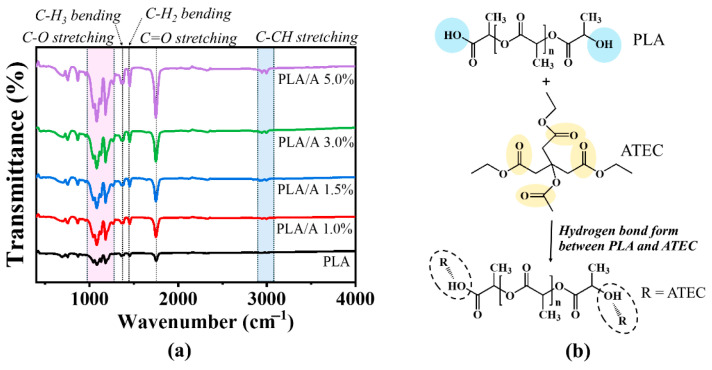 Figure 2
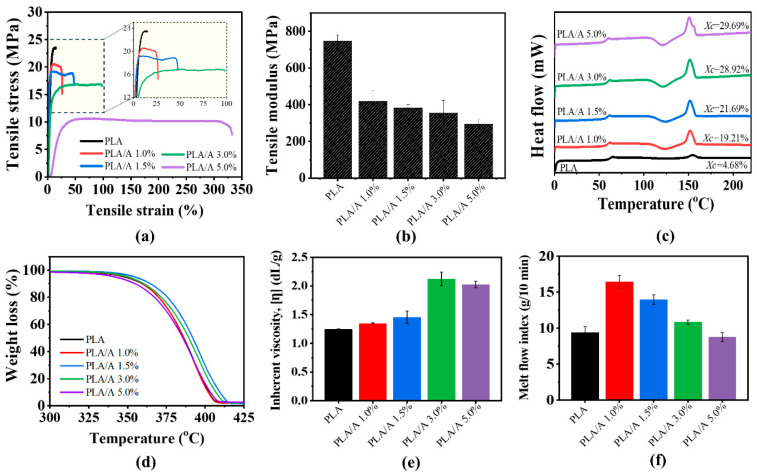 Figure 3
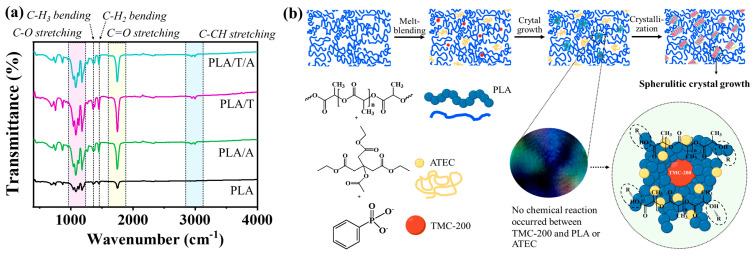 Figure 4
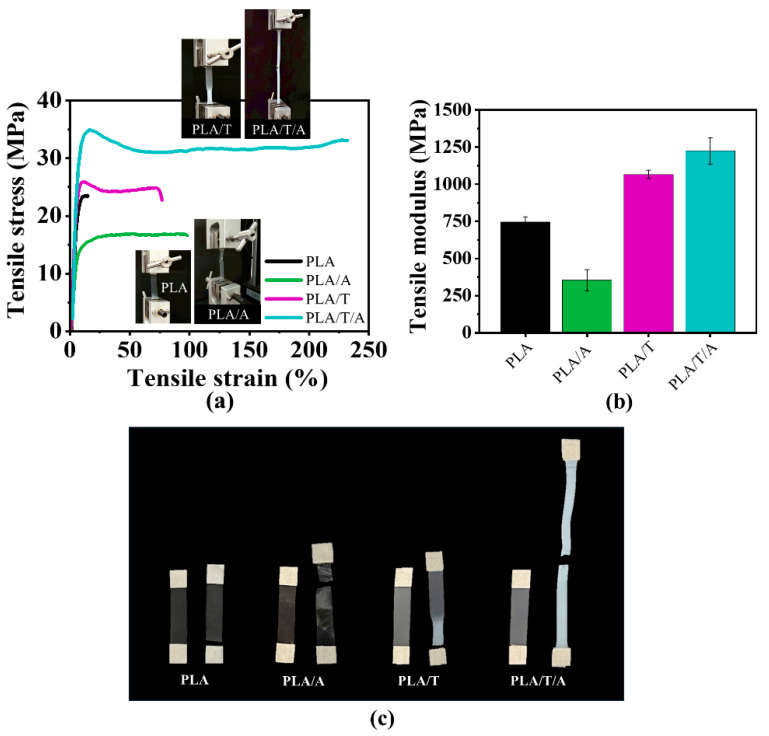 Figure 5
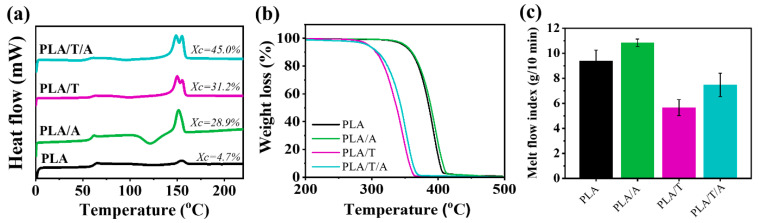 Figure 6
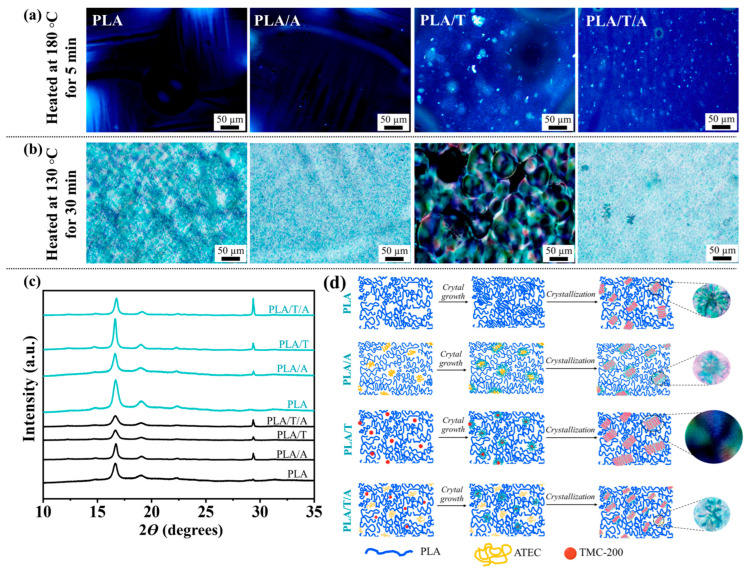 Figure 7
 Figure 8
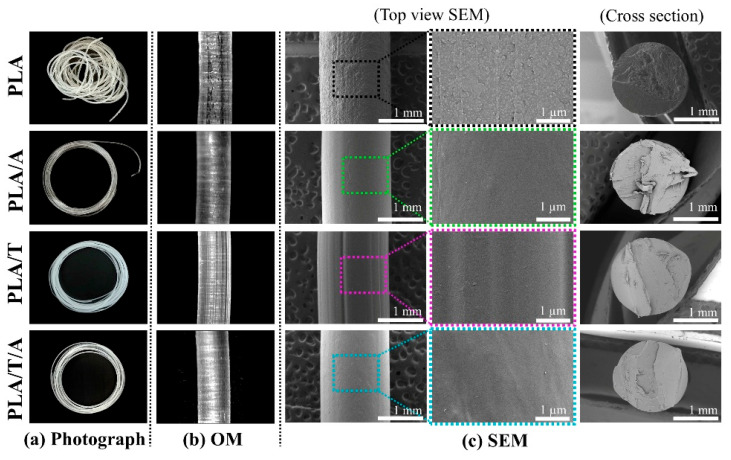 Figure 9
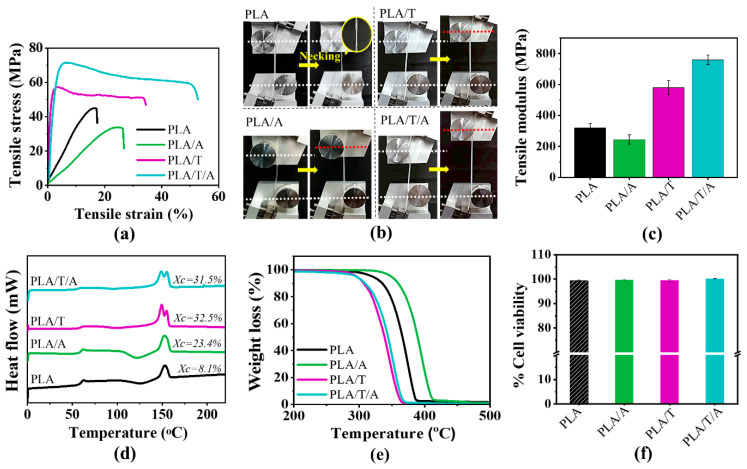 Figure 10
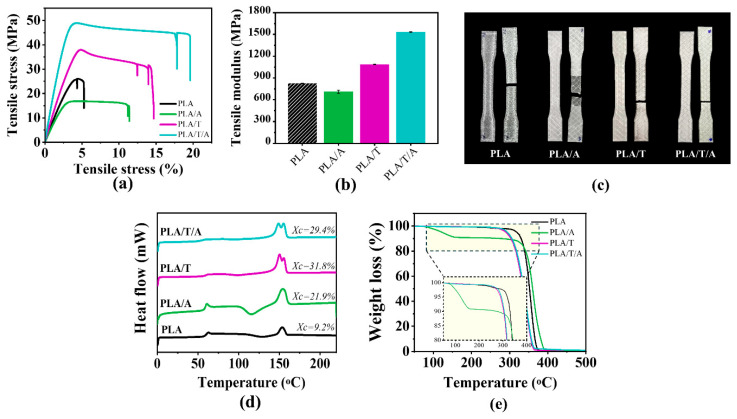 Figure 11
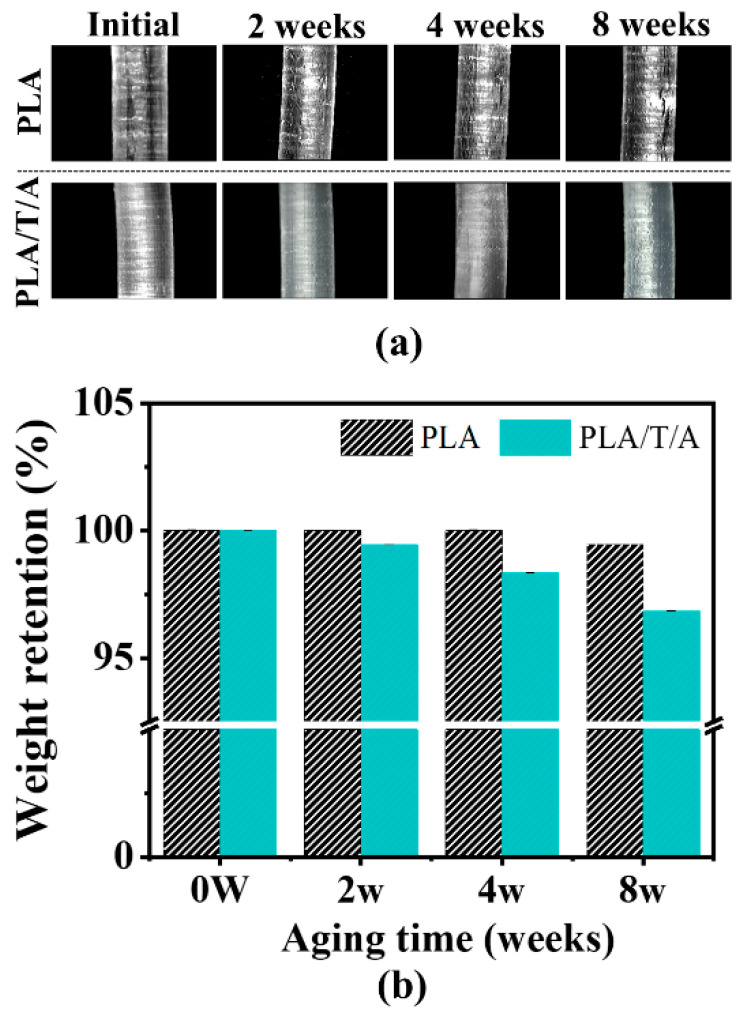 Figure 12
Peer Reviews
No public reviews on file for this paper yet. If you reviewed it on a platform where reviews are public (OpenReview, ICLR, NeurIPS, ICML), you can paste yours below so the community can read it here.
Videos
No videos yet. Explain this paper in a talk, walkthrough, or lecture? Add one.
Taxonomy
Topicsbiodegradable polymer synthesis and properties · Additive Manufacturing and 3D Printing Technologies · Polymer Foaming and Composites