Survival Outcomes and Prognostic Factors for Patients in Early Stage Cervical Cancer: A Multicentric Study in Turkey
Yesim Ozkaya Ucar, Okan Aytekin, Necim Yalcin, Okan Oktar, Hande Esra Koca Yildirim, Gülsah Tiryaki Guner, Mustafa Gokkaya, Mehmet Unsal, Abdurrahman Alp Tokalioglu, Fatih Celik, Fatih Kilic, Burak Ersak, Günsu Kimyon Cömert, Simge Kirmizigul Kerinc, Dilek Yuksel, Caner Cakir

TL;DR
This study analyzed survival outcomes in early-stage cervical cancer patients in Turkey and found that lymph node metastasis is a key factor affecting survival.
Contribution
The study provides new insights into prognostic factors for early-stage cervical cancer in a large Turkish multicenter cohort.
Findings
Lymph node metastasis was identified as an independent prognostic factor for both disease-free and overall survival.
The 5-year overall survival rate was 98.4%, and the 5-year disease-free survival rate was 85.3%.
Tailored adjuvant treatment strategies are emphasized based on nodal status, stromal invasion, margin status, and LVSI.
Abstract
Background: To identify prognostic factors related to survival in patients with early-stage cervical cancer treated with radical surgery in six high-volume gynecologic oncology centers in Turkey. Methods: This retrospective analysis examined a cohort of 612 patients diagnosed with cervical cancer who underwent type II/III radical hysterectomy and pelvic lymphadenectomy, with or without para-aortic lymphadenectomy at six gynecologic oncology centers. A total of 537 patients between 1993 and 2023 were included. According to the 2009 FIGO staging system, 411 patients (76.5%) were stage IB1, 76 (14.2%) were stage IB2, 40 (4.7%) were stage IIA1, and 10 (1.9%) were stage IIA2. Patients underwent either type II or type III radical hysterectomy with pelvic lymphadenectomy, with para-aortic lymphadenectomy performed in 93.1% of cases. Among the 537 patients, 258 (48%) underwent type II radical…
Genes, proteins, chemicals, diseases, species, mutations and cell lines named across the full text — each resolved to its canonical identifier and authoritative record.
Click any figure to enlarge with its caption.
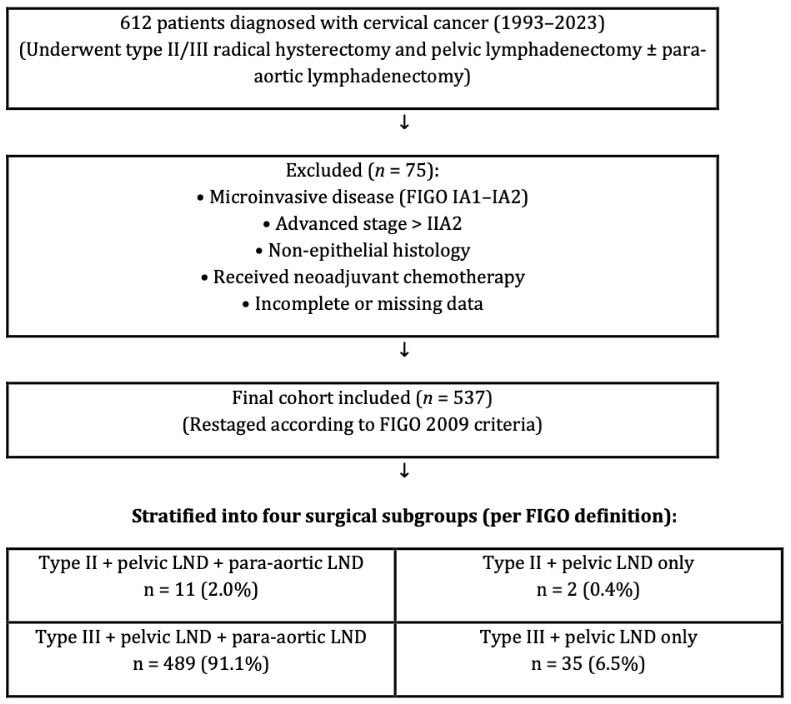 Figure 1
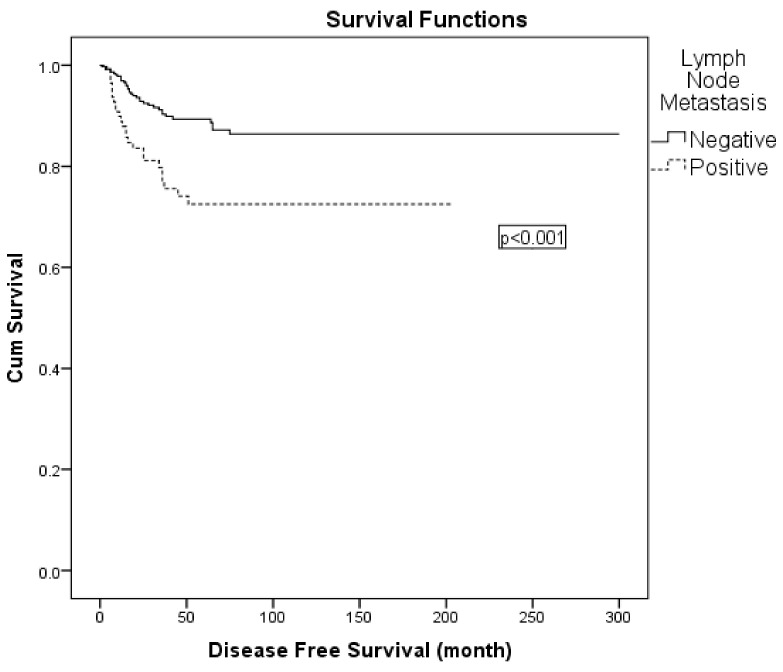 Figure 2
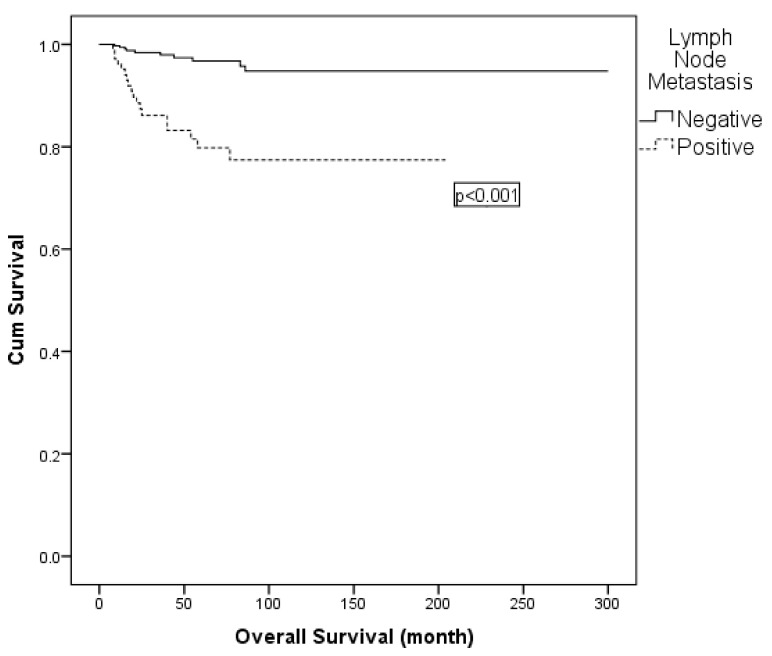 Figure 3
Peer Reviews
No public reviews on file for this paper yet. If you reviewed it on a platform where reviews are public (OpenReview, ICLR, NeurIPS, ICML), you can paste yours below so the community can read it here.
Videos
No videos yet. Explain this paper in a talk, walkthrough, or lecture? Add one.
Taxonomy
TopicsEndometrial and Cervical Cancer Treatments · Cervical Cancer and HPV Research · Ovarian cancer diagnosis and treatment