Hydroelectricity Generation from Fiber-Oriented Waste Paper via Capillary-Driven Charge Separation
Hyun-Woo Lee, Seung-Hwan Lee, So Hyun Baek, Yongbum Kwon, Mi Hye Lee, Kanghyuk Lee, Inhee Cho, Bum Sung Kim, Haejin Hwang, Da-Woon Jeong

TL;DR
This paper introduces a method to generate hydroelectricity from shredded waste paper using a simple, eco-friendly process that converts waste into energy.
Contribution
The novelty lies in using waste printing paper as a low-cost, sustainable material for hydroelectricity generation without purification or complex processing.
Findings
The device achieves an open-circuit voltage of 0.372 V and a short-circuit current of 135 μA at room temperature.
Carbon-black-coated waste paper shows high performance in electrokinetic energy conversion.
The system offers a practical and sustainable pathway for distributed power generation.
Abstract
Hydroelectricity energy harvesting has emerged as a promising, eco-friendly alternative for addressing the growing demand for sustainable energy solutions. In this study, we present a hydroelectricity energy harvester fabricated from shredded waste printing paper (WPP), offering a novel waste-to-energy conversion strategy that requires neither material purification nor complex processing. The device leverages the randomly entangled fiber network of WPP to facilitate capillary-driven moisture diffusion and electric double layer (EDL) formation, thereby enabling efficient electrokinetic energy conversion. The random arrangement of WPP fibers increases the effective EDL area, allowing the waste printing paper generator (WPPG) to achieve an open-circuit voltage of 0.372 V and a short-circuit current of 135 μA at room temperature under optimized electrolyte conditions. This study…
Genes, proteins, chemicals, diseases, species, mutations and cell lines named across the full text — each resolved to its canonical identifier and authoritative record.
Click any figure to enlarge with its caption.
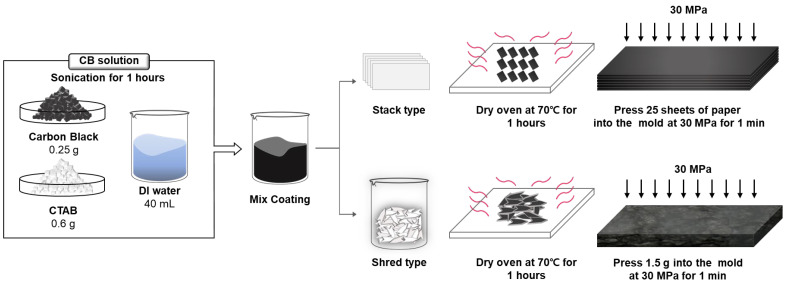 Figure 1
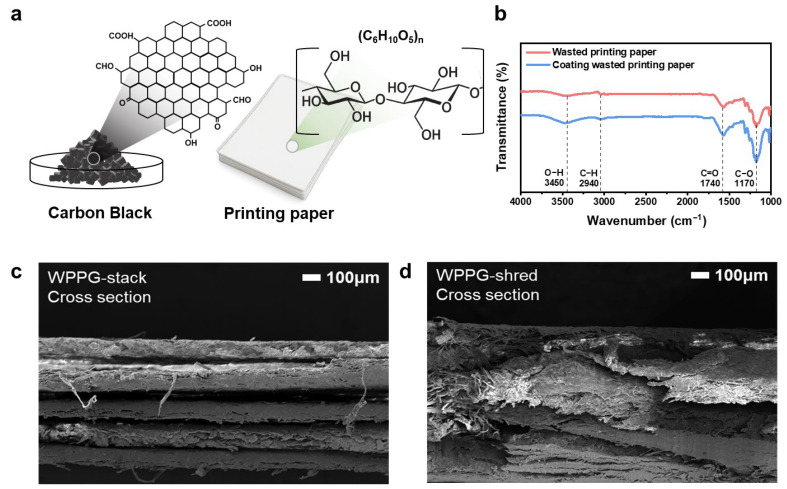 Figure 2
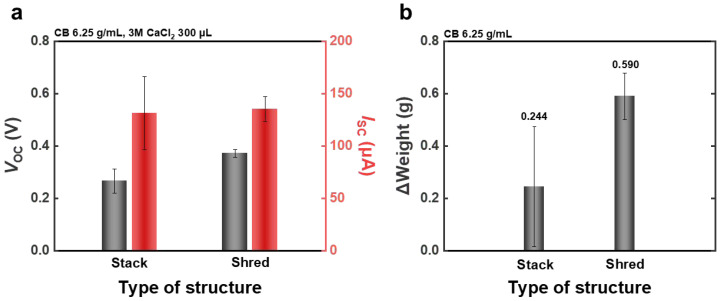 Figure 3
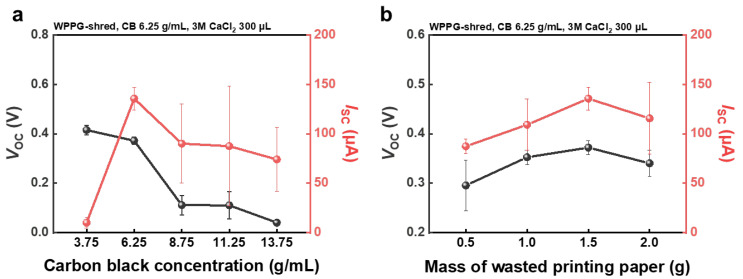 Figure 4
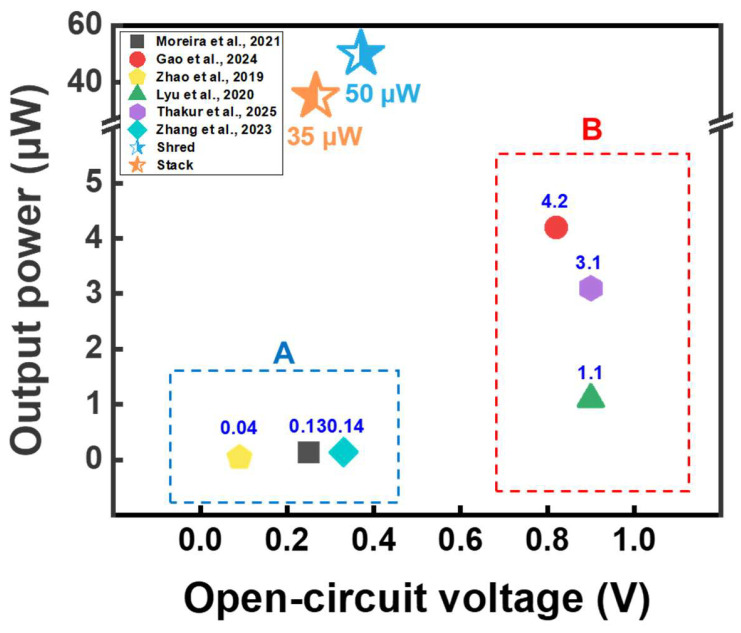 Figure 5
Peer Reviews
No public reviews on file for this paper yet. If you reviewed it on a platform where reviews are public (OpenReview, ICLR, NeurIPS, ICML), you can paste yours below so the community can read it here.
Videos
No videos yet. Explain this paper in a talk, walkthrough, or lecture? Add one.
Taxonomy
TopicsNanomaterials and Printing Technologies · Solar-Powered Water Purification Methods · Surface Modification and Superhydrophobicity