Synthesis, Physicochemical Characterization, and Biocidal Evaluation of Three Novel Aminobenzoic Acid-Derived Schiff Bases Featuring Intramolecular Hydrogen Bonding
Alexander Carreño, Vania Artigas, Belén Gómez-Arteaga, Evys Ancede-Gallardo, Marjorie Cepeda-Plaza, Jorge I. Martínez-Araya, Roxana Arce, Manuel Gacitúa, Camila Videla, Marcelo Preite, María Carolina Otero, Catalina Guerra, Rubén Polanco, Ignacio Fuentes, Pedro Marchant

TL;DR
This paper explores new aminobenzoic acid compounds that show selective antibacterial activity, especially against Gram-positive bacteria, with iodinated versions being the most effective.
Contribution
The study introduces three novel Schiff bases with intramolecular hydrogen bonding and demonstrates that iodination enhances antibacterial potency and redox properties.
Findings
SB-5, an iodinated derivative, showed potent activity against Gram-positive bacteria like Clostridioides difficile at low micromolar concentrations.
Halogenation, especially iodination, modulates redox behavior and improves antimicrobial selectivity and cellular tolerance.
The compounds exhibited no significant activity against Gram-negative bacteria or fungi at tested concentrations.
Abstract
Metal-free aminobenzoic acid-derived Schiff bases are attractive antimicrobial leads because their azomethine (–C=N–) functionality enables tunable electronic properties and target engagement. We investigated whether halogenation on the phenolic ring would modulate the redox behavior and enhance antibacterial potency, and hypothesized that heavier halogens would favorably tune physicochemical and electronic descriptors. We synthesized three derivatives (SB-3/Cl, SB-4/Br, and SB-5/I) and confirmed their structures using FTIR, 1H- and 13C-NMR, UV-Vis, and HRMS. For SB-5, single-crystal X-ray diffraction and Hirshfeld analysis verified the intramolecular O–H⋯N hydrogen bond and key packing contacts. Cyclic voltammetry revealed an irreversible oxidation (aminobenzoic ring) and, for the halogenated series, a reversible reduction associated with the imine; peak positions and reversibility…
Genes, proteins, chemicals, diseases, species, mutations and cell lines named across the full text — each resolved to its canonical identifier and authoritative record.
Click any figure to enlarge with its caption.
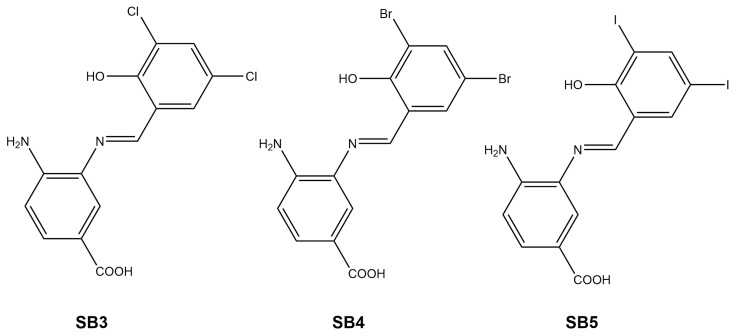 Figure 1
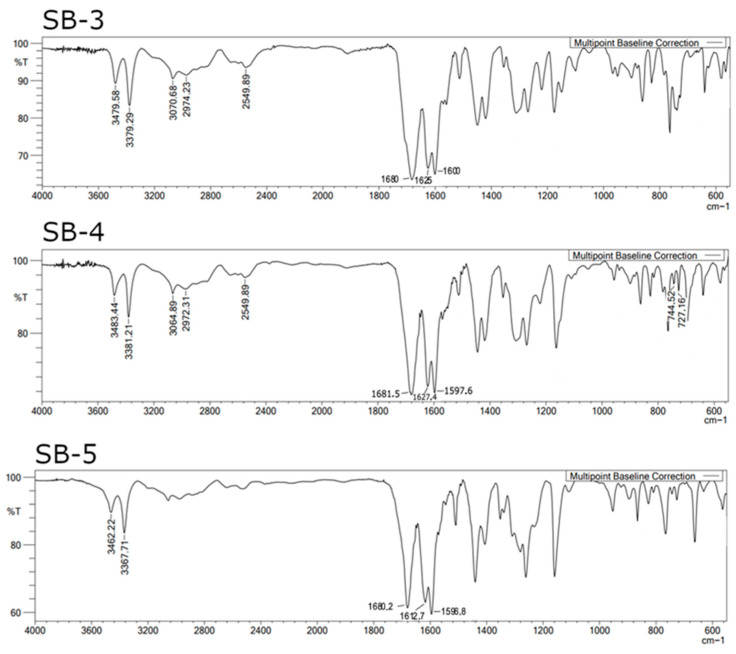 Figure 2
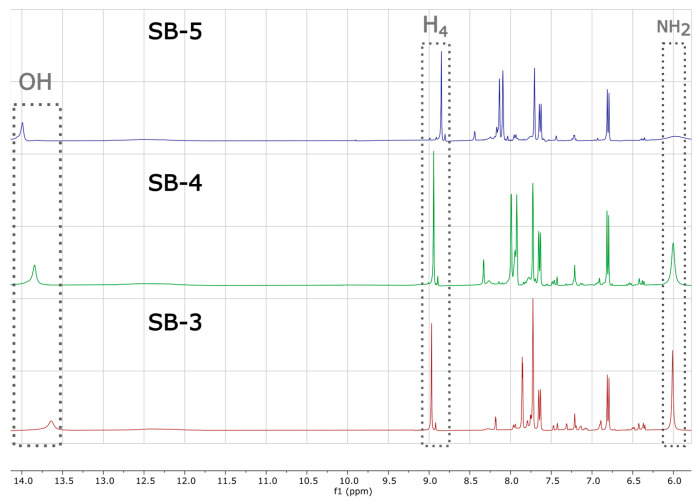 Figure 3
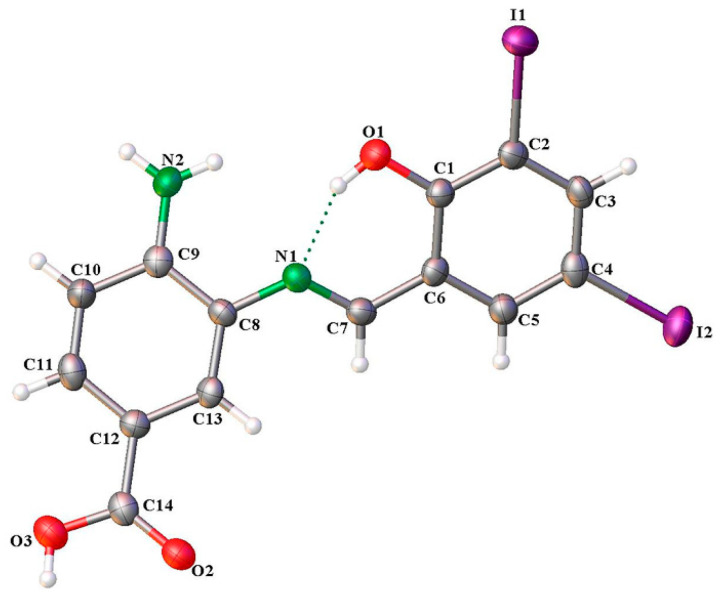 Figure 4
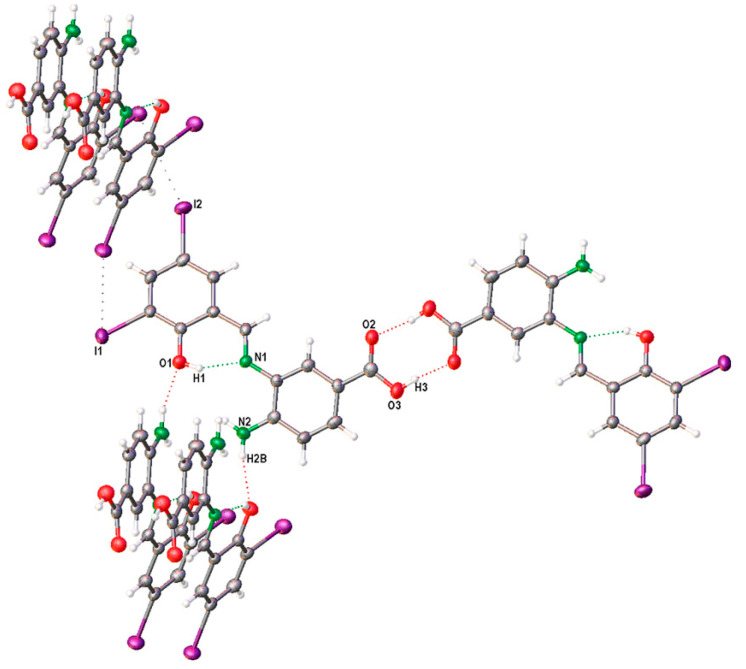 Figure 5
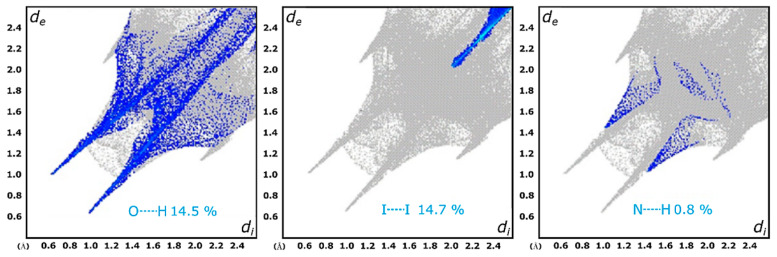 Figure 6
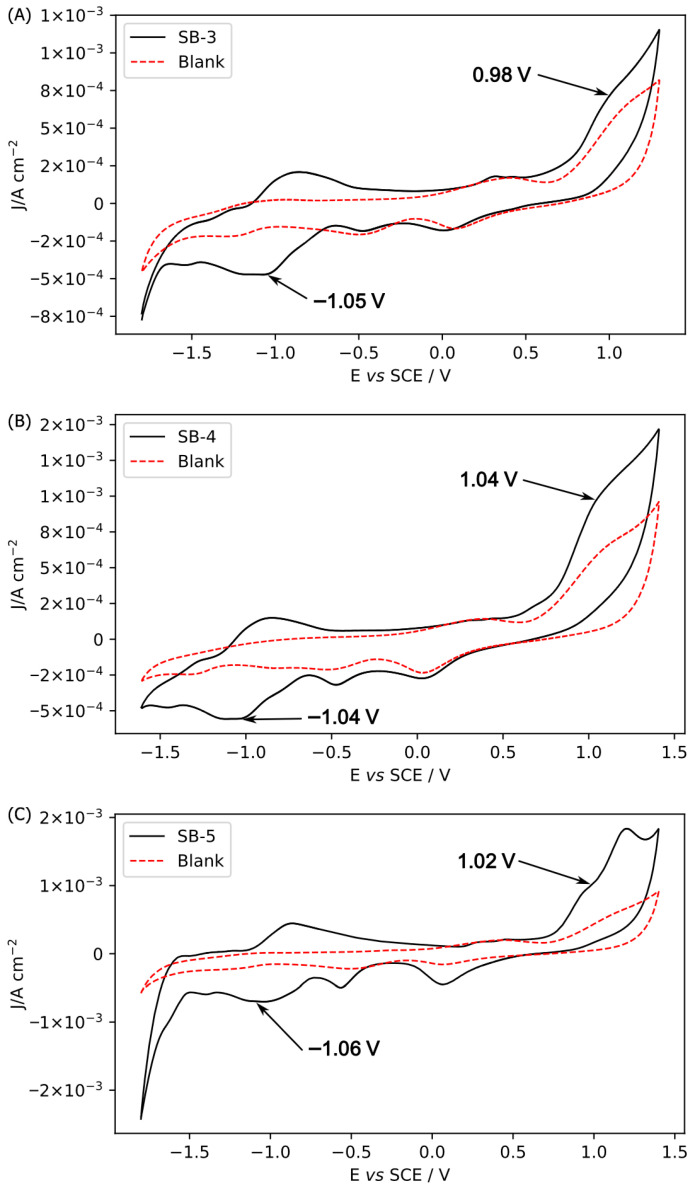 Figure 7
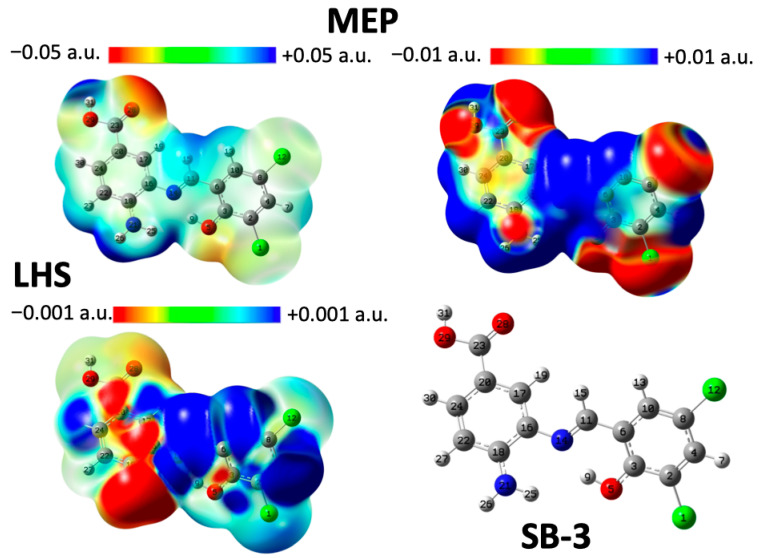 Figure 8
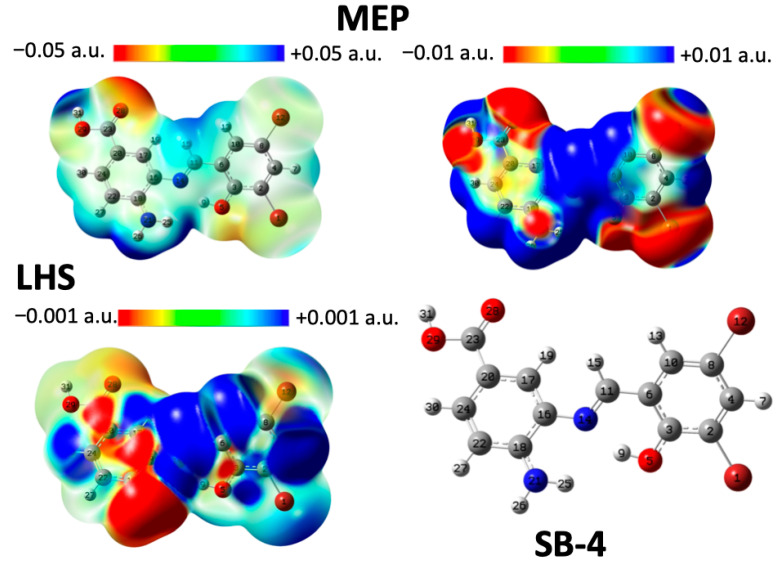 Figure 9
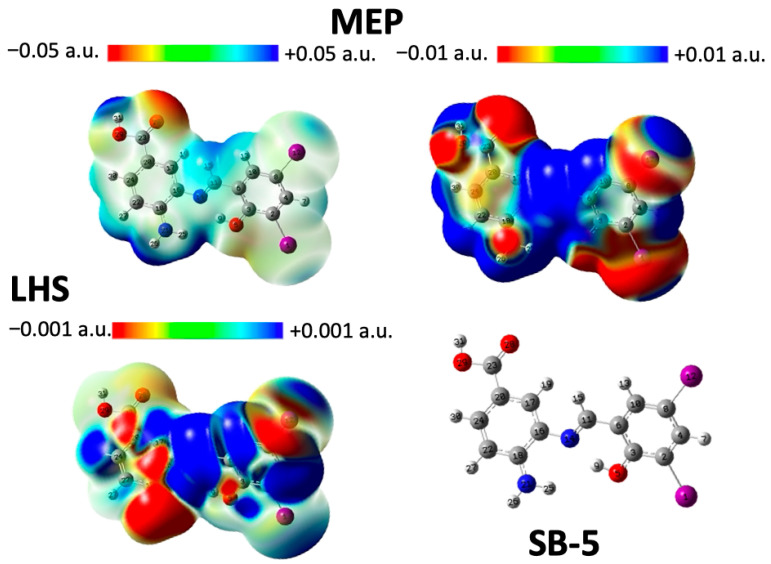 Figure 10
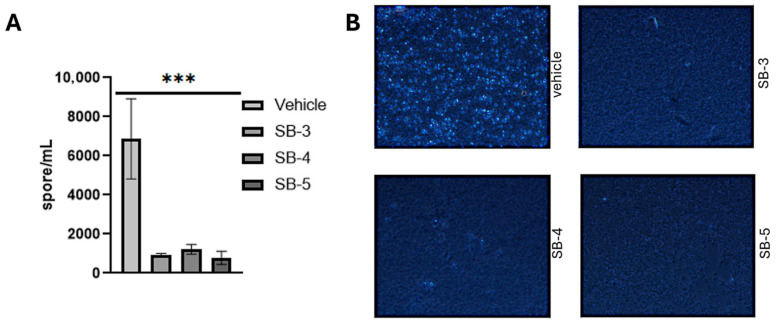 Figure 11
Peer Reviews
No public reviews on file for this paper yet. If you reviewed it on a platform where reviews are public (OpenReview, ICLR, NeurIPS, ICML), you can paste yours below so the community can read it here.
Videos
No videos yet. Explain this paper in a talk, walkthrough, or lecture? Add one.
Taxonomy
TopicsAntimicrobial agents and applications · Microbial Applications in Construction Materials · Crystallography and molecular interactions