PLGA Nanoparticles Double-Decorated with a TAT Peptide and Folic Acid to Target Staphylococcus aureus
Stéphanie Andrade, Maria J. Ramalho, João Santos, Sílvio Santos, Luís D. R. Melo, Nuno Guimarães, Maria P. Ferraz, Nuno F. Azevedo, Maria C. Pereira, Joana A. Loureiro

TL;DR
Researchers developed a new nanoparticle system that can target and interact more effectively with Staphylococcus aureus bacteria, potentially improving antibiotic delivery.
Contribution
The first double-modified nanovehicle combining TAT peptide and folic acid to enhance targeting and permeability for S. aureus.
Findings
Double-modified PLGA NPs showed increased interaction with S. aureus (87% fluorescence) compared to unmodified NPs (71%).
The nanosystem slightly delayed S. aureus growth without significant toxicity to human fibroblast cells.
NPs remained stable for four months and had a spherical morphology with a size of 174 ± 4 nm.
Abstract
Treating bacterial infections has become increasingly difficult due to the rise in antibiotic-resistant bacterial strains. Strategies involving the targeted delivery of antibiotics have been proposed to minimize the administered antibiotic doses. This study aims to develop the first double-modified nanovehicle capable of increasing bacterial membranes’ permeability while specifically targeting Staphylococcus aureus, one of the foremost pathogens responsible for global mortality rates. Thus, polymeric NPs composed of poly(lactic-co-glycolic acid) (PLGA) were produced, and their surface was modified with TAT peptide to increase the membranes’ permeability and folic acid (FA) to direct the NPs to S. aureus. The nanosystem showed spherical morphology with sizes of 174 ± 4 nm, a monodisperse population (polydispersity index of 0.08 ± 0.02), and a zeta potential of −2.5 ± 0.1 mV. The NPs…
Genes, proteins, chemicals, diseases, species, mutations and cell lines named across the full text — each resolved to its canonical identifier and authoritative record.
Click any figure to enlarge with its caption.
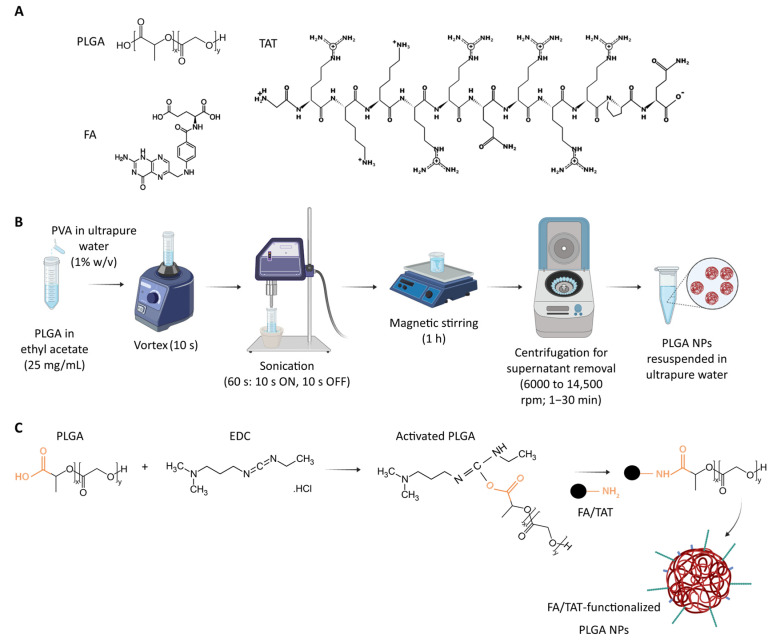 Figure 1
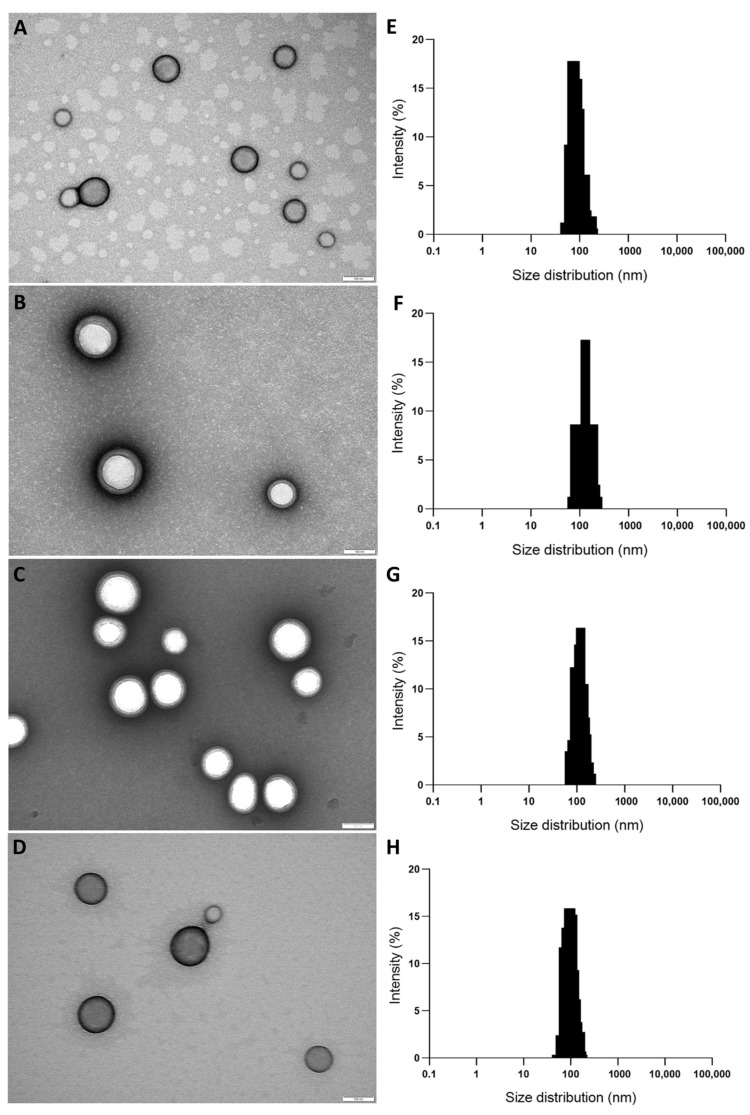 Figure 2
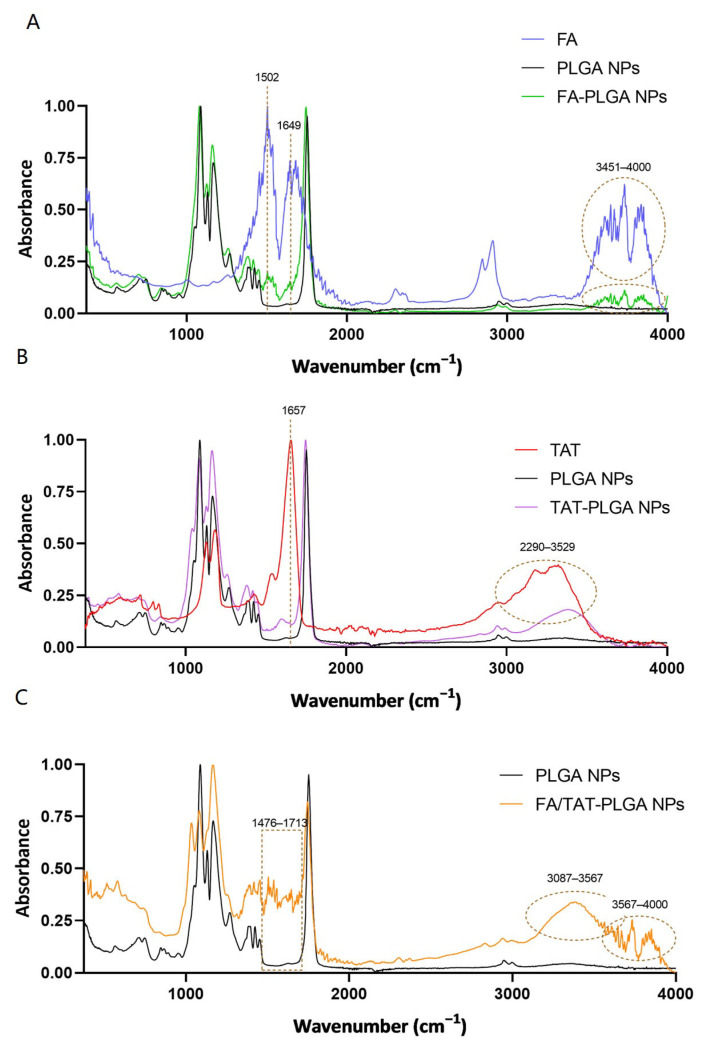 Figure 3
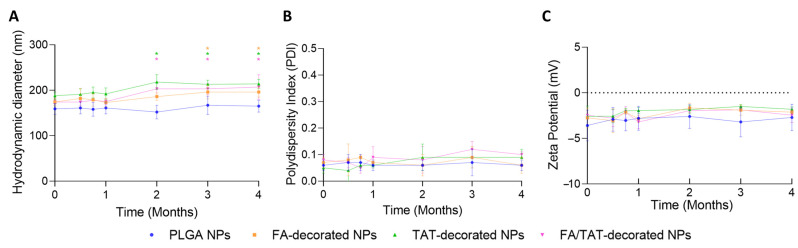 Figure 4
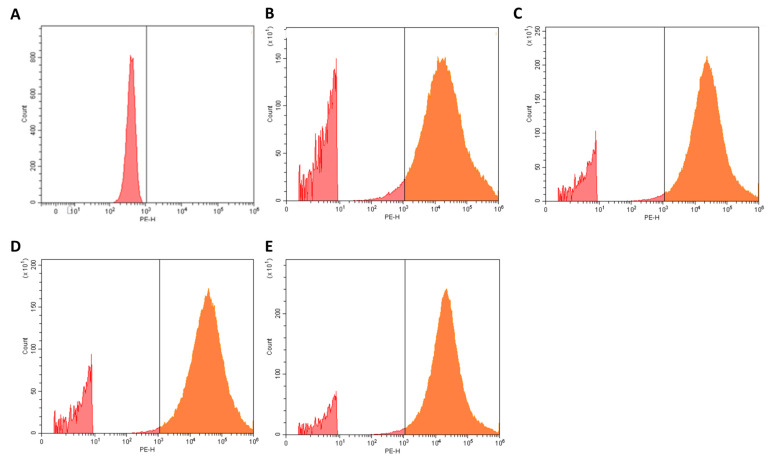 Figure 5
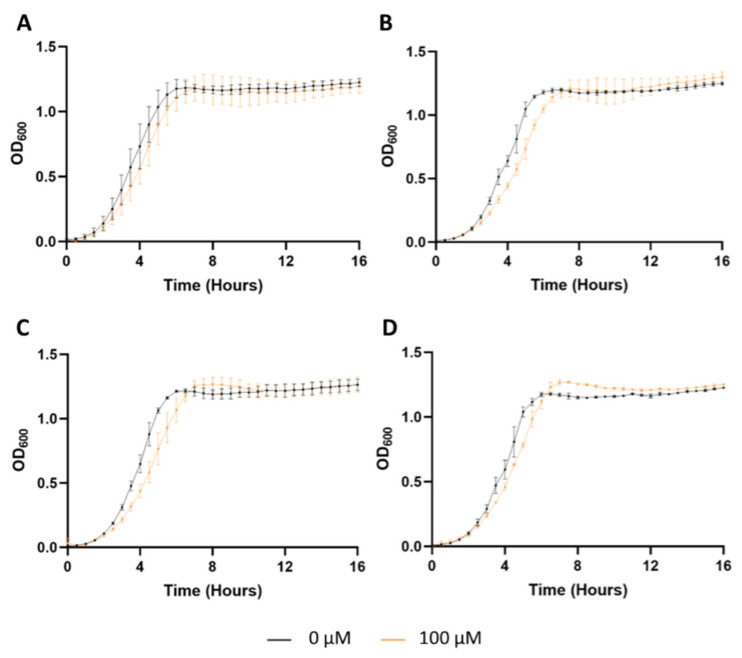 Figure 6
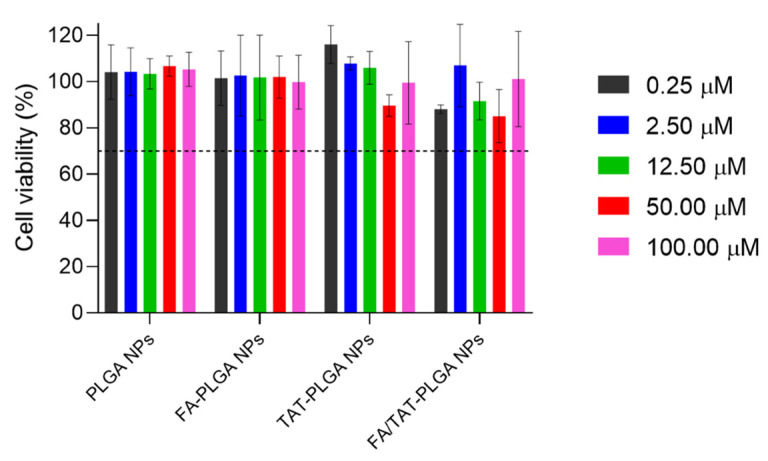 Figure 7
Peer Reviews
No public reviews on file for this paper yet. If you reviewed it on a platform where reviews are public (OpenReview, ICLR, NeurIPS, ICML), you can paste yours below so the community can read it here.
Videos
No videos yet. Explain this paper in a talk, walkthrough, or lecture? Add one.
Taxonomy
TopicsAntimicrobial agents and applications · Hydrogels: synthesis, properties, applications · Antimicrobial Peptides and Activities