UiO-66-(COOH)2 Decorated Collagen Fiber Membranes for High-Efficiency Separation of Cationic Surfactant-Stabilized Oil/Water Emulsions: Toward Sustainable and Robust Wastewater Treatment
Guifang Yang, Qiu Wu, Gao Xiao, Xiaoxia Ye

TL;DR
A new membrane made of collagen fibers and a metal-organic framework efficiently separates oil-water emulsions, offering a sustainable solution for wastewater treatment.
Contribution
A novel composite membrane combining collagen fibers and UiO-66-(COOH)2 for high-efficiency separation of cationic surfactant-stabilized emulsions.
Findings
The CFM-UiO-66-(COOH)2 membrane achieved over 99.85% separation efficiency for cationic oil-in-water emulsions.
The membrane showed permeation fluxes between 178.9 and 225.9 L·m−2·h−1 with robust antifouling and durability properties.
Stable performance was maintained over six separation cycles with good acid/alkali resistance and biocompatibility.
Abstract
Membrane separation is a promising technology for emulsified wastewater treatment. However, conventional membrane often suffer from limitations such as low mechanical strength, the inherent “trade-off” effect between flux and separation efficiency, and poor antifouling properties. To address these challenges, we report a novel composite membrane (CFM-UiO-66-(COOH)2) fabricated by in situ growth of functionalized UiO-66-(COOH)2 on a mechanically robust collagen fiber membrane (CFM) substrate. The resulting composite leverages the inherent properties of the CFM, along with the controlled generation of charge-neutralization demulsification sites and size-sieving filtration layers from the UiO-66-(COOH)2. This CFM-UiO-66-(COOH)2 exhibited superwetting behavior and achieved efficient separation of cationic surfactant-stabilized oil-in-water micro- and nano-emulsions. Specifically, the…
Genes, proteins, chemicals, diseases, species, mutations and cell lines named across the full text — each resolved to its canonical identifier and authoritative record.
Click any figure to enlarge with its caption.
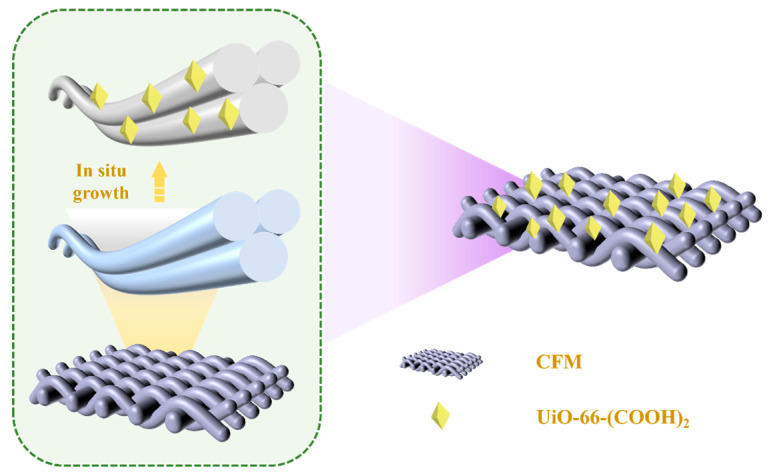 Figure 1
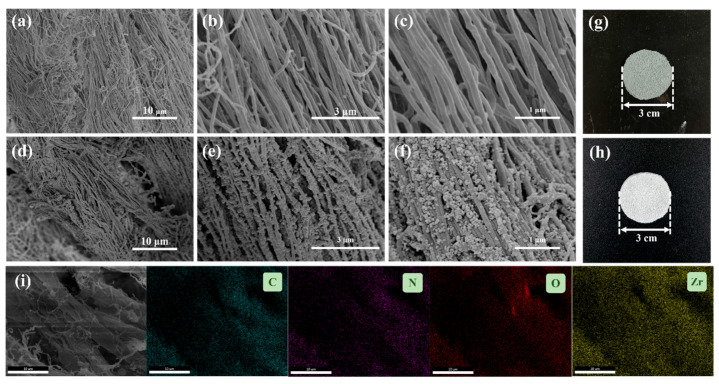 Figure 2
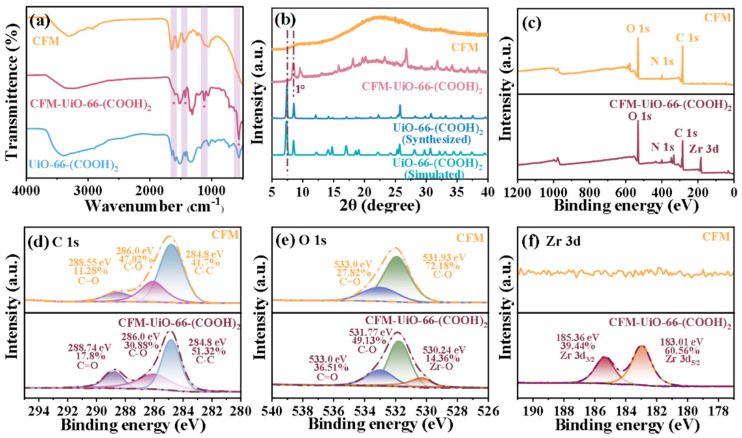 Figure 3
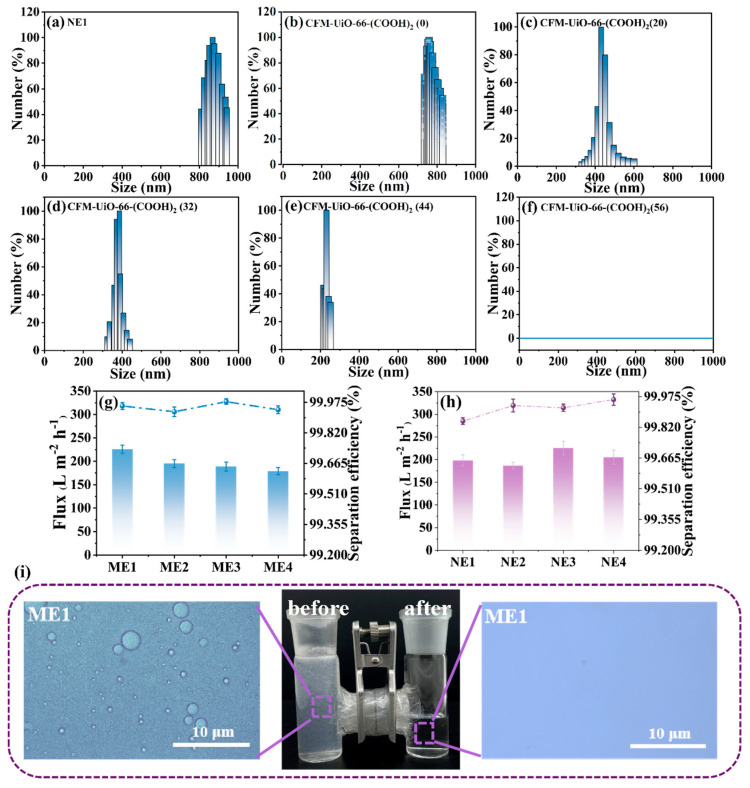 Figure 4
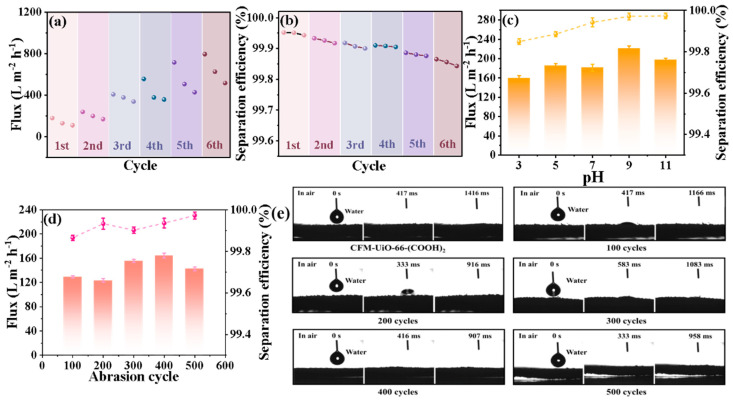 Figure 5
 Figure 6
Peer Reviews
No public reviews on file for this paper yet. If you reviewed it on a platform where reviews are public (OpenReview, ICLR, NeurIPS, ICML), you can paste yours below so the community can read it here.
Videos
No videos yet. Explain this paper in a talk, walkthrough, or lecture? Add one.
Taxonomy
TopicsSurface Modification and Superhydrophobicity · Membrane Separation Technologies · Polymer Surface Interaction Studies