Association of Plasma BDNF Concentration and Val66Met Polymorphism with Postoperative Delirium After Cardiac Surgery Under General Anesthesia with Cardiopulmonary Bypass
Kacper Lechowicz, Aleksandra Szylińska, Elżbieta Cecerska-Heryć, Ewa Ostrycharz-Jasek, Edyta Zagrodnik, Jerzy Pacholewicz, Barbara Dołęgowska, Katarzyna Kotfis

TL;DR
This study investigates whether brain-derived neurotrophic factor (BDNF) levels and a genetic variant (Val66Met) are linked to postoperative delirium in patients undergoing heart surgery with cardiopulmonary bypass.
Contribution
The study evaluates the novel association between plasma BDNF concentrations and the Val66Met polymorphism with postoperative delirium in cardiac surgery patients.
Findings
Postoperative delirium occurred in 19.6% of patients and was associated with prolonged hospitalization and reoperations.
The BDNF Val66Met polymorphism was not linked to postoperative delirium, but carriers had higher plasma BDNF concentrations.
Neurological complications remain a significant challenge in cardiac surgery, highlighting the need for better identification strategies.
Abstract
Background/Objectives: Cardiac surgery, particularly procedures performed with cardiopulmonary bypass (CPB), carries a high risk of neurological complications, including postoperative delirium (POD), which affects 16–73% of patients and increases the likelihood of long-term cognitive impairment. Brain-derived neurotrophic factor (BDNF), a neurotrophin involved in neuronal function, synaptic plasticity, and inflammatory regulation processes, including its Val66Met polymorphism, has been implicated as a potential predictor of POD. This study aimed to evaluate the relationship between perioperative plasma BDNF levels, the BDNF Val66Met polymorphism, and the incidence of POD in patients undergoing elective cardiac surgery with CPB. Methods: This prospective observational single-center study enrolled 287 adults scheduled for elective isolated coronary artery bypass grafting (CABG) with CPB,…
Genes, proteins, chemicals, diseases, species, mutations and cell lines named across the full text — each resolved to its canonical identifier and authoritative record.
Click any figure to enlarge with its caption.
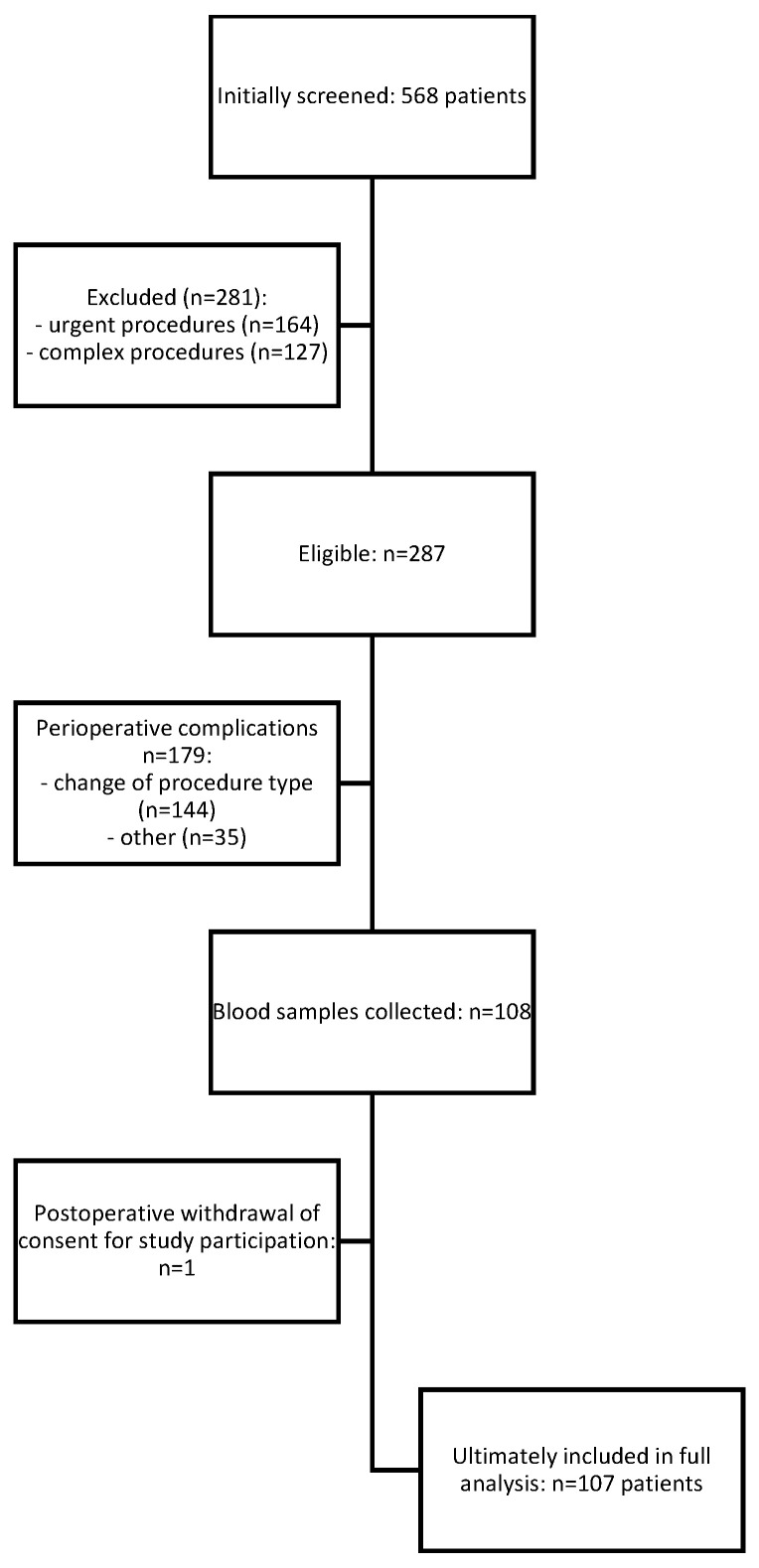 Figure 1
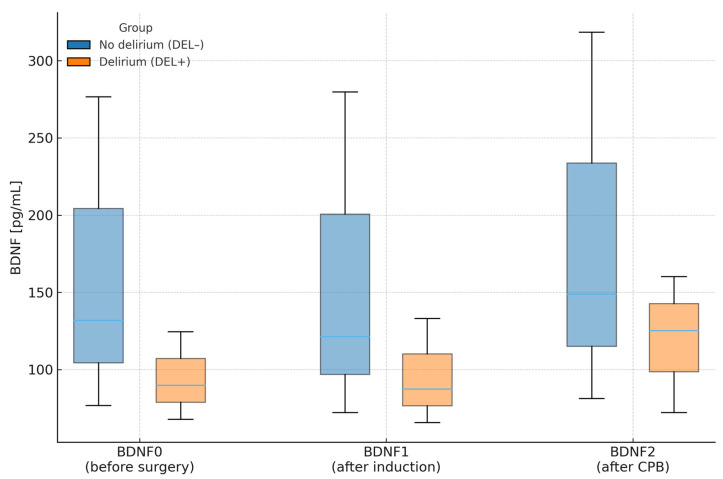 Figure 2
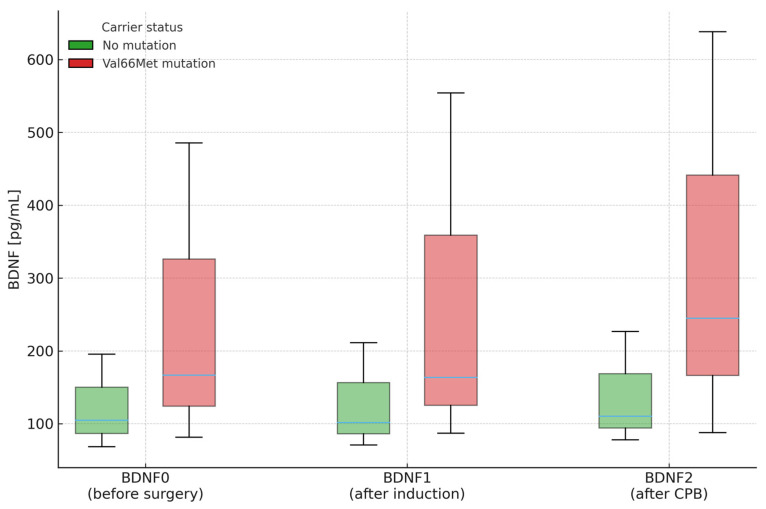 Figure 3
Peer Reviews
No public reviews on file for this paper yet. If you reviewed it on a platform where reviews are public (OpenReview, ICLR, NeurIPS, ICML), you can paste yours below so the community can read it here.
Videos
No videos yet. Explain this paper in a talk, walkthrough, or lecture? Add one.
Taxonomy
TopicsIntensive Care Unit Cognitive Disorders · Cancer, Stress, Anesthesia, and Immune Response · Nerve injury and regeneration