Weight Gain and Fatigue Effect on Nursing Students Performing High-Fidelity CPR Simulation
Santiago Morejón Bandrés, José Luis Martin Conty, Begoña Polonio-López, Samantha Diaz-Gonzalez, Cristina Rivera-Picón, Sergio Rodríguez-Cañamero, Juan José Bernal-Jiménez, Joseba Rabanales-Sotos, Miguel Ángel Castro-Villamor, Rosa Conty-Serrano, Ancor Sanz-García

TL;DR
This study found that wearing a weighted vest during CPR simulations increases physiological stress in nursing students, which could affect their performance.
Contribution
The study introduces a novel simulation approach using weighted vests to assess the physical impact on nursing students during high-fidelity CPR training.
Findings
Wearing a vest during CPR led to increased heart rate, lactate, and cortisol levels.
Physiological variables showed significant time-based changes during the simulation.
Weight gain and fatigue may negatively affect CPR performance in nursing students.
Abstract
Background/Objectives: This study aimed to determine the effects of weight gain and fatigue on nursing students performing high-fidelity cardiopulmonary resuscitation (CPR) simulation. Methods: A simulation-based research study (with or without a vest) was performed at the Faculty of Health Sciences, University of Castilla la Mancha (Spain), with volunteer nursing students. Vital signs, pain scale, pupillary sizes, analytical parameters, and lifestyle habits were evaluated before, during, and after CPR. The differences between groups were assessed by ANOVA for time and group factors. Results: A total of 31 participants met the inclusion criteria, 15 subjects without a vest and 16 subjects with a vest. The ANOVA results revealed that all the variables presented statistically significant time effects, except for glucose. For the group effect, heart rate, lactate, and cortisol presented…
Genes, proteins, chemicals, diseases, species, mutations and cell lines named across the full text — each resolved to its canonical identifier and authoritative record.
Click any figure to enlarge with its caption.
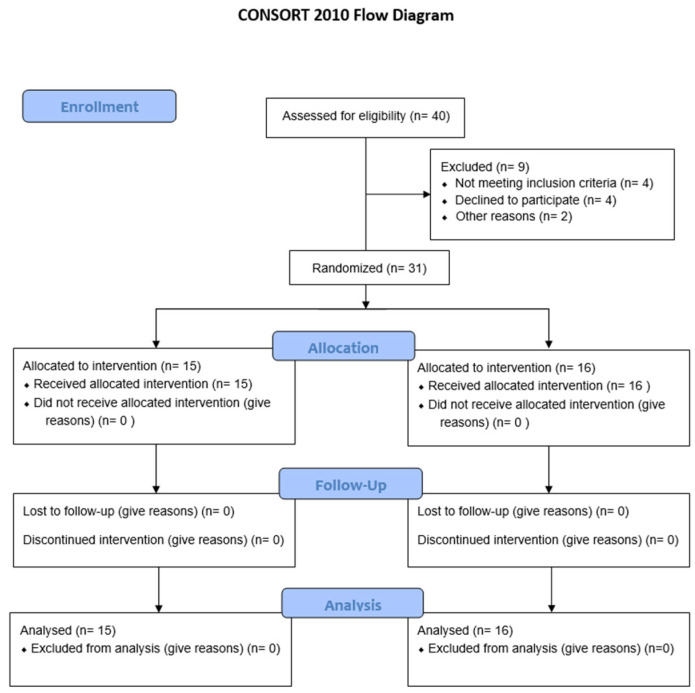 Figure 1
Peer Reviews
No public reviews on file for this paper yet. If you reviewed it on a platform where reviews are public (OpenReview, ICLR, NeurIPS, ICML), you can paste yours below so the community can read it here.
Videos
No videos yet. Explain this paper in a talk, walkthrough, or lecture? Add one.
Taxonomy
TopicsCardiac Arrest and Resuscitation